


More news on this day
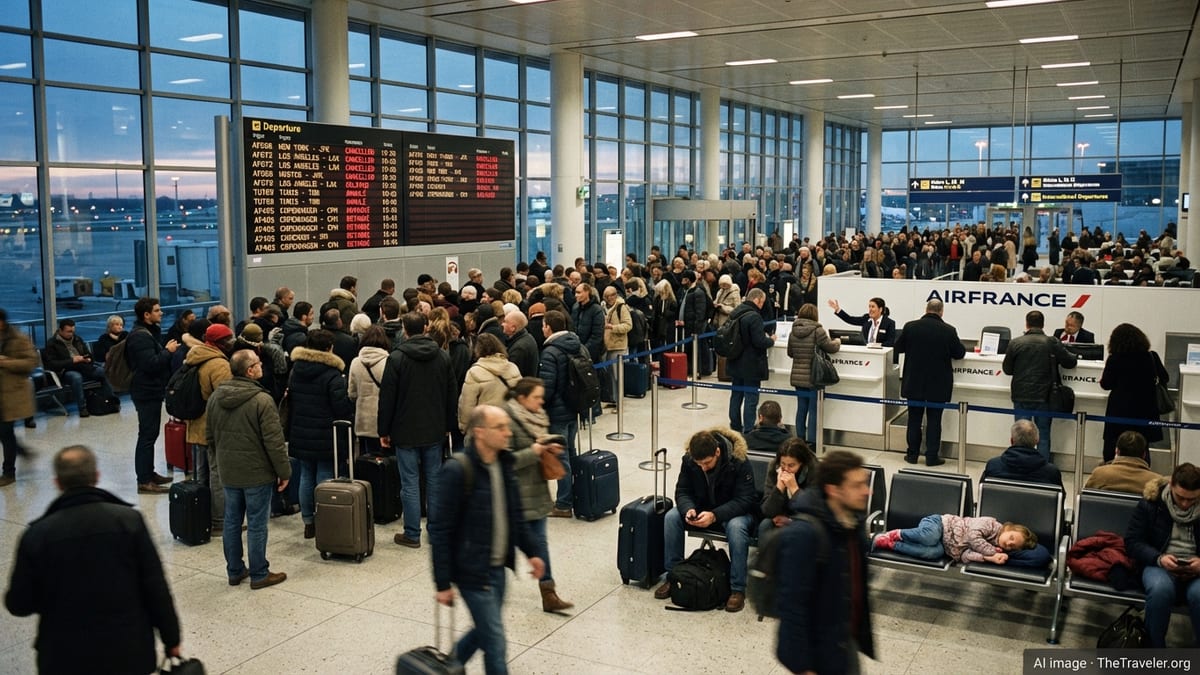
From weather knock‑ons to large‑scale IT outages, recent travel disruptions have exposed how quickly passengers can find themselves stranded mid‑journey, revealing significant gaps and inconsistencies in protections across airlines, rail operators and coach companies worldwide.
Get the latest news straight to your inbox!
High‑Profile Disruptions Highlight Mid‑Journey Vulnerabilities
Major operational failures in the past two years have underlined how fragile complex, multi‑leg itineraries can be once a journey is underway. One of the most visible examples was the CrowdStrike-related IT outage in July 2024, which triggered widespread cancellations and delays for several large U.S. airlines. Coverage of the Delta Air Lines disruption described thousands of travelers stuck at Atlanta’s Hartsfield‑Jackson airport and other hubs for extended periods, often with limited rerouting options and conflicting information about refunds.
Reports on that episode noted that some travelers, unable to secure timely rebooking, turned to expensive last‑minute alternatives such as long‑distance train tickets priced near four figures for routes that normally cost far less. Legal action filed afterward in U.S. courts alleges that some passengers were denied prompt refunds despite being unable to complete their trips, underscoring persistent confusion over when a traveler is entitled to their money back after a cancellation or significant delay mid‑itinerary.
Similar stories emerge across continents: travelers missing onward connections, reaching an unintended city at the end of the day, or being advised to find and fund their own accommodation while they wait for a slot on a later service. While these cases often involve highly publicized airline disruptions, consumer organizations point out that fragmented protections in rail, ferry and coach transport can leave passengers in an even weaker position once they are partway through a journey.
Patchwork Rules for Refunds and Rebooking
The recent tightening of some regulations has not eliminated the mid‑journey risk. In the European Union, passenger rights are among the most comprehensive in the world. Regulation EC 261/2004 and related rules establish compensation and assistance when flights are significantly delayed or cancelled, and the European Commission emphasizes that EU frameworks also extend, with variations, to rail, bus, coach and waterborne travel. Updated measures adopted in July 2026 aim to clarify rights in complex, connecting itineraries and to strengthen enforcement.
EU-level guidance highlights that passengers are entitled to care, rerouting or refunds in many cases where a missed connection or long delay prevents them from reaching their final destination. For rail, for example, EU rules provide for ticket refunds under certain conditions and, in more recent reforms, allow passengers to arrange alternative public transport themselves if the operator fails to offer rerouting within a defined timeframe. However, published information also notes that obligations differ between modes, and that national rules or operator terms can create additional layers of complexity for travelers attempting to claim assistance.
In the United States, protections remain more limited and heavily focused on refunds rather than care. A final rule on airline refunds and consumer protections published by the U.S. Department of Transportation in April 2024 establishes that passengers are entitled to an automatic cash refund when a flight is cancelled or significantly changed and they choose not to travel, as long as the ticket was purchased directly from the airline. The rule also covers scenarios such as significantly delayed baggage and paid services that are not provided, with key provisions taking effect in 2024.
Yet, according to publicly available DOT material, these refund rights do not automatically translate into obligations to provide meals, hotels or interline transfers during disruptions, and they typically do not cover travelers who voluntarily accept travel credits in lieu of refunds. As a result, a passenger whose trip is interrupted mid‑journey may recover the cost of the unused segment but still face substantial out‑of‑pocket expenses to complete or reschedule their travel.
Multi‑Leg and Multi‑Mode Trips Remain a Grey Area
Travelers are increasingly combining airlines, rail operators and coach companies, often booked through online platforms that stitch together separate tickets. European institutions have acknowledged this shift. The European Commission’s Passenger Mobility Package, presented in late 2023, highlighted the need for smoother multimodal journeys and direct support for passengers whose connections fail, including better real‑time information on delays and cancellations across modes.
Subsequent EU policy documents and Council briefings indicate that recent updates to air passenger rules are intended, in part, to clarify protections for connecting journeys on a single contract and to ensure that passengers who miss a connection because of a prior disruption receive appropriate assistance while waiting for rerouting. Draft and adopted texts emphasize the importance of informing passengers at the time of booking whether their itinerary is covered by a single air transport contract, since this distinction can determine eligibility for compensation when a missed connection leaves them stranded.
Outside the EU, however, there is far less clarity for multimodal or self‑connected trips. U.S. refund rules, for example, focus on each airline ticket as a separate contract. The Federal Register discussion accompanying the DOT’s refund regulation notes that protections do not extend to foreign‑to‑foreign segments within an itinerary or to other modes of transport. Canadian regulations, cited in that same discussion, guarantee rebooking or refunds in some circumstances under the Air Passenger Protection Regulations but primarily within aviation, leaving bus and rail journeys subject to different regimes.
This patchwork means that a traveler might be well protected on one segment yet face minimal recourse on another. If a long‑distance coach leg is missed because an inbound flight was late, or if a separate low‑cost airline ticket was purchased to connect to a mainline carrier, there is often no clear legal obligation for any operator to cover the gap, even when the traveler is effectively stranded between origin and destination.
Consumer Expectations Outpace Legal Obligations
Disruptions such as the 2024 Delta outage have also shown how consumer expectations differ from what the law guarantees. In some jurisdictions, passengers still reference the legacy concept of “Rule 240,” a pre‑deregulation U.S. standard that historically required airlines to transfer delayed passengers to another carrier if it could get them to their destination more quickly. While this federal rule was rendered obsolete decades ago, many airlines voluntarily embed similar commitments in their contracts of carriage. Publicly accessible summaries explain that these commitments vary widely by carrier and do not have the force of a uniform federal mandate.
In Europe, published guidance from the Commission stresses that EU passenger rights are designed to ensure a “high level of protection,” including care and assistance during long delays. However, official FAQs also acknowledge that the regulations do not address every scenario. For example, they may not apply when a traveler is refused carriage for reasons unrelated to cancellation or overbooking, or when a passenger themselves cannot meet check‑in or security requirements, even if this ultimately leads to missed onward connections.
As itineraries become more complex, these nuances are harder for travelers to navigate in real time. Consumer advocates argue that passengers often assume they are entitled to full care, hotel stays and rapid rerouting whenever they are stranded, regardless of the legal framework. In practice, the outcome depends on where they are, which carrier is responsible for the disruption, whether journeys are sold under a single contract, and what national enforcement bodies are prepared to support.
Regulators Move, but Enforcement and Awareness Lag
Regulators on both sides of the Atlantic have started to respond to the visibility of stranded travelers. In the United States, the DOT has launched additional rulemaking aimed specifically at passengers affected by airline disruptions. The agency describes this initiative as building on the new automatic refund rule and on public commitments displayed on the flightrights.gov dashboard, with the goal of securing clearer standards for services like meal vouchers, hotel accommodation and rebooking when disruptions are within an airline’s control.
Across the European Union, the Commission and Council have signaled that the 2026 overhaul of air passenger rules is part of a broader consumer protection agenda that also covers package travel and multimodal connections. Policy summaries emphasize better information before and during travel, stronger complaint‑handling procedures, and more consistent enforcement across member states. Separate EU webpages consolidate air, rail, bus, coach and ship rights to make it easier for passengers to understand what they can claim when journeys go wrong.
Despite these moves, the lived experience for many travelers remains that protections are hardest to access precisely when they are most needed: in the middle of a disrupted journey, far from home, with limited connectivity and little clarity over which rules apply. Until upcoming measures are fully implemented and widely communicated, passengers are likely to continue discovering the limits of existing protections only after they are already stranded.
US DOT automatic refunds rule overview
European Commission passenger rights portal