


More news on this day
Flights at Abu Dhabi’s Zayed International Airport and Dubai International Airport are experiencing continued delays and selective cancellations this week, as regional tensions and separate operational disruptions ripple across key routes.
Get the latest news straight to your inbox!
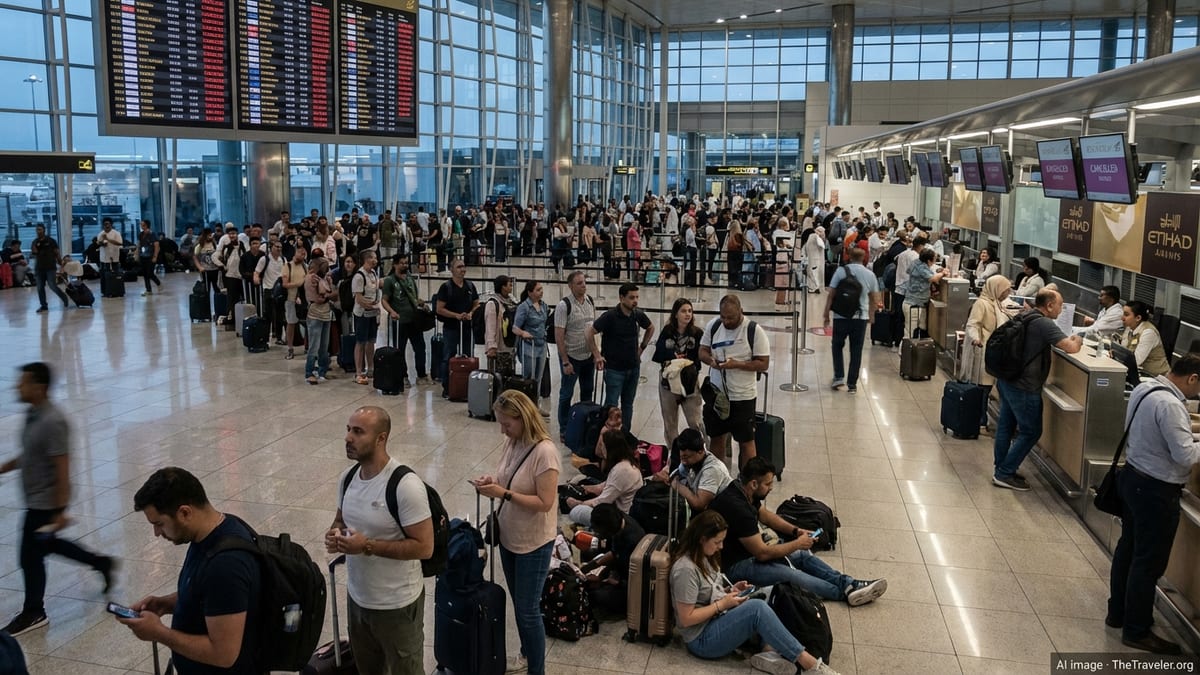
Regional tensions and external disruptions impact UAE flight schedules
Publicly available information indicates that services to and from the UAE have been disrupted in early September by a combination of heightened regional geopolitical tensions and separate operational issues in other countries. Recent coverage links a wave of delays and cancellations across the Middle East to renewed fighting involving the United States and Iran, which has led to tighter airspace controls and schedule adjustments on some routes touching Gulf hubs.
In parallel, a temporary closure of Soekarno Hatta International Airport in Jakarta due to volcanic ash has forced airlines to cancel or reschedule multiple services between Dubai and the Indonesian capital. Emirates, for example, has listed a series of Dubai–Jakarta flights between September 6 and 8 as cancelled, with associated return services also not operating on those days. These route-specific issues have added to the broader sense of uncertainty for travelers connecting through the UAE.
Despite the disruptions, UAE airports remain open and operational. Travel advisories aimed at visitors to Abu Dhabi describe the emirate as functioning normally, with Zayed International Airport handling flights to destinations worldwide. However, these notices emphasize that individual services may be affected at short notice and that passengers should rely on their airline for the most accurate, flight-level information.
Industry-focused regional summaries describe the GCC aviation network as largely functional but caution that some carriers are still operating reduced or selective schedules. The overarching message is that travelers should treat any previously confirmed itinerary as subject to change when flying through the UAE in the current environment.
Abu Dhabi: Zayed International Airport sees targeted delays
Reports from Abu Dhabi highlight rolling delays on both arriving and departing flights at Zayed International Airport over recent days. Coverage from local media lists Etihad Airways among the airlines experiencing schedule changes on routes spanning Europe, Asia and the wider Middle East, including services to and from London, Lisbon, Manchester, Nairobi, Moscow, Delhi and several Indian subcontinent cities.
Low-cost and regional operators have also been affected. Air Arabia Abu Dhabi services between the UAE capital and destinations such as Calicut, Chennai, Trivandrum, Ahmedabad, Sialkot and Kathmandu have been reported as running behind schedule. Some flights operated by Indian carriers and other regional airlines have similarly been delayed, reflecting knock-on effects across shared corridors rather than an issue confined to a single operator.
Abu Dhabi’s official travel advisory maintains that flights to and from the emirate, including those operated by Etihad, are “operating normally as scheduled,” while at the same time advising passengers to verify status directly with their airline before setting out for the airport. Guidance also notes that if a journey is cancelled or significantly delayed while a traveler is in transit, airlines are expected to support alternative arrangements where possible.
Weather has not emerged as a primary cause of the latest disruptions in Abu Dhabi. Aviation meteorology bulletins for UAE airspace show standard seasonal heat and routine advisories, while urging aviation stakeholders to monitor any significant weather warnings. The picture that emerges is one of an airport that remains fully open but subject to occasional schedule reshuffles influenced by events and operational decisions beyond the country’s borders.
Dubai International: global hub managing rolling delays and select cancellations
Dubai International Airport, one of the world’s busiest long-haul hubs, is also reporting a mix of delays and limited cancellations on specific routes. Coverage of the situation indicates that some flydubai services from regional cities in Central Asia, the Caucasus and the Middle East have encountered schedule changes, with isolated cancellations such as an Entebbe–Dubai flight highlighted in recent reports.
Emirates arrivals from European cities including Manchester, London, Lisbon, Edinburgh, Dublin, Amsterdam, Warsaw, Rome and Bologna have been documented as reaching Dubai behind schedule on certain days. Long-haul services from North American gateways such as Washington, Montreal, New York, Chicago, Boston, Los Angeles, Houston and San Francisco have also appeared on delay lists, along with selected flights from South Asia, Southeast Asia and Africa.
Departures from Dubai have, according to recent reporting, experienced fewer disruptions than inbound services, although some regional flights operated by other carriers have still left later than scheduled. Dubai Airports’ own flight-status portal continues to function as a primary reference point, allowing passengers to search live arrival and departure information by route, airline or flight number on the day of travel.
In addition to the broader regional context, ongoing cancellations of Emirates services between Dubai and Jakarta through at least September 8 due to volcanic ash illustrate how external events can echo through Dubai’s hub operations. Passengers booked on these routes are being re-accommodated according to standard airline policies, adding another layer of complexity for travelers relying on the city as a connecting point.
Airline responses, suspended routes and advice for travelers
Airlines serving the UAE are updating their travel advisories on an almost daily basis as conditions evolve. Emirates’ travel updates page lists affected flight numbers and dates, particularly for the Dubai–Jakarta corridor, and urges customers to monitor their booking status online and review email notifications ahead of departure. Etihad and low-cost carriers such as flydubai and Air Arabia are also publishing operational notices and schedule changes through their websites and customer channels.
At the same time, a number of international airlines have extended or introduced suspensions on certain routes to and from the Gulf region. Recent summaries note that carriers including Air France and several European operators have paused or reduced services to Dubai or other Middle East destinations amid the current security environment. Other airlines are applying flexible rebooking policies, allowing affected passengers to change travel dates or request refunds, depending on fare conditions.
Regional travel advisories produced by industry intermediaries characterize airports in the UAE, Saudi Arabia and Oman as fully operational but flag “schedule changes or delays” on some services. These notices consistently encourage passengers to reconfirm departure and arrival times directly with their airline shortly before heading to the airport, even if their flight appears on the schedule.
Given that different disruptions have different triggers, from regional tensions to volcanic ash thousands of kilometres away, travelers are being advised to build greater flexibility into their plans. This includes allowing extra time for connections, keeping contact details updated within airline bookings so that notifications can be received promptly, and checking both airport and airline websites or apps on the day of travel.
What passengers flying through the UAE should do now
For travelers with imminent itineraries through Abu Dhabi or Dubai, the clearest guidance from public information sources is to verify flight status repeatedly in the 24 hours before departure. Airline websites and mobile apps typically provide real-time updates, while airport portals for Dubai International and Zayed International allow independent checks using city pairs, airlines or specific flight numbers.
Passengers connecting through the UAE from other regions affected by airspace restrictions or local disruptions should pay close attention to the first segment of their journey. If an outbound flight from a home airport is cancelled or heavily delayed, connection options in Abu Dhabi or Dubai may need to be reconfigured. In many cases, carriers are offering waivers on change fees or flexible rebooking windows, particularly where operational disruptions are beyond the traveler’s control.
Travelers are also encouraged to monitor broader regional travel advisories and, where relevant, guidance from their own national carriers. Several major airlines with services to the Gulf have introduced special policies for bookings touching the Middle East, allowing one-time changes without additional fees during specified travel windows. Understanding the terms of these policies before contacting customer service can help speed up rebooking conversations if plans need to change at short notice.
While the current situation has produced noticeable disruption, flight operations at Abu Dhabi and Dubai continue at large scale. For many passengers, journeys are proceeding as scheduled, but the recent pattern of delays and targeted cancellations means that proactive monitoring and flexibility have become essential parts of flying through the UAE’s major hubs this week.
The National: UAE travel advisory on Dubai and Abu Dhabi flight delays
Khaleej Times: UAE travel advisory on airline delays and cancellations
Emirates: official travel updates and flight advisories
Experience Abu Dhabi: current travel advisory and airport guidance