


More news on this day
Premium air travel on marquee routes such as New York to London is entering a new, more expensive era in 2026, as booming private jet usage and rising demand for wellness-centric journeys push luxury fares sharply higher.
Get the latest news straight to your inbox!
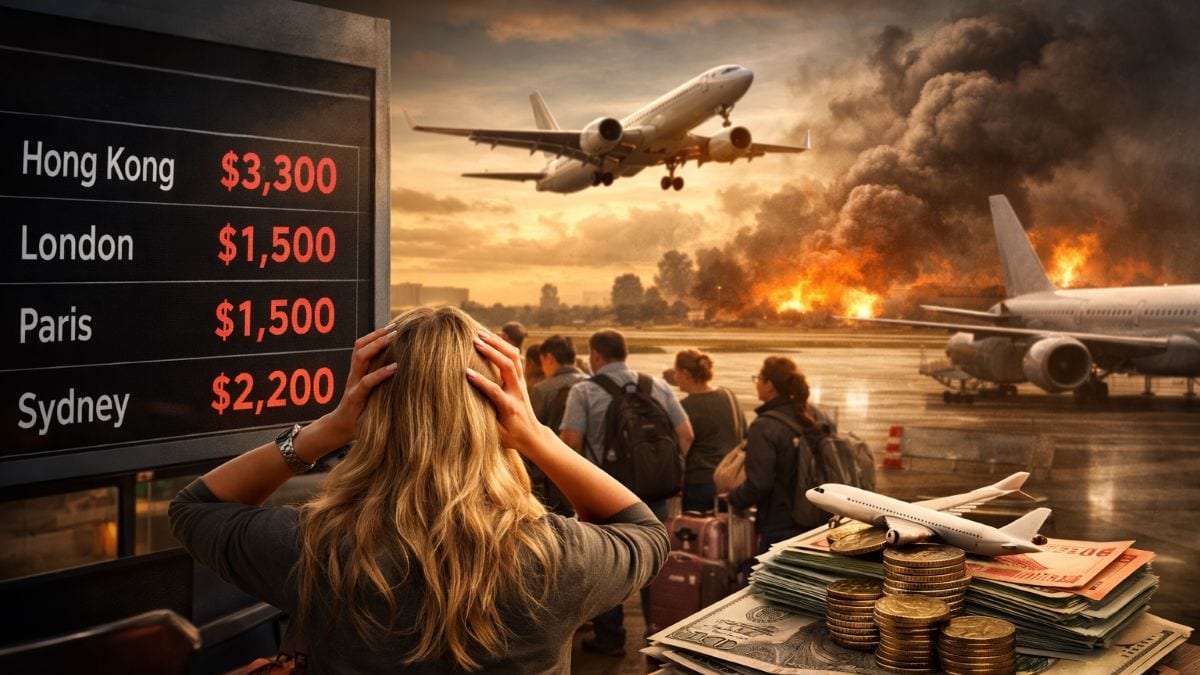
Premium Cabins Outpace the Rest of the Market
Recent air transport data indicates that premium cabins are increasingly driving airline revenue, particularly on high-yield transatlantic routes. Industry statistics for 2025 show that international business and first class passengers grew faster than total traffic and now represent a disproportionately large share of revenue compared with their relatively small share of seats. Analysts note that routes such as New York–London rank among the world’s busiest and most lucrative international pairs, making them early flashpoints for price increases.
IATA’s latest global outlook highlights that North American and European carriers are leaning heavily into premium demand, with business class volumes climbing at a faster pace than economy on key long-haul markets. As airlines allocate more floor space to lie-flat suites, premium economy mini-cabins and enclosed business suites, fixed capacity in these sections constrains supply just as demand from affluent leisure and corporate travelers remains resilient. That imbalance is feeding higher average fares and more aggressive upgrade pricing at the front of the plane.
Consulting and financial forecasts for 2026 suggest this trend is far from temporary. A recent aviation outlook projects that premium-heavy traffic will underpin airline profitability this year, even as some mass-market segments soften. Long-haul business class products with four-figure one-way fares are expected to remain relatively insulated from macroeconomic uncertainty, especially on transatlantic city pairs linking financial centers such as New York, London, Paris and Frankfurt.
Taxes, Surcharges and Limited Inventory Push Fares Higher
For travelers pricing trips between New York and London, the cost escalation is not just about base fares. In the United Kingdom, higher Air Passenger Duty on non-economy tickets has added a significant tax burden to business and first class departures from London, with published government changes lifting the levy on premium cabins by double-digit percentages from 2025 onward. On a typical business class itinerary from London to New York, the tax component alone can now run into several hundred pounds per ticket, magnifying the overall fare surge.
At the same time, carrier-imposed surcharges and fuel-linked fees have climbed. Publicly available fare breakdowns and traveler reports show that surcharges on some premium transatlantic tickets increased markedly between mid-2025 and mid-2026, even when base fares remained nominally similar. On select long-haul routes, business class surcharges are now several hundred dollars higher than in economy, widening the gap between cabins and contributing to what frequent flyers describe as “sticker shock.”
Capacity dynamics are reinforcing these price moves. Airlines serving New York–London and other long-haul premium corridors have reconfigured cabins to favor higher-yield seats without necessarily expanding the absolute number of business class berths dramatically. Delta’s forthcoming Airbus A350-1000, for example, is planned with nearly half of its space dedicated to premium products, while other major carriers incrementally densify economy. Limited premium inventory relative to demand, combined with higher structural costs and taxes, is resulting in sustained fare pressure at the top end of the cabin.
Private Jet Boom Raises the Luxury Benchmark
The backdrop to the surge in commercial premium fares is a historic boom in private aviation. Industry analyses covering 2025 and 2026 point to record flight hours and rapid expansion in the global private jet charter market, with some estimates suggesting the segment could approach a market value near $50 billion in 2026. Flight activity has moved beyond a simple post-pandemic rebound into a period of structural growth, driven by wealthy individuals and corporate clients seeking flexibility, privacy and time savings on long-haul trips.
Key operators such as NetJets, VistaJet and Flexjet have expanded fleets to meet this demand, adding long-range and large-cabin jets suited to transatlantic sectors between hubs like New York and London. VistaJet has emphasized wellness as part of its competitive strategy, rolling out a science-backed “Sleep” program focused on rest and recovery in the air and at destination. Industry commentary frames these enhancements as an effort to transform ultra-premium travel into a holistic experience, not merely a mode of transportation.
Analysts argue that the normalization of private jet usage among ultra-high-net-worth travelers effectively raises the bar for what counts as “luxury” in commercial aviation. As more affluent travelers opt for private charters at five-figure hourly rates, airlines are incentivized to upscale their front cabins and price accordingly. Business and first class are being repositioned as aspirational yet still relatively accessible alternatives to private aviation, especially on sectors where private capacity is tight during major events or peak seasons.
Wellness Travel Becomes a Core Selling Point
The premium airfare surge in 2026 is closely intertwined with a broader wellness travel boom. The Global Wellness Institute estimates that the global wellness economy surpassed $6 trillion and is on track to reach around $9 trillion by 2028, with travel-related segments among the most dynamic. Hospitality groups and travel providers report rising interest in sleep, stress reduction, recovery and longevity, all of which are being woven into air travel offerings at the upper end of the market.
Airlines across regions have introduced wellness-focused initiatives targeting long-haul premium passengers. Fiji Airways recently launched its FlyWell program on select North America flights, offering business class travelers recovery wearables, circadian-friendly eyewear, functional “sleep” beverages and light-based therapies designed to mitigate jet lag and improve in-flight rest. Singapore Airlines, meanwhile, has expanded its wellness partnerships on ultra-long-haul routes, including nutrition and movement programs developed with leading destination spas for flights exceeding 18 hours.
Cabin design and amenity suppliers also report that wellness now shapes everything from lighting schemes to skincare kits. New “wellbeing zones” on some forthcoming ultra-long-haul aircraft will encourage stretching, hydration and low-impact movement between meal and sleep cycles. Luxury amenity collaborations feature hydrating skincare formulations, aromatherapy pillow mists and sleep oils intended to counteract the dry, low-pressure cabin environment. These elements, while costly to implement, help justify higher price points and tap into a clientele willing to pay for perceived health and performance benefits.
What Travelers Can Expect on Routes Like New York–London
For travelers booking New York–London and comparable premium routes in 2026, the convergence of these trends translates into noticeably higher cash fares, more sophisticated products and sharper segmentation between cabins. Published research on cabin layouts and pricing suggests that airlines increasingly use differentiated seat density and ancillary services to capture surplus from high-spending passengers, while maintaining competitive headline prices in economy. The result is a widening gulf in both cost and experience between standard and premium travel tiers.
Reports from travel advisors and online fare trackers indicate that roundtrip business class tickets between major North American and European hubs frequently sit well above pre-pandemic levels, with five-figure prices during peak periods no longer exceptional. Taxes, surcharges and constrained premium capacity mean last-minute upgrades are especially expensive, while loyalty redemptions on flagship routes face limited award inventory and higher mileage requirements. At the same time, airlines are channeling more investment into lie-flat seats, privacy doors, curated dining and wellness amenities to keep these cabins fully occupied.
For the luxury segment that might previously have opted for commercial first class, private jets now represent an increasingly mainstream alternative, particularly for group or family travel. Industry forecasts for business aviation through 2035 project steady fleet growth and persistent demand, suggesting that private and commercial premium products will continue to coexist at the top of the market. In this environment, destinations connected by dense, high-yield corridors such as New York, London and other global financial centers are likely to remain ground zero for the luxury airfare surge.
IATA World Air Transport Statistics 2025
Deloitte 2026 Travel Industry Outlook
Travel Weekly: Understanding the Private Jet Market