

More news on this day
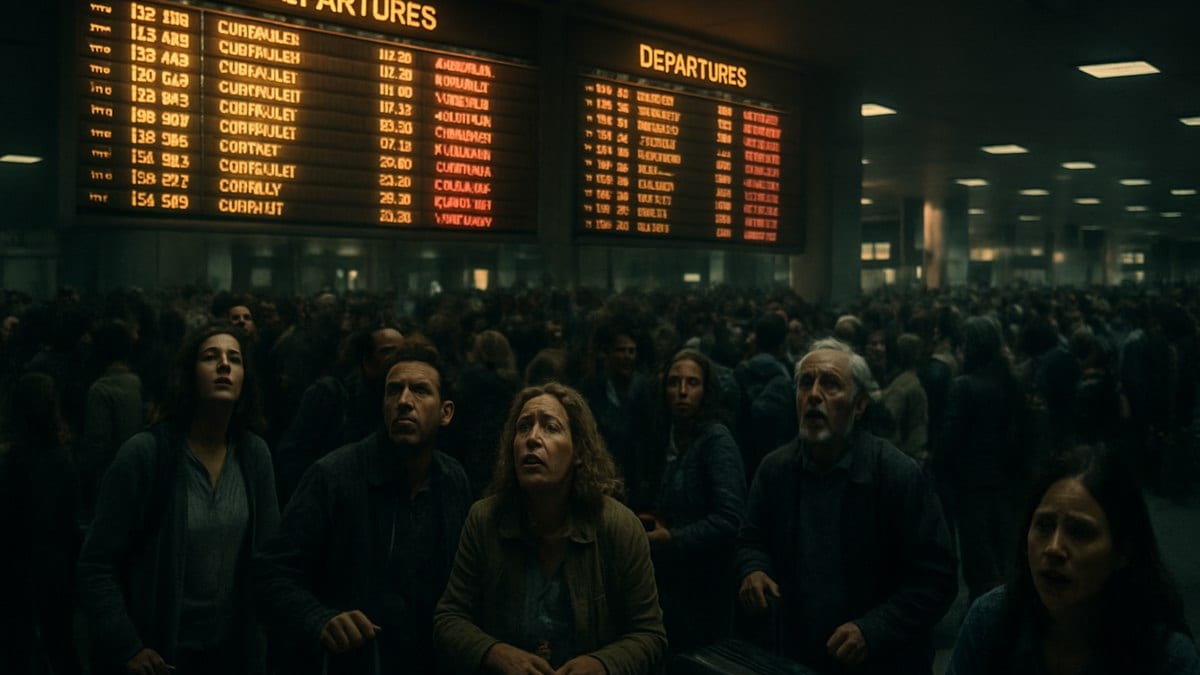
Thousands of air passengers have been left sleeping on terminal floors and scrambling for scarce rebooking options this April, as a series of strikes, storms and fuel supply worries converge to disrupt operations at Europe’s biggest hubs during one of the year’s busiest travel periods.
Get the latest news straight to your inbox!
Rolling Strikes Snarl Traffic in Germany, Italy and Spain
Labor disputes in key aviation markets have triggered widespread cancellations and long queues at airports in Germany, Italy and Spain since the start of April. Published coverage indicates that a major cabin-crew walkout at Germany’s largest carrier on 10 April led to hundreds of grounded flights at Frankfurt and Munich, with tens of thousands of passengers unable to depart as planned and aircraft and crews left out of position across the network.
Reports from industry-focused outlets describe Frankfurt Airport as the epicentre of the latest disruption, with departure boards showing clusters of cancellations on short and medium haul routes and knock-on effects for long haul services. Travellers attempting to connect through the hub have faced missed onward flights and lengthy rebooking queues, with some rerouted via secondary airports already under strain from the wider April travel surge.
In Italy, public information on industrial calendars shows that air traffic control and ground-handling actions around 10 April added further pressure at Rome Fiumicino and Milan Malpensa. Even limited, time-bound stoppages in the control tower and on the ramp forced airlines to trim schedules and re-time departures, contributing to delays that rippled across intra-European networks.
Spain has been contending with its own wave of airport staff strikes since late March, concentrated around the Easter peak and carrying into early April. Major tourist gateways such as Madrid, Barcelona and Málaga have reported periodic slowdowns at security and check-in, while handling strikes at some regional airports have produced clusters of cancellations that leave passengers waiting hours for alternative flights.
Weather and Network Strain Compound the Crisis
The industrial unrest has collided with adverse weather and an already stretched air traffic system, creating what aviation analysts describe as a perfect storm for disruption. Data aggregated by passenger rights platforms shows that on 5 and 7 April alone, Europe recorded well over a thousand delayed flights per day, along with dozens of outright cancellations, as thunderstorms, low visibility and airspace bottlenecks combined with staffing gaps.
Air travel monitoring services have highlighted Italy as a particular hotspot, with Rome Fiumicino and Milan Malpensa among the worst affected by weather-related delays in early April. According to publicly available figures, the two hubs together accounted for hundreds of late departures on 7 April, illustrating how quickly operational backlogs can build when ground teams, air traffic control and airline crews are all operating near their limits.
In Greece and southeastern Europe, severe weather and temporary airspace restrictions have similarly stretched schedules, contributing to a surge in reactionary delays, the cascading knock-on effects that occur when one late arrival pushes subsequent flights off schedule. These secondary disruptions have stranded passengers far from the original trouble spots, including those connecting through northern European hubs hours after the initial storms cleared.
Even routes between traditionally resilient hubs have shown signs of strain. Recent coverage from regional outlets noted that services linking Amsterdam Schiphol and London Heathrow experienced a significant interruption in early April before returning to normal operations, underscoring how quickly congestion and crew placement issues can flare on heavily used corridors when wider network pressures are present.
Fuel Supply Fears Hang Over Europe’s Busiest Airports
On top of the immediate disruption, airports and airlines are now grappling with a mounting jet fuel supply risk linked to geopolitical tensions in the Gulf. A letter circulated by Airports Council International Europe in early April, as reported by European business media, warned that disruptions to fuel shipments from the Middle East have already tightened supplies and driven prices to record highs at some hubs.
The correspondence, addressed to European policymakers responsible for energy and tourism, cautioned that without a significant and sustained reopening of key maritime chokepoints within weeks, a systemic jet fuel shortage across the European Union is possible. The warning singled out implications for short haul carriers that rely on dense point-to-point networks and high aircraft utilisation, with budget airlines highlighted as particularly exposed.
While most large airports continue to report normal fuelling operations in mid-April, some airlines have begun implementing fuel-saving measures and selective capacity adjustments. Industry observers note that reduced frequency on marginal routes, tighter turnarounds and increased use of fuel tankering strategies can all limit the flexibility needed to recover from sudden disruptions such as storms or strikes, increasing the likelihood that passengers will be stranded when things go wrong.
The fuel concerns intersect with a broader energy shock affecting Europe, where higher costs for aviation fuel are feeding into ticket prices and potentially constraining the ability of carriers to add buffer capacity ahead of the peak summer season. For passengers already dealing with cancellations in April, the prospect of more constrained networks later in the year is raising questions about how resilient Europe’s aviation system will be if current pressures persist.
Passenger Rights Tested as Terminals Fill Up
As queues lengthen and terminal floors fill with stranded travellers, attention is again turning to the rights of passengers under European Union regulations. Guidance published by consumer advocates and passenger rights services in recent days has stressed that, under the EU’s Denied Boarding and Compensation Regulation, carriers must generally offer meals, refreshments and hotel accommodation when travellers are stuck overnight because of delays or cancellations.
Compensation eligibility depends heavily on the cause of disruption. Strikes by airline staff, such as the walkout affecting flights at Germany’s main hubs, are generally treated as events within the airline’s control, meaning passengers whose flights were cancelled or significantly delayed may be entitled to compensation payments in addition to refunds or re-routing. By contrast, severe weather or certain air traffic control restrictions usually qualify as extraordinary circumstances, limiting carriers to providing care and alternative transport rather than cash payouts.
Legal specialists note that the latest wave of disruption is testing these frameworks in complex ways. Many passengers affected this month have experienced a mixture of causes, such as an initial weather delay followed by a missed connection on a route hit by a strike or capacity-driven cancellation. In such situations, the precise chain of events can determine whether compensation is payable, a distinction that can be difficult for travellers to untangle on their own amid the chaos of a busy terminal.
Travel organisations are advising passengers caught up in the April disruptions to keep boarding passes, booking confirmations and receipts for out-of-pocket expenses, and to document the reasons for disruption as communicated on airport displays or airline channels. These records can be important when submitting claims weeks later, particularly in cases where airlines and passengers dispute whether a delay resulted from extraordinary circumstances or operational decisions.
Summer Outlook Darkens as Structural Weaknesses Emerge
Behind the immediate chaos, recent reports from Eurocontrol and industry bodies point to deepening structural challenges in Europe’s aviation system. An analysis released in late 2025 found that average air traffic control delays on the continent had more than doubled over the previous decade, even though flight numbers had risen only modestly. The findings highlighted chronic staffing constraints, fragmented airspace management and slow progress on long-discussed reforms.
The April 2026 disruptions appear to confirm those concerns. With travel demand rebounding strongly and some hubs already operating near capacity, relatively small shocks are producing outsized consequences for passengers. A short strike window in one country, or a line of storms over a busy corridor, can quickly cascade into widespread cancellations and missed connections when there is little slack in schedules or staffing.
Aviation consultancies have warned that the combination of rising fuel costs, labour pressures and airspace bottlenecks could make the upcoming summer season particularly fragile. Carriers facing higher operating costs may be reluctant to maintain spare aircraft and crew on standby, reducing their ability to recover quickly from disruptions. At the same time, airports are under pressure to process growing passenger volumes without the generous staffing buffers that were common before the pandemic.
For now, stranded travellers at hubs such as Frankfurt, Rome, London and Amsterdam are dealing with the immediate reality of crowded terminals and uncertain departure times. But the pattern emerging in April suggests that, without significant investment and coordinated planning, episodes of mass disruption like this month’s could become an increasingly regular feature of European air travel rather than an exceptional shock.