

More news on this day
More than 60 flights to and from Argentina were cancelled or heavily modified on February 19 as a nationwide general strike disrupted air travel across the country, affecting services by Delta Air Lines, LATAM, Aerolíneas Argentinas and other carriers on key routes linking Buenos Aires, Córdoba, São Paulo, Lima, Santiago, Madrid and additional cities.
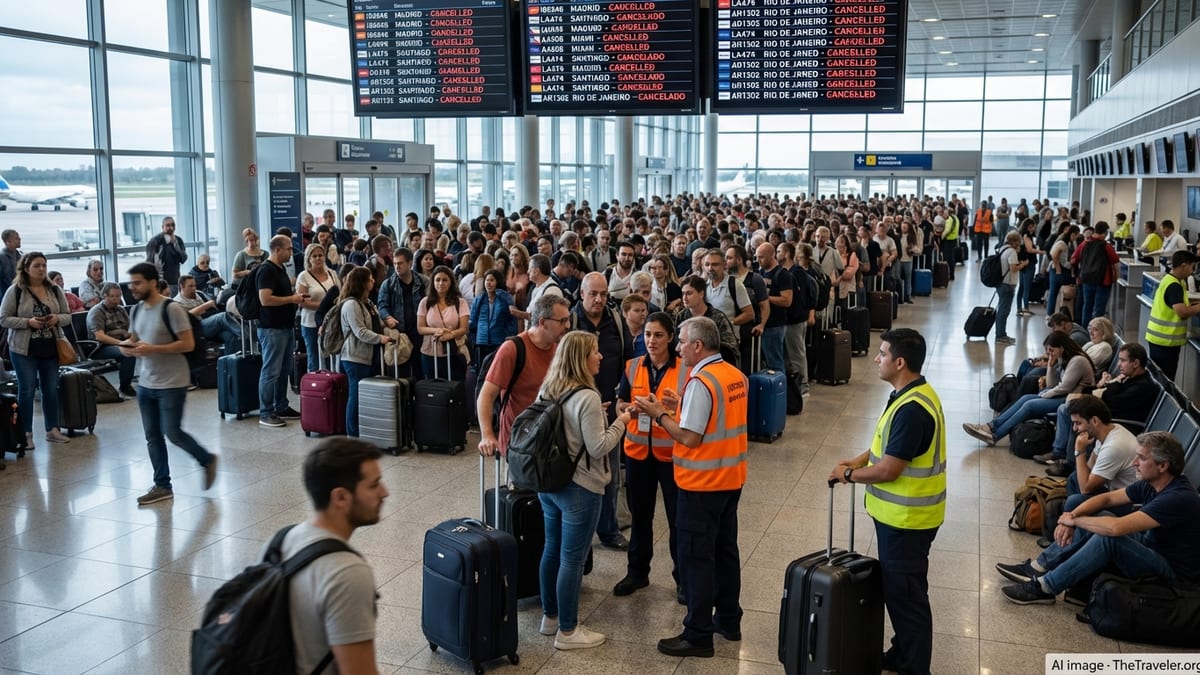
General Strike Halts Air Travel Across Argentina
The latest disruption was triggered by a 24 hour general strike called by Argentina’s main labor confederation, the CGT, in protest against the government’s proposed labor reform. The walkout coincided with a key lower house debate in Buenos Aires and quickly rippled through the country’s transport network, with aviation among the hardest hit sectors.
State owned flag carrier Aerolíneas Argentinas announced the cancellation of 255 flights across its network on February 19, affecting more than 31,000 passengers on domestic, regional and international routes. The airline estimated a direct financial impact of about 3 million US dollars, underscoring how a single day of industrial action can crush already tight margins in Latin America’s aviation market.
Although Aerolíneas Argentinas bore the brunt of the cancellations, the effects were not limited to the national carrier. Other airlines operating in Argentina, including low cost operators and foreign carriers, were forced to trim or reconfigure schedules in anticipation of reduced staffing levels on the ground and limited support services at major airports.
International Carriers Adjust Schedules to Buenos Aires
Major international airlines serving Buenos Aires also moved to protect their operations and passengers as the strike approached. LATAM Airlines Group confirmed schedule changes on services to and from Argentina on February 19, cautioning that some flights would operate on altered times or dates even if they were not fully cancelled. The group cited formal notifications from ground handling unions as a key factor in its decision to preemptively adjust operations.
For travellers booked on long haul routes linking Buenos Aires with cities such as São Paulo, Lima, Santiago and Madrid, the situation translated into a patchwork of cancellations, re timings and aircraft swaps. Delta Air Lines services between the United States and Buenos Aires were among those closely watched by passengers, with selected departures adjusted to avoid the peak of the disruption window and to maintain connectivity with onward transcontinental and regional banks.
At Buenos Aires’ main international gateway, Ministro Pistarini International Airport in Ezeiza, departure boards showed clusters of cancelled and rescheduled flights across multiple alliances. Airport authorities urged passengers to arrive with extra time and remain in close contact with their airline, noting that knock on effects were likely to continue beyond the formal end of the strike as operations gradually normalized.
Domestic and Regional Routes Hit Hardest
Within Argentina, domestic travelers faced the highest concentration of cancellations. Aerolíneas Argentinas reported that the majority of its grounded flights were internal services linking Buenos Aires with key cities such as Córdoba, Mendoza, Bariloche and Salta. The loss of these high frequency routes left many passengers with limited alternatives, particularly in regions where rail or long distance bus capacity is already stretched.
Regional services across the Southern Cone were also affected. Flights connecting Buenos Aires with São Paulo, Lima and Santiago saw schedule disruptions as crews, ground staff and airport support teams participated in or were indirectly affected by the strike. LATAM, which relies heavily on its South American network to feed long haul services, restructured some rotations and offered passengers the option to rebook without penalty within a defined travel window.
While a small number of international long haul operations managed to operate close to schedule, many did so with adjusted departure times or revised routings. Airlines prioritized flights with tightly timed connections at overseas hubs, seeking to minimize broader network disruption even as they reduced frequencies to Argentina for the day.
Passengers Face Queues, Rebookings and Limited Options
For travellers caught in the middle, the operational decisions translated into long queues at check in counters and help desks, as well as heavy online and call center traffic. Passengers reported receiving last minute notifications of cancellations and significant delays, followed by offers to rebook on later dates, reroute via alternative hubs or accept travel credits and refunds.
Airlines urged customers to avoid going to the airport without a confirmed reissued ticket and stressed the importance of monitoring email and mobile updates. Many carriers activated flexible travel policies, waiving change fees and fare differences for customers willing to move their trips away from the strike date, although availability on alternative flights remained tight on certain routes.
Hotels near key airports in Buenos Aires and Córdoba also saw a spike in same day bookings from stranded travellers. Local tourism operators warned that inbound visitors with tight itineraries, including cruise passengers and tour groups, were at particular risk of missing onward segments or prepaid excursions, adding additional cost and complexity to already disrupted journeys.
Longer Term Questions for Argentina’s Aviation Sector
The latest wave of disruptions has revived debate about the vulnerability of Argentina’s aviation system to industrial action and political volatility. Analysts note that repeated strikes in recent years have eroded confidence among both business and leisure travellers, who increasingly factor potential stoppages into their planning when choosing routes and carriers across South America.
For Aerolíneas Argentinas, the cancellations come at a delicate moment as the company seeks to improve its financial position while remaining a key tool of national connectivity. The carrier’s decision to dock pay for employees who joined the strike highlighted tensions between management, unions and the government over cost control, working conditions and the future role of the state in the aviation sector.
International airlines, including Delta and LATAM, are closely watching the policy environment as they calibrate capacity to and from Argentina. While demand for travel to Buenos Aires and regional destinations such as Córdoba remains robust, persistent uncertainty around labor relations and economic policy continues to complicate long term planning and fleet deployment decisions.
In the short term, industry observers expect residual delays and occasional tactical cancellations in the days following the strike as airlines reposition aircraft and crews. Travellers planning to fly to or from Argentina in the coming week are being advised to confirm their bookings regularly, allow extra time at the airport and consider travel insurance that covers strike related disruption.