


More news on this day
Thailand’s Suvarnabhumi Airport is accelerating its shift to automated border control, rolling out a powerful new wave of eGate expansions that aim to move far more passengers through Bangkok’s main international hub in less time.
Get the latest news straight to your inbox!
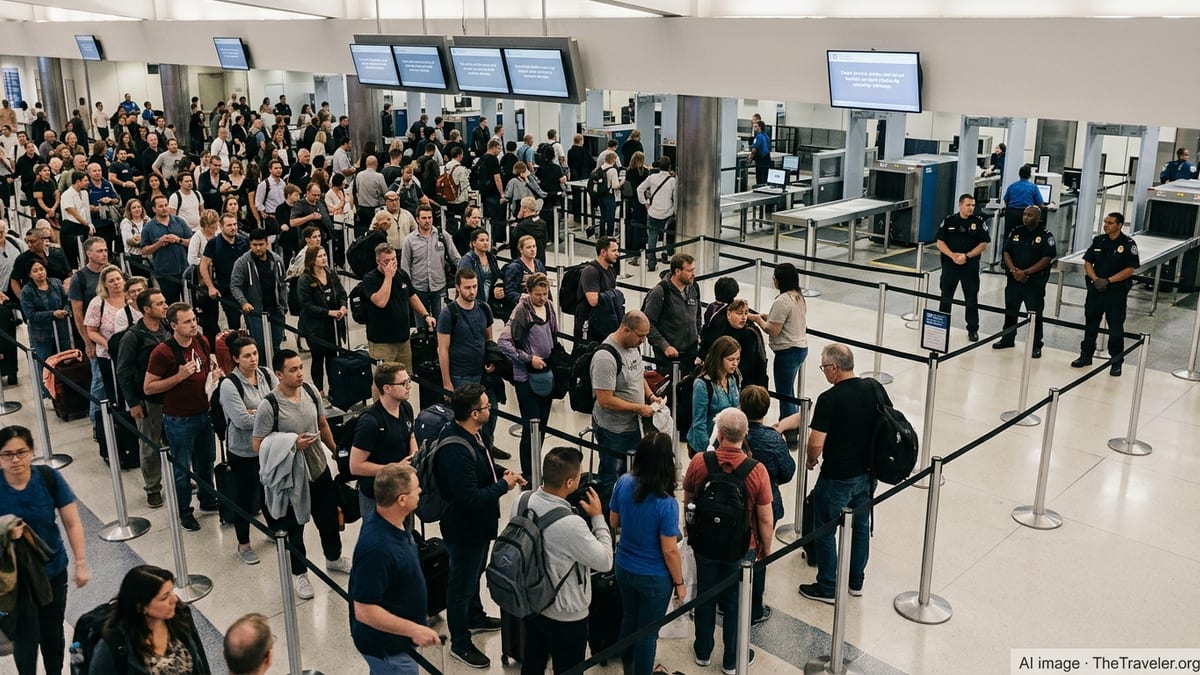
Major eGate Expansion Targets Peak-Hour Bottlenecks
Publicly available information from Airports of Thailand (AOT) and Thai media coverage indicates that Suvarnabhumi’s passport control is undergoing one of its most significant technology upgrades since the airport opened. Automated border control systems, often branded locally as “Auto Channel” or “autogates,” are being expanded and upgraded to handle many more passengers per hour at departure and, in the next phase, at arrival checkpoints.
Earlier deployment of Auto Channel facilities focused primarily on Thai nationals, but since late 2023 foreign e-passport holders from dozens of countries have been able to use departure eGates at Suvarnabhumi. Reports from travellers and local coverage describe a rapid build-out of additional lines through 2024, with new automated lanes opening beside traditional manned counters and priority lanes.
Thai-language news reports from early 2024 describe a government push to ease long queues that formed during holiday peaks. Measures included adding manual immigration staff and installing dozens of extra auto channels by mid-year, with the aim of cutting processing times and reducing the risk of bottlenecks when outbound traffic spikes to 5,000–6,000 passengers per hour.
Corporate disclosures from AOT’s strategy and sustainability documents further show that automated border control is a core element of a wider “Smartest Airport Operation” roadmap running through 2027. The agency positions the upgraded eGate network as critical infrastructure to support Thailand’s ambition to rank among the world’s top 20 airports and to grow Suvarnabhumi’s annual capacity well beyond its pre-pandemic design.
From 5,000 to 10,000 Passengers Per Hour at Passport Control
Figures released through AOT communications highlight the scale of the current expansion. One program description notes that the Auto Channel investment is designed to raise passport control capacity from around 5,000 passengers per hour to approximately 10,000 passengers per hour, effectively doubling throughput at peak times for eligible travellers.
This upgrade builds on an initial wave of automatic lanes that came online in the departure hall in December 2023. According to information shared by Thailand’s tourism promotion agencies and immigration-related announcements, the system allows passengers with compliant e-passports to clear exit checks in a matter of seconds, using biometric verification and electronic passport scans instead of manual stamping.
AOT’s digital-technology briefing materials describe the Automated Border Control system as tightly integrated with other airport platforms, including biometric identification tools and passenger validation systems. This integration allows airlines and airport operators to verify travel documents electronically, reducing the reliance on repeated manual checks at different points in the departure journey.
Recent company reporting on Suvarnabhumi’s expansion program also ties the autogate build-out to larger capacity goals. Official statistics show that the airport handled more than 50 million passengers in 2023 and has continued climbing through 2024, even though its original terminal was designed for around 45 million passengers a year. With traffic now rebounding, doubling automated passport processing capacity is presented as a necessary step to keep queues manageable as volumes grow.
Smarter Infrastructure for Thailand’s Aviation Hub Strategy
The eGate program at Suvarnabhumi is part of a broader infrastructure drive intended to position Thailand as a leading aviation hub in Asia. Government policy statements in 2024 outlined ambitions to lift combined capacity across AOT’s airports to more than 150 million passengers per year, with Suvarnabhumi at the center of that network.
In addition to autogates, Bangkok’s main airport is rolling out a suite of smart systems, from upgraded common-use check-in platforms and self-service bag drops to an automated people mover connecting the main terminal with the SAT-1 satellite concourse. A third runway is scheduled to scale up operations progressively, increasing the number of flights Suvarnabhumi can handle each hour in the coming years.
AOT’s published digital roadmap highlights automated border control alongside baggage reconciliation and biometric tools as one of the pillars of a “smart airport” ecosystem. The strategy emphasizes using real-time data and automation to shorten processing times at every step, from check-in to security and boarding, while still complying with security and immigration requirements.
For travellers, the impact is felt most immediately at the immigration hall. Reports suggest that as more eGates come online and eligibility is widened, a growing share of passengers will be able to bypass traditional counters altogether, making Bangkok a more attractive transit point on busy regional routes.
Who Can Use Suvarnabhumi’s New eGates Today
Eligibility for Suvarnabhumi’s eGates is evolving as the system expands. Official airport guidance on the Automatic Channel notes that passengers must hold a valid e-passport and meet specific criteria, such as possessing an appropriate visa or being from a country that qualifies for visa exemption or visa-on-arrival schemes.
As of late 2023 and 2024, information shared by Thailand-focused travel resources and immigration updates indicates that Thai nationals with biometric passports, as well as foreign travellers from a broad group of countries, are able to use departure eGates once their passports have been registered and verified. In many cases, manual counters are still required on first entry or for complex visa situations, but subsequent exits can often be processed automatically.
Travel forums and user reports provide additional on-the-ground detail. Passengers transiting through Suvarnabhumi frequently describe departure processing at the eGates taking only a few minutes even at peak times, contrasting with earlier experiences of extended queues stretching across the immigration hall. Others note that some lanes may still be reserved for certain nationalities or passport types as the system continues to be calibrated.
Plans reported in late 2024 and early 2025 discussions around Thailand’s upcoming electronic travel authorization suggest that authorities intend to extend automated processing further to international arrivals in the next phase. Implementation timelines are not yet fully defined, but public commentary by aviation and tourism bodies points to a gradual rollout of arrival eGates at Suvarnabhumi and other major Thai airports once technical and policy frameworks are in place.
What Faster Border Control Means for Travellers
For the tens of millions of travellers who pass through Suvarnabhumi each year, the expanding eGate network is reshaping the airport experience. Shorter immigration queues reduce overall connection times and provide more predictable margins for tight transfers, a key factor for airlines considering Bangkok as a regional hub.
Travel-industry coverage from major trade events in 2024 notes that AOT has been promoting these digital upgrades as part of a renewed pitch to airlines and tour operators. With leisure and business traffic recovering across Asia, smoother border control is seen as essential to maintaining competitiveness against other regional hubs such as Singapore and Seoul, which already operate extensive automated immigration systems.
At ground level, passengers connecting through the new SAT-1 satellite and main terminal complex are beginning to encounter a more continuous, self-service journey: digital check-in, automated bag drops, biometric identity checks, and now expanded eGates at passport control. While traditional counters and manual inspections remain in place, particularly for special cases and spot checks, the direction of travel is clearly toward automation for the majority of routine movements.
As Thailand advances work on its electronic travel authorization and continues installing eGates at additional airports including Don Mueang, Phuket and Chiang Mai, Suvarnabhumi’s upgraded border control systems are likely to serve as the template. For international visitors, that means a future in which entering and leaving the country increasingly involves a quick scan and a walk through an automated gate, rather than a long wait at a desk.
Suvarnabhumi Airport – Automatic Channel information
TAT Newsroom – AOT hub strategy and Auto Channel capacity plans