

More news on this day
The Tanzania–Zambia Railway Authority has restarted cross-border passenger trains between Dar es Salaam and New Kapiri Mposhi, reinstating a vital regional link whose suspension in 2024 disrupted travel, trade and tourism across the heart of southern and eastern Africa.
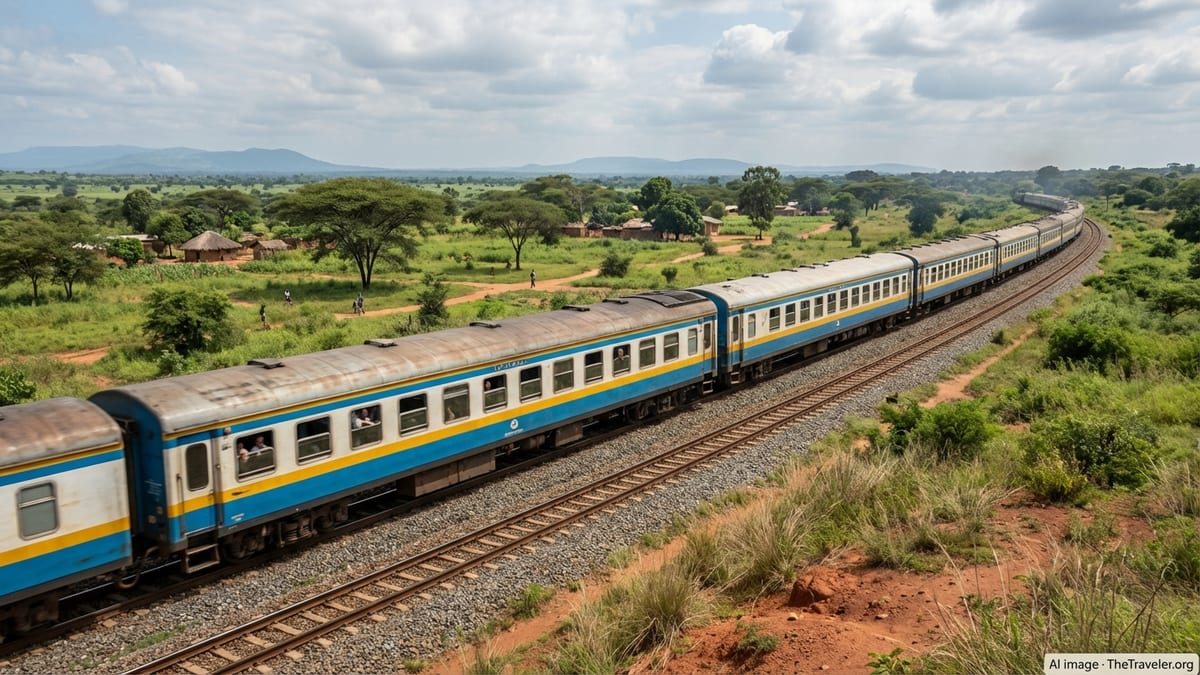
Passenger Trains Resume After Nearly Two-Year Suspension
TAZARA formally brought back its international passenger service on February 10, 2026, when the Mukuba train once again began running between Tanzania’s Indian Ocean hub of Dar es Salaam and New Kapiri Mposhi in central Zambia. The move restores a direct rail link that had been suspended since June 2024 because of technical and operational difficulties, including an ageing fleet and chronic maintenance needs.
The relaunch follows a comprehensive reorganisation of passenger operations designed to match services with current capacity while keeping the line open for the communities and businesses that depend on it. TAZARA executives describe the return of cross-border trains as a reaffirmation of the railway’s founding mandate: to promote regional mobility, trade and people-to-people contact across a corridor that connects landlocked mining centres to a deep-water seaport.
Under the revised operating plan, the Mukuba has been positioned as the core long-distance cross-border service, while some secondary and overlapping services have been scaled back. Officials argue that concentrating scarce locomotives and coaches on this flagship train should allow them to offer a more predictable timetable and a more reliable experience for passengers.
New Weekly Timetable Blends Express and Local Demand
The revived Mukuba service now runs once a week in each direction, with departures from New Kapiri Mposhi every Tuesday afternoon and from Dar es Salaam every Friday evening. The schedule has been harmonised to serve both international travellers journeying the full 1,860 kilometres and local passengers who rely on the train for shorter hops between rural towns where road infrastructure is weak or non-existent.
In practice, that means the train operates at different speeds along different sections. Between New Kapiri Mposhi and Kasama in Zambia, and again between Nakonde on the border and Msolwa in Tanzania, Mukuba runs as a limited-stop express, trimming journey times along stretches where other transport options are more readily available. Elsewhere on the route, including heavily used rural segments, it functions as an all-stations ordinary service, stopping frequently to serve communities that have few realistic alternatives.
TAZARA managers say the reduced frequency is a deliberate trade-off that allows them to marshal enough rolling stock to run fuller, more dependable trains, rather than spreading locomotives and coaches thinly across multiple lightly used services. The goal, they stress, is not simply to move trains but to rebuild passenger confidence in a corridor that has struggled with disruptions in recent years.
Regional Travel, Tourism and Trade Get a Timely Lift
The restoration of the cross-border service is expected to provide an immediate boost to overland travel between Tanzania and Zambia, especially for budget-conscious passengers, small traders and tour operators who build itineraries around rail journeys. For domestic and regional tourists, the Mukuba route offers access to a string of natural attractions, from the Udzungwa Mountains and Ruaha ecosystems in Tanzania to Zambia’s northern highlands and onward road links to the Copperbelt and major national parks.
Tourism stakeholders say the predictability of a weekly departure in each direction makes it easier to package multi-country trips that combine rail, safari and cultural tourism. The railway corridor itself has become part of the story, drawing visitors interested in the line’s Cold War history, its Chinese–African construction legacy and its role in supporting liberation movements and post-independence regional integration.
Beyond leisure travel, the revived trains promise to ease cross-border movement for traders who transport textiles, agricultural produce and household goods between markets along the line. While freight remains a separate business segment, a functioning passenger service improves the overall resilience of the corridor and can help smooth logistics for small-scale commerce that depends on both people and goods being able to move consistently.
Udzungwa Shuttle and Local Mobility in Tanzania
Alongside the cross-border restart, TAZARA has also reinstated its Udzungwa local service in southern Tanzania, which resumed operations on February 12, 2026. Running twice a week between Kidatu and Makambako, the shuttle connects communities in the Morogoro and Njombe regions with each other and with the wider TAZARA network, filling gaps where road access can be slow, costly or unreliable, particularly in the rainy season.
The Udzungwa train plays an important role in domestic tourism as well, giving visitors a rail-based gateway to Udzungwa Mountains National Park and other nature reserves that lie near the line. For local residents, however, the shuttle is first and foremost a lifeline for reaching schools, clinics and markets, and for maintaining family and business ties across long distances.
By pairing the Mukuba’s international reach with the Udzungwa shuttle’s local focus, TAZARA aims to preserve a layered network of services that reflects how people actually travel along the corridor. Officials argue that keeping these regional and local trains running, even on leaner schedules, is essential to ensuring that the benefits of the railway’s revival are felt not only in capital cities and mining hubs but also in smaller towns and rural districts.
Modernisation Drive Seeks Long-Term Reliability
The current service revival is unfolding against the backdrop of a far larger modernisation effort set to reshape TAZARA over the coming decades. Tanzania and Zambia have agreed a long-term concession framework with China Civil Engineering Construction Corporation, the original builder of the line, paving the way for an estimated 1.4 billion US dollars in investment to rehabilitate track, signalling and rolling stock and to introduce new locomotives and passenger coaches.
Authorities on both sides of the border say the influx of capital and expertise is intended to transform TAZARA from a struggling legacy railway into a competitive regional transport corridor linked to the port of Dar es Salaam and to mining and agricultural regions in Zambia and neighbouring countries. Projected gains include higher speeds, greater capacity and lower operating costs, which in turn could support more frequent and more comfortable passenger services along with expanded freight operations.
The revamp also carries symbolic weight as TAZARA marks half a century of operations. Originally built in the 1970s as a political and economic lifeline for a landlocked country seeking alternatives to apartheid-era trade routes, the railway is now being recast as a 21st-century connector for the African Continental Free Trade Area. The resumption of cross-border passenger trains in early 2026 offers a tangible preview of what a revitalised corridor could mean for everyday travellers: safer, more reliable and more affordable journeys that once again bind Tanzania, Zambia and their neighbours more closely together.