


More news on this day
Germany’s entire long-distance and regional rail network ground to a sudden halt late Tuesday after a failure in a critical communications system, stranding thousands of passengers at stations across the country and triggering knock-on disruptions to European rail connections.
Get the latest news straight to your inbox!
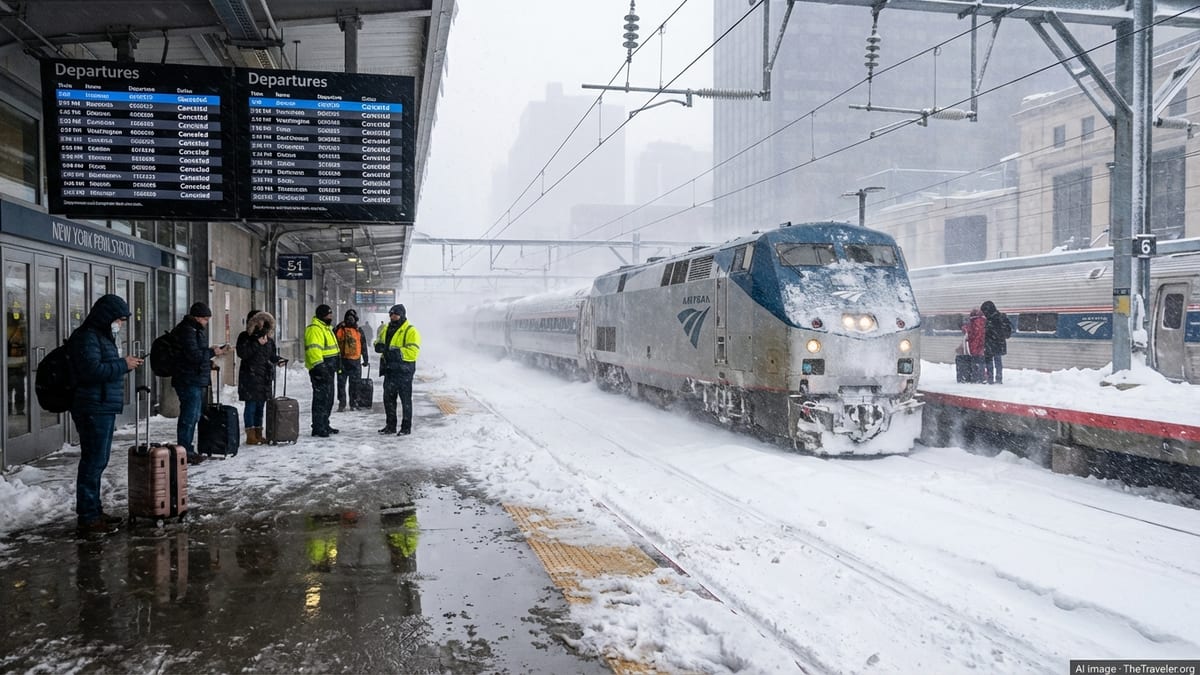
Nationwide standstill after GSM-R outage
According to published coverage from multiple outlets, the disruption began late on the evening of June 23, when the GSM-R digital radio system used for internal railway communications failed across large parts of Germany. The outage affected operational contact between train drivers and control centers, a safety-critical requirement for train movements on the national network.
Publicly available information indicates that trains were ordered to stop wherever they were, with services on the country’s dense long-distance and regional network coming to a complete standstill. Reports describe packed concourses and long lines at major hubs including Berlin, Frankfurt and Munich as evening services were frozen in place.
The main operator, Deutsche Bahn, reported that rail traffic was being gradually restarted roughly 90 minutes to two and a half hours after the first alerts, once an emergency communication system was activated. Even as lines reopened, passengers continued to face significant delays and cancellations as the network slowly recovered from the sudden shutdown.
Coverage in German and international media notes that it was one of the most extensive rail interruptions in recent years caused by a purely technical fault, rather than by storms, strikes or police operations, which more commonly disrupt services.
Thousands of travelers stranded across Germany and beyond
Reports from national broadcasters, regional outlets and international news agencies highlight that the abrupt halt left thousands of travelers stranded at stations and in trains that were unable to proceed. In some cases, passengers were asked to remain on board stationary trains for extended periods, while others were advised to disembark and seek alternative transport or overnight accommodation.
At major intercity hubs, public information displays showed long lists of delayed and canceled services, with travelers attempting to reroute journeys at ticket counters and information desks. Social media posts and local coverage describe crowded platforms, families sleeping in waiting areas and business travelers struggling to reach early-morning appointments.
The breakdown also had an impact beyond Germany’s borders. Published reports note that international services connecting Germany with neighboring countries, including cross-border high-speed and regional trains, were disrupted or suspended during the outage window. This created a ripple effect for travelers across Central Europe who rely on German routes as key transit corridors.
By the following morning, rail traffic was reported to be running largely as scheduled again, but residual delays and rolling stock displacement continued to affect timetables. Travelers on early services encountered last-minute changes, shorter formations and occasional cancellations as the system worked through the backlog created by the shutdown.
Preliminary cause linked to maintenance on key component
Subsequent reporting by German media and specialist outlets indicates that Deutsche Bahn has linked the outage to a technical problem that arose during scheduled maintenance on a key component of the GSM-R network. Early assessments point to an issue that prevented the communication system from functioning correctly nationwide, triggering strict safety protocols that require trains to stop when radio contact is lost.
In background explanations, transport and technology publications describe GSM-R, or Global System for Mobile Communications Railway, as a dedicated digital network that underpins voice communication between drivers, dispatchers and traffic control centers. The system is designed with redundancy and backup layers so that a localized failure does not normally paralyze an entire national network.
However, publicly available analysis suggests that this incident affected not only the primary GSM-R infrastructure but also an intended fallback, reducing the ability to maintain safe train movements. As a result, rail traffic authorities had no option but to halt services until an emergency solution could be deployed and system stability verified.
Technical specialists quoted in published coverage note that the detailed root cause analysis is still under way. Investigators are expected to examine why maintenance on a single component could cascade into a nationwide communications failure and which safeguards did not operate as intended.
Passenger support, compensation and ongoing criticism
Reports indicate that Deutsche Bahn introduced a range of short-term measures to assist affected travelers once the scale of the disruption became clear. At major hubs, some trains were kept at platforms overnight as “hotel trains” so passengers could stay on board, while staff distributed information about rebooking options. According to media coverage, the company offered vouchers for taxis and hotel stays in certain cities, and advised passengers to claim refunds and compensation under existing regulations.
Despite these measures, many passengers reported confusion and frustration over limited real-time updates, crowded help desks and difficulty securing last-minute accommodation in larger cities. Images and descriptions from German and international outlets depict long queues at service counters and passengers searching their phones for alternative ways to complete their journeys.
The incident has intensified ongoing criticism of the reliability of Germany’s rail infrastructure. Commentaries in German regional and national media point out that passengers have already been contending with frequent delays, construction-related disruptions and previous episodes involving IT or communications glitches. Politicians at regional level have described the total standstill caused by a single technical malfunction as a new low point for operating quality on the country’s flagship rail system.
Consumer groups and passenger advocacy organizations cited in published reports are calling for clearer communication protocols during major disruptions and more robust contingency planning, arguing that travelers should not be left without timely, comprehensible information when critical systems fail.
Questions over resilience of Europe’s rail hub
Beyond the immediate disruption, analysts say the outage raises broader questions about the resilience of Germany’s rail network, which forms a central spine of European passenger and freight traffic. With tens of thousands of trains operating on an average day, even a brief system-wide shutdown can ripple across neighboring countries and logistics chains.
Background reporting notes that the rail operator is already undertaking large-scale modernization projects after years of underinvestment. These works, which include track renewals, signaling upgrades and station improvements, are aimed at increasing capacity and reliability, but in the short term have contributed to frequent timetable changes and bottlenecks.
Specialist transport coverage suggests that the GSM-R incident is likely to accelerate discussions about accelerating investment in more modern communications technologies and multi-layered backup systems. Some experts are highlighting the need to ensure that maintenance practices, system design and emergency procedures are robust enough to prevent a repeat of a nationwide shutdown caused by a single point of failure.
As investigations continue, the episode has become another test of public confidence in long-distance rail as a dependable alternative to air and road travel in Europe’s largest economy. For travelers who spent the night of June 23 on platforms, in stranded trains or searching for hotel rooms, the expectation now is that lessons from the failure will translate into tangible improvements in how future disruptions are prevented and managed.