

More news on this day
Air travel across Texas entered a turbulent stretch this week as nearly 400 flight delays were recorded across major airports in Dallas, Houston, and San Antonio, creating long waits, missed connections, and fresh concerns about how fragile the nation’s aviation network remains heading into the busy spring travel period.
Get the latest news straight to your inbox!
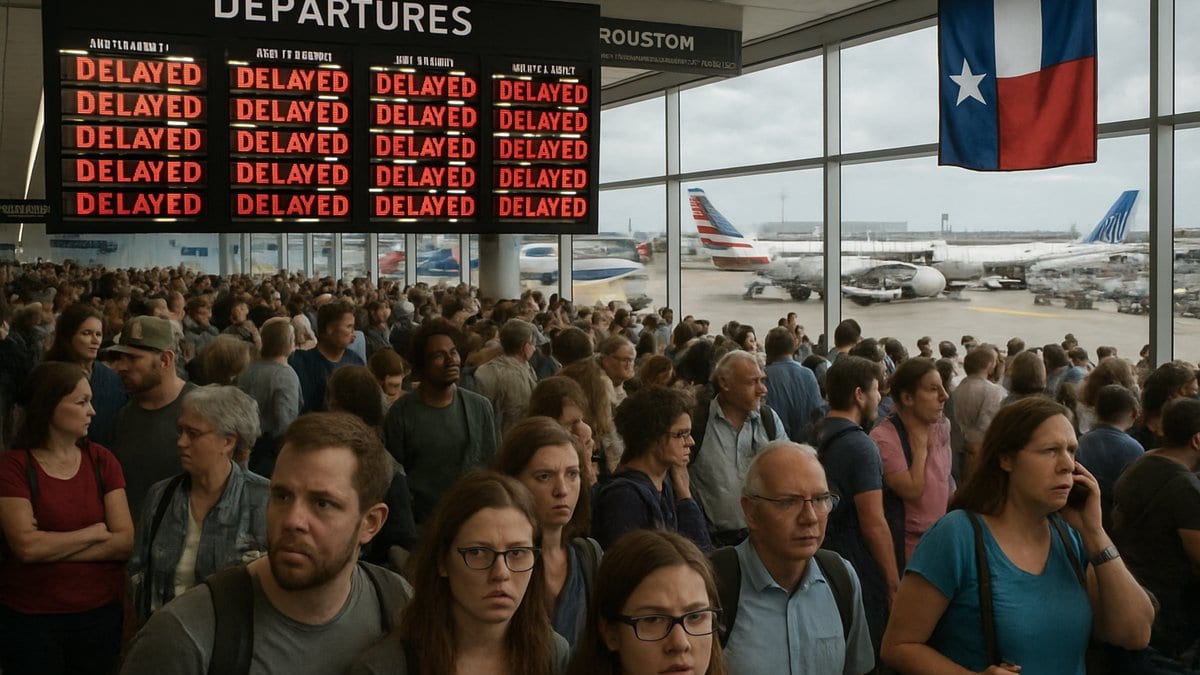
Image by nomadlawyer.org
Dallas-Fort Worth Emerges as the Epicenter of Disruptions
Publicly available flight-tracking data and industry reports indicate that Dallas-Fort Worth International Airport has borne the brunt of the current disruption, logging the single largest share of delays in the Texas corridor. One recent operational snapshot showed well over 250 delayed flights in a single day at DFW, alongside a smaller number of cancellations, as tight schedules collided with weather and air-traffic constraints.
The disruptions have not been tied to a single catastrophic event, but rather a combination of residual weather issues, congested airspace, and ripple effects from earlier storms across the central United States. Aviation analysts note that Dallas-Fort Worth, as one of the busiest hubs in the country, routinely runs near capacity, meaning even modest slowdowns in arrivals or departures can quickly cascade into widespread delays.
Travel industry coverage further suggests that the Dallas delays have had an outsize impact on passengers far beyond North Texas. With DFW serving as a central connector for routes spanning both coasts, Europe, and Latin America, missed connections in Dallas have forced many travelers into rebookings, overnight stays, and complex rerouting across the national network.
For travelers, the practical effect has been longer gate holds, last-minute schedule changes, and a growing sense of uncertainty around departure times. Online forums have been filled with accounts of aircraft pushed back from gates only to wait on taxiways, as flight crews contend with congestion and staggered arrival slots into the Dallas area.
Houston Delays Add Pressure to an Already Strained System
Houston’s George Bush Intercontinental Airport has added another major pressure point in the current Texas flight crisis, with recent published tallies showing dozens of delays in a single day and a limited number of cancellations. The issues in Houston arrive on the heels of intense scrutiny over security wait times, where a wave of staffing shortages within federal screening operations had already left travelers facing lines that stretched through terminals earlier in March.
According to recent local coverage, security wait times at Houston’s main international airport have begun to improve as additional personnel return to work, but the flight schedule has remained vulnerable. High passenger volumes, aircraft and crew rotations funneling through Houston, and thunderstorms moving across the region have all contributed to a pattern of rolling disruptions.
Industry analyses describe how a delay in one direction can reverberate through multiple subsequent legs, particularly at a hub like Houston where connecting traffic is heavy. A late inbound aircraft arriving from the East Coast or Central America can lead to outbound flights leaving behind connecting passengers, tightening turnaround windows, or in some cases forcing ground delays as crews reset flight duty limits.
The result has been a sizable contribution from Houston to the overall figure of roughly 395 delays across the three major Texas markets, turning what might otherwise have been localized challenges into a statewide air travel headache.
San Antonio Feels the Ripple Effects
While Dallas and Houston account for the largest cluster of delays, San Antonio International Airport has also felt the impact, underscoring how regional gateways can be pulled into broader operational crises. Compared with the major hubs, San Antonio has recorded a smaller but still significant number of delayed departures and arrivals as disruptions from connecting hubs filter down the network.
Many flights into and out of San Antonio are tied directly to larger hubs in Dallas and Houston. When those hubs experience congestion or schedule cuts, regional routes are often among the first to see adjustments, whether in the form of rolling delays, equipment changes, or in some cases consolidation of frequencies. This dynamic has contributed to an uneven experience for travelers in San Antonio, where some flights have operated near schedule while others have seen multi-hour disruptions.
Travelers heading from San Antonio to other parts of Texas or to national hubs have reported tighter connection windows and a greater risk of missed onward flights. Even when local weather conditions are relatively calm, delays inherited from upstream hubs can leave aircraft arriving late to the gate, compressing ground times and pushing back subsequent departures.
The strain on San Antonio’s schedule illustrates how even secondary airports are vulnerable when major hubs in the same state encounter simultaneous turbulence in their operations.
Weather, Security Strains, and Record Demand Converge
The current wave of delays in Texas is unfolding against a broader backdrop of stressed aviation infrastructure and unusually strong demand. Forecasts for the March and April travel window indicate record passenger volumes across the United States, with national trade groups projecting tens of millions more travelers than during the same period last year.
At the same time, Texas has been in the path of unsettled weather patterns that have included severe thunderstorms across North and Central Texas and the threat of additional storm systems building to the north and west. Meteorological outlooks highlight the risk of heavy rain, lightning, and strong winds around key travel days, creating conditions that can slow departures, lengthen arrival spacing, and at times halt operations entirely for safety reasons.
Layered atop the weather and demand challenges are operational strains linked to security staffing and federal funding uncertainty. Recent national coverage has detailed how earlier staffing shortfalls in airport security contributed to hours-long waits in Houston and other hubs, disrupting passenger flows and compressing the time available for boarding and pre-departure checks. Even as some of those bottlenecks ease, airlines and airports are still working through the residual impact on schedules and crew assignments.
Aviation analysts point out that, when demand runs high and spare capacity is limited, there is little slack in the system to absorb even modest shocks. As a result, a single storm cell over North Texas or a backup at security checkpoints in Houston can set off a chain reaction that ripples across the entire Texas network and beyond.
What Travelers Can Expect in the Days Ahead
With the spring travel period ramping up and more unsettled weather in the forecast, reports suggest that Texas travelers should brace for continued pockets of disruption, even if not every day reaches the level of nearly 400 reported delays statewide. Airlines are attempting to keep schedules intact, but any renewed bout of storms or air-traffic congestion could quickly revive the pattern of rolling hold-ups.
Public guidance from airlines and airport operators emphasizes the importance of checking flight status frequently, arriving early at the airport, and building extra time into connections, particularly when routing through Dallas-Fort Worth or Houston. Travelers are also being encouraged, where possible, to take advantage of flexible rebooking policies that have been introduced during recent waves of disruption, especially when severe weather is in the forecast.
For now, the Texas flight crisis serves as a pointed reminder of how interconnected the aviation system has become. A delay counter tallying 395 late departures and arrivals is not only a local inconvenience; it is a signal that a complex network of aircraft, crews, and passengers is operating with minimal room for error.
As airlines, airports, and federal agencies move to stabilize operations, travelers across Dallas, Houston, and San Antonio are likely to face a period where preparation, flexibility, and patience remain as essential as a boarding pass.