


More news on this day
San Francisco International Airport is entering a six month period of runway construction and new federal operating limits that are expected to cut arrivals, extend delays and complicate spring and summer travel for millions of passengers.
Get the latest news straight to your inbox!
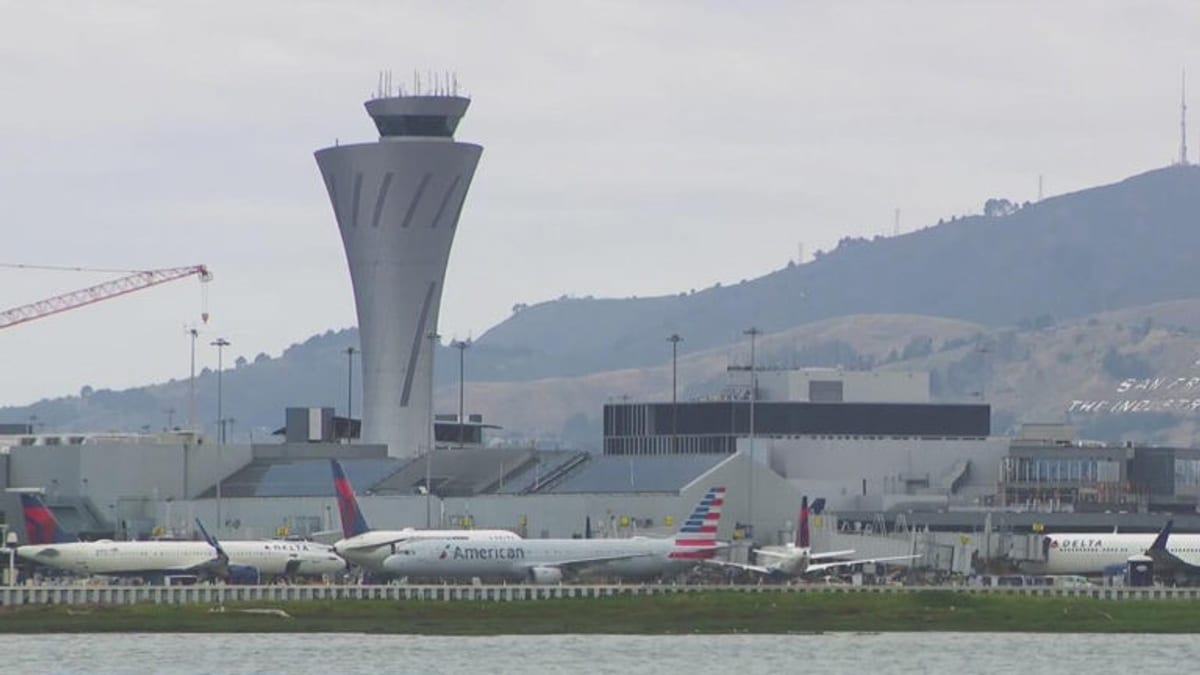
Image by MSN
Runway 1R closure cuts north south capacity
Publicly available information from San Francisco International Airport shows that Runway 1 Right, one of the airport’s two north south runways, closed on March 30, 2026, for a major repaving and taxiway improvement project scheduled to last six months. The work, budgeted at about 180 million dollars with significant federal funding support, is intended to renew pavement, upgrade lighting and markings, and reduce bottlenecks on adjacent taxiways.
Construction plans indicate that during the project all traffic that would normally use Runway 1 Right will be shifted to the west side of the airfield. The parallel strip, Runway 1 Left, is being converted into a temporary taxiway rather than used for takeoffs or landings, a choice airport planning documents describe as a way to relieve ground congestion around the busy departure corridors to the west.
Airport forecasts released ahead of the closure suggested that, based on historical traffic and weather patterns, less than 10 percent of all flights could be delayed specifically because of the runway work, with most of those delays clustering around peak morning and evening banks. However, those projections were modeled before new federal rules further reduced the number of planes allowed to arrive each hour.
The north south closure also limits the airport’s flexibility when strong winds or low ceilings force shifts away from its preferred west facing configuration. Industry analyses note that in past construction seasons at San Francisco International, unusual wind patterns on days when one runway pair was unavailable have led to disproportionately large delays compared with the share of operations directly affected by construction.
FAA trims hourly arrivals and restricts parallel approaches
According to published coverage of recent federal announcements, the Federal Aviation Administration has imposed a new permanent cap on arrivals at San Francisco International while tightening rules on how closely aircraft can operate on the airport’s parallel runways. The changes came after the agency reassessed so called side by side landing procedures on the closely spaced 28 Left and 28 Right runways that handle the bulk of the airport’s traffic.
Reports indicate that San Francisco’s previous ceiling of about 54 arrival operations per hour has been reduced to approximately 36, a cut of one third that takes effect as the runway construction is ramping up. The new policy effectively ends routine simultaneous independent approaches under many conditions on the 28 pair, a signature feature of flying into San Francisco that had allowed two jets to appear to touch down almost in unison.
Federal documents and aviation trade reporting describe the rule change as a site specific response to the combination of tight runway spacing and complex Bay Area airspace, which is shared by Oakland and San Jose airports as well as several smaller fields. The FAA characterizes the limits as safety driven measures rather than a temporary congestion program, meaning the arrival cap is expected to remain in place even after Runway 1 Right reopens in early October.
The revised procedures apply on top of long standing weather related constraints that have always slowed traffic when visibility falls below thresholds required for simultaneous approaches. Under the new regime, those restrictions become a baseline condition instead of an exception, reshaping how airlines schedule and recover operations at one of the West Coast’s busiest international hubs.
Forecasts point to higher delay rates through October
Before the federal changes were announced, planning estimates from the airport suggested that the six month runway closure would push delay rates to roughly the low double digits, a modest increase over typical seasonal patterns. Since the arrival cap was disclosed, more recent analyses cited in local and national coverage indicate that roughly one quarter of arriving flights may now face delays of 30 minutes or more during the construction period.
That projected jump reflects how tightly many airline schedules at San Francisco International are built around high density banks of transcontinental and transpacific flights. With fewer arrival slots available per hour, even a brief disruption from coastal fog, low clouds or en route congestion can extend into a queue that takes hours to clear.
Publicly available timetables show that westbound transcontinental flights arriving midmorning and evening, along with shorter haul feeder flights that connect into long haul departures to Asia and Europe, are particularly exposed. When those inbound flights miss their scheduled arrival windows, onward journeys are more likely to be rescheduled, reaccommodated or, in some cases, canceled if there is no longer enough time to complete the turn.
The result, industry analysts suggest, is that passengers can expect more frequent gate holds, airborne holding patterns and last minute schedule adjustments through at least October 2, the target date for reopening Runway 1 Right. Because the FAA’s rule change is permanent, some of the operational pressure created during the construction window may persist even after all four runways are back in service.
Airlines adjust schedules as passengers brace for disruption
Airline statements summarized in business and travel media indicate that carriers with major operations at San Francisco International are still evaluating how to respond to the combination of construction and federal restrictions. United Airlines, which accounts for roughly half of the airport’s passenger traffic, has acknowledged the potential for increased delays tied to the project and is reviewing schedules for possible adjustments.
Alaska Airlines and other carriers with smaller but still significant footprints at the airport have reported fluctuating day to day impacts as the new environment settles in. Early in the runway closure period, some days have seen clusters of delays, while others have operated relatively normally, illustrating how weather and demand can amplify or blunt the effect of the new constraints.
Network planning experts quoted across several outlets note that airlines have a limited set of levers to pull when a key hub suddenly loses capacity. Over the coming months, travelers may see incremental schedule trims in peak hours, upgauging to larger aircraft on select routes to preserve seat counts, or the shifting of some connections to other West Coast gateways where runway capacity is less constrained.
At the same time, traveler advocates are urging passengers to build more buffer time into itineraries that connect through San Francisco, particularly for long haul or last flight of the day segments. Data from previous construction seasons at the airport suggest that early morning departures are often the most reliable, while late afternoon and evening periods can be more vulnerable once the day’s disruptions have accumulated.
Regional and long term implications for Bay Area air travel
The combined effect of runway construction and new federal operating rules is likely to ripple beyond San Francisco International itself. Aviation analysts point out that nearby Oakland and San Jose airports may absorb some displaced demand, especially from price sensitive or time flexible travelers who can more easily shift airports within the region.
However, the specialized role that San Francisco plays as a long haul and international gateway means that a substantial share of traffic cannot easily move. Widebody flights to Europe and Asia typically require long runways, robust ground handling infrastructure and alliance connectivity that are not as deeply developed at neighboring airports.
In the longer term, the situation is prompting renewed debate over how to balance safety, capacity and community impacts at major coastal hubs. Some regional planning documents have raised the possibility of greater use of schedule management, demand based pricing and technology upgrades to squeeze more efficiency out of existing pavement without compromising safety margins.
For now, though, the most immediate reality for travelers is that San Francisco International will be operating with one major runway effectively out of action and fewer arrival slots than in previous years. As the busy summer travel season approaches, that constraint is expected to translate into longer lines, tighter connections and a higher likelihood that flights touching the Bay Area will not run exactly on time.