

More news on this day
International travelers flying out of Thailand’s major airports, including Bangkok’s Suvarnabhumi, Phuket and Chiang Mai, will face significantly higher airport service charges from June 20, 2026, as authorities move to finance massive expansion plans and upgrade passenger processing systems at the country’s busiest gateways.
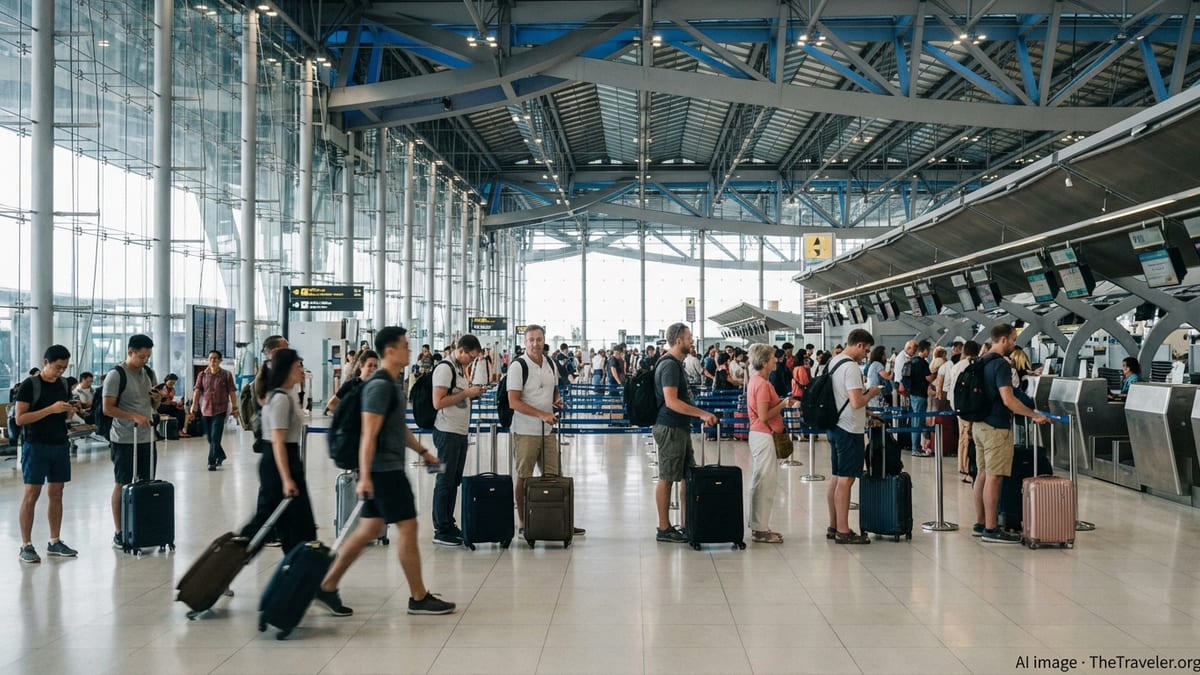
What Is Changing at Thailand’s Major Airports
Airports of Thailand, the state-controlled operator of six key international gateways, has confirmed a steep increase in the passenger service charge for outbound international flights, lifting the fee from 730 baht to 1,120 baht per traveler. The new rate will be applied at Suvarnabhumi, Don Mueang, Phuket, Chiang Mai, Mae Fah Luang Chiang Rai and Hat Yai airports, covering the bulk of Thailand’s international traffic.
The change is scheduled to take effect on June 20, 2026, following formal approval by the Civil Aviation Board and subsequent administrative steps. From that date, any passenger whose journey originates internationally from one of these airports will see the higher fee embedded in their ticket price, regardless of airline or destination.
Domestic passengers will be spared any immediate additional burden. The existing 130 baht charge on domestic departures at Airports of Thailand facilities will remain unchanged, preserving the lower-cost travel environment on the country’s heavily used internal routes linking Bangkok with resort and regional cities.
The increase represents a 53 percent jump in the international departure charge, a scale that has already triggered heated debate within Thailand’s tourism and aviation sectors. However, authorities argue that the move is necessary to support long-planned capacity upgrades as passenger volumes climb back toward and beyond pre-pandemic levels.
Suvarnabhumi: Funding a Vast South Terminal Expansion
At the center of the fee hike is Suvarnabhumi Airport, Thailand’s flagship international hub and the primary gateway for long-haul and regional traffic. Airports of Thailand has outlined an ambitious multiyear investment program anchored by construction of a new South Terminal complex, a project valued at more than 200 billion baht and planned in three major phases.
The South Terminal is designed to dramatically increase Suvarnabhumi’s capacity, enabling the airport to eventually handle up to 120 million passengers a year. This is a critical upgrade for Bangkok’s main hub, which has repeatedly pushed against its design limits during tourism booms, resulting in long queues at security, immigration and check-in counters during peak periods.
Officials say the enlarged terminal footprint, new concourses and expanded baggage and security systems will relieve those chronic bottlenecks. More check-in counters, additional aircraft stands and upgraded airside facilities are expected to give airlines greater scheduling flexibility and help support Thailand’s long-term ambition to position itself as a leading aviation hub in Southeast Asia.
Crucially for travelers, the additional revenue from the higher passenger service charge is intended to reduce Airports of Thailand’s reliance on debt financing for the project. By generating an estimated 10 to 13 billion baht in extra income each year from the increased international fee, the operator aims to curb borrowing costs and lessen pressure for further large price rises in the future.
Phuket and Chiang Mai: Tourist Gateways Facing Higher Costs
The new fee structure will also reshape the cost profile of trips through Phuket and Chiang Mai, two of Thailand’s most popular leisure and cultural gateways. Both airports, run by Airports of Thailand, have seen strong rebounds in arrivals as international tourism has recovered, and both are central to the country’s efforts to spread visitor flows beyond Bangkok.
Phuket International Airport is the primary entry and exit point for travelers heading to the Andaman Sea islands and resorts. Airlines offering direct connections from Europe, the Middle East and regional Asian cities price the airport’s passenger service charge into their fares, meaning holidaymakers will absorb the higher fee automatically in ticket prices for outbound legs from June 2026.
In the north, Chiang Mai International Airport serves as the hub for cultural and nature-based tourism across Thailand’s mountainous provinces. The increased international departure charge there will be particularly relevant for travelers using Chiang Mai as their exit point after overland or multi-stop itineraries through northern Thailand and neighboring countries.
Airport managers argue that higher revenues will allow both Phuket and Chiang Mai to accelerate much-needed improvements in passenger processing, terminal comfort and airside operations. This may include more investment in common use check-in technology, expanded lounges, improved baggage systems and better crowd management during peak holiday seasons that have increasingly strained existing facilities.
How the New Charges Compare Regionally
Supporters of the higher fees emphasize that Thailand’s international passenger service charge, even after the increase, will remain broadly in line with or below that of some competing regional hubs once the new rate is converted into foreign currency. Officials note that the fee is only one component of overall taxes and charges folded into a ticket, which also includes security, navigation and airline-imposed surcharges.
Industry analysts observe that Southeast Asia’s leading airports, from Singapore to major gateways in Malaysia and Vietnam, are also raising or reshaping various passenger-related levies to fund sustainability projects and capacity expansions. In this context, Airports of Thailand’s decision is seen as an effort to close the gap between a fast-growing infrastructure pipeline and the funding tools available to a largely self-financing airport operator.
Still, Thailand’s 53 percent jump in a single move stands out, especially given the sensitivity of international tourism to perceived price increases. Some economists warn that while the fee represents a relatively small proportion of a long-haul return fare, it may be more noticeable on short regional hops, low-cost carrier tickets and budget itineraries centered on Thailand.
For now, carriers operating from Suvarnabhumi, Phuket and Chiang Mai have not announced specific fare changes tied solely to the new charge, as the passenger service fee is typically embedded with other airport and government charges. Travelers are unlikely to see a line item labeled explicitly with the new amount, but total ticket prices for flights originating in Thailand after June 20, 2026, will quietly reflect the higher cost base.
Why Authorities Say the Increase Is Necessary
The fee hike follows a Civil Aviation Board meeting held on December 3, 2025, during which transport officials endorsed Airports of Thailand’s request to lift the international passenger service charge. The board and the Civil Aviation Authority of Thailand cited the need to match rising operating costs, fund major capital projects and keep pace with international standards in safety and passenger service.
In recent years, Thailand has invested heavily in common use passenger processing systems across its network, including shared check-in counters, self-service kiosks and automated baggage drops. These systems, grouped under the Common Use Passenger Processing System framework, are meant to streamline airport operations for all airlines and give passengers more self-service options, but they come with substantial installation and maintenance costs.
Authorities argue that incorporating these technology and infrastructure expenses into the passenger service charge is more transparent than relying solely on aeronautical fees charged to airlines. Spreading the cost directly across departing travelers, they say, ensures that those who use the upgraded facilities contribute proportionally to their upkeep, while enabling Airports of Thailand to maintain competitively priced landing and parking fees for carriers.
Government and airport executives also frame the increase as part of a broader strategy to elevate Thailand’s role as a regional aviation hub. They contend that modern terminals, efficient processing and expanded capacity will attract more long-haul and transit traffic, supporting the tourism economy and air cargo growth despite the short-term discomfort caused by higher passenger charges.
Impact on Travelers’ Budgets and Booking Strategies
For individual travelers, the most immediate effect of the change will be an increase of 390 baht on the cost of any international ticket departing from the six Airports of Thailand gateways after the June 20, 2026, implementation date. Since the passenger service charge is usually built into the fare, passengers will not need to pay the fee separately at the airport, but they should expect higher all-in prices for flights leaving Thailand.
Budget-conscious visitors planning multi-leg journeys may start adjusting itineraries to minimize the impact. Some could opt to depart the region from nearby hubs where overall taxes and fees are perceived to be lower, although any savings will depend on the particular airline and route. Others might choose to start and end trips in Bangkok but route outbound legs through promotions or loyalty redemptions that offset the higher underlying charge.
For families and group travelers, the additional cost can add up quickly, particularly on short-haul routes where the base fare is modest. A group of four departing from Suvarnabhumi or Phuket on a regional flight, for example, will collectively pay more than 1,500 baht extra compared with current levels once the new fee takes effect.
Travel advisors suggest that visitors keep a close eye on ticket prices for departures around the June 2026 transition. Some airlines may adjust inventory or roll out promotions in response to demand patterns, while others could re-balance capacity between Thailand and alternative hubs based on perceived price sensitivity in their core markets.
Reactions From the Tourism and Aviation Sectors
The announcement has drawn mixed reactions from airlines, tourism operators and business groups. Some carriers and hotel associations have voiced concern that raising travel-related charges when the global tourism recovery remains uneven could slow momentum, particularly among cost-sensitive segments such as backpackers, regional weekend travelers and price-conscious tour groups.
Critics describe the jump as steep and argue that the timing could coincide with efforts by neighboring destinations to lure visitors through tax breaks and promotional discounts. They worry that any perception of Thailand becoming a more expensive destination at the margins may influence travelers who are undecided between competing beach or city breaks within the region.
Other stakeholders adopt a more measured tone, acknowledging that modern, efficient airports are a prerequisite for long-term competitiveness. Some airline and logistics executives note that chronic congestion, delays and capacity constraints at major hubs can inflict costs that far exceed modest increases in passenger service charges, both in terms of airline operations and visitor satisfaction.
Within Thailand, the debate has spilled into public forums and social media, with some commentators questioning whether the added revenue will be managed transparently and deliver visible improvements for passengers. Consumer advocates are calling for clear communication about how funds from the higher fee are allocated, and for measurable service benchmarks covering queue times, cleanliness and overall passenger experience.
What Travelers Should Do Now
With the policy already approved and a firm start date on the calendar, travelers planning trips that extend into mid-2026 and beyond should factor the new charges into their budgets. Those arranging complex or high-cost itineraries, such as long-haul family holidays or multi-stop Southeast Asia tours, may wish to lock in flights before airlines fully reprice tickets for departures after June 20, 2026, although availability and fare rules will vary by carrier.
Passengers who use Thailand’s airports frequently, including business travelers and long-stay visitors, can benefit from monitoring announcements from both Airports of Thailand and their preferred airlines over the coming year. Any new terminal openings, check-in technologies or service enhancements at Suvarnabhumi, Phuket and Chiang Mai will provide clues as to how the additional passenger service charge revenue is being deployed.
At the airport, travelers should continue to arrive early during peak seasons, as construction and upgrade works may create temporary congestion even as long-term capacity is expanded. Paying attention to self-service options, mobile check-in and off-peak departure times may help mitigate the crowding that larger passenger volumes and renovation projects can bring.
Ultimately, while the higher airport service charges will make outbound travel from Thailand more expensive at the margin, they are also tied to a substantial investment cycle that aims to reshape the country’s main gateways. For visitors passing through Suvarnabhumi, Phuket and Chiang Mai in the years ahead, the trade-off between cost and comfort will be closely watched as the next phase of Thailand’s aviation infrastructure takes shape.