

More news on this day
Tens of thousands of foreign tourists who were stranded in Thailand after sudden airspace closures across the Middle East are finally beginning to leave the country, as emergency flight corridors, alternative routings and temporary visa relief measures ease one of the most disruptive aviation shocks to hit Asia’s tourism hub in years.
Get the latest news straight to your inbox!
From Flight Chaos to Carefully Managed Exits
Travel industry reports and local coverage in Thailand indicate that around 40,000 foreign visitors were left in limbo after significant portions of Middle Eastern airspace were shut from late February 2026, following escalating regional conflict. Many of Thailand’s busiest long haul routes to Europe and parts of Africa rely on connections through hubs such as Doha, Dubai and Abu Dhabi. When those corridors abruptly closed or were severely restricted, itineraries collapsed overnight, leaving visitors with cancelled tickets, limited options and mounting accommodation costs.
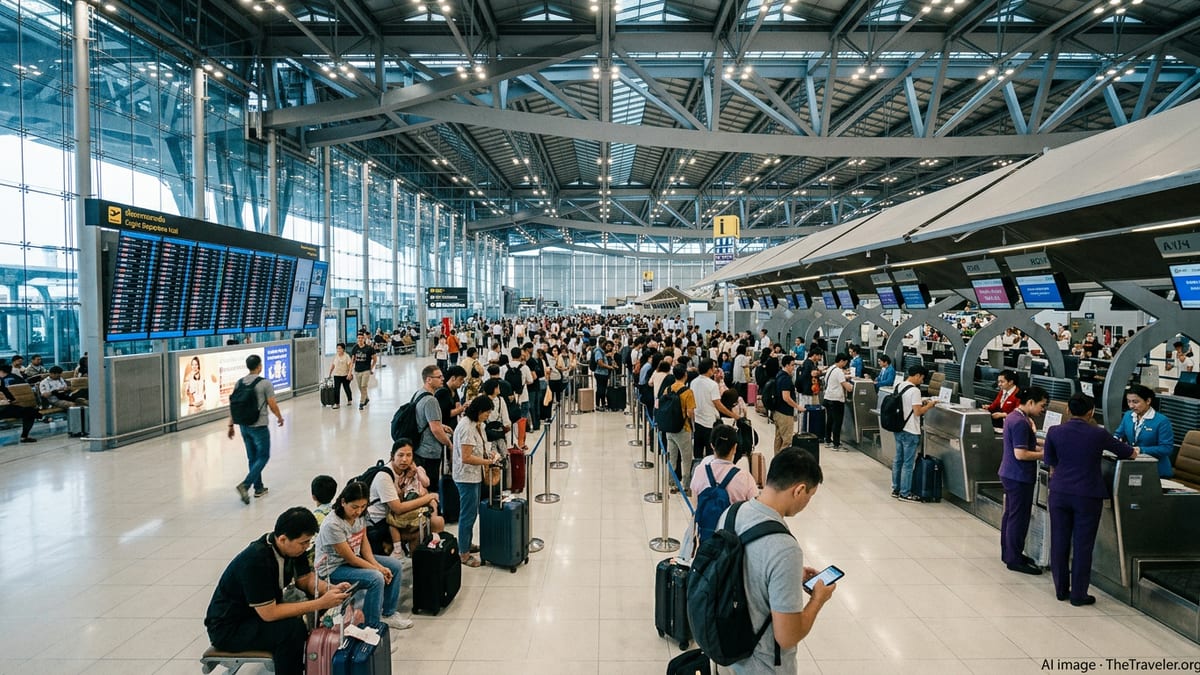
Bangkok’s Suvarnabhumi and Don Mueang airports, along with Phuket and Chiang Mai, quickly became holding points for passengers who could not continue to Europe, the Gulf or parts of North America without crossing affected skies. Travellers described making repeated trips to airline service desks, scrambling to rebook via remaining safe corridors through East Asia, South Asia or direct European services, only to find prices spiking and seats in short supply.
Over the past week, however, regional aviation updates show that emergency repatriation flights, new non stop links and adjusted routings over alternative airspace have gradually chipped away at the backlog. Carriers based in Thailand, Europe and East Asia have been adding capacity on direct or rerouted services that avoid the most volatile air corridors, enabling a steady outflow of stranded holidaymakers.
Tourism analysts note that the number of affected visitors is significant even for Thailand, which welcomed nearly 40 million international arrivals in peak pre pandemic years. Moving 40,000 disrupted passengers in a compressed time frame has required what observers describe as an improvised but increasingly coordinated airlift involving multiple governments and airlines.
Repatriation Flights and New Detours Around the Gulf
Airline advisories and airport notices across the region outline a patchwork of solutions now being used to move people home. Some Gulf carriers have been granted tightly controlled corridors for limited repatriation services, operating selected flights between Doha and major European capitals while avoiding the most sensitive airspace. These flights have been heavily oversubscribed, with priority typically going to passengers who have been stranded the longest or who face urgent travel needs.
At the same time, publicly available flight data shows that European and Asian airlines have stepped in with additional services from Bangkok and Phuket to destinations such as Frankfurt, London, Paris and Rome, routing north or east of the conflict zone. Routes via Turkey, India, Central Asia and parts of China have become crucial detours, even as schedules shift frequently in response to updated risk assessments.
Travel forums and aviation trackers highlight new patterns emerging almost in real time. Passengers bound for Europe are piecing together itineraries that might run from Phuket to Bangkok, on to Tbilisi or Istanbul, and then onwards to their final destinations, often using different airlines on each segment. For North American travellers, routings through East Asian hubs such as Tokyo, Seoul or Hong Kong have replaced once standard connections through Gulf carriers.
Industry specialists caution that while the system is now moving thousands of people each day, capacity remains tight and fares on remaining routes are substantially higher than before the disruption. For many holidaymakers, the trip home from Thailand is ending up far longer, more complex and more expensive than the journey out.
Thai Authorities Prioritise Visas, Welfare and Airport Flow
As flights were suspended or rerouted, Thailand’s immediate challenge was less about inbound tourism and more about how to host a sudden surplus of visitors who could not depart. Public notices from the Thai Immigration Bureau announced temporary leniency for travellers whose visas expired while they were stuck in the country because of the Middle East conflict, stating that those affected would not face overstay fines during the emergency period.
Local media and online advisories describe how tourism help desks at major airports and in popular resort areas have been expanded or reoriented to handle stranded travellers. Staff have been directing visitors to airlines, sharing updated route information and clarifying immigration rules, while hotel associations in destinations such as Phuket and Krabi have been coordinating with tour operators to offer discounted rates to those forced to extend their stays.
Thai policymakers have also discussed limited financial support measures for small tourism businesses that have been accommodating stranded guests, according to domestic economic briefings. While the country’s wider tourism industry still benefits from visitors staying longer, smaller operators face cash flow strains when cancellations prevent them from reselling rooms or tours.
Airport managers have meanwhile focused on crowd control and information flow. Suvarnabhumi in particular has had to balance regular arrivals with large numbers of passengers waiting on standby lists or hoping for last minute seats on repurposed flights. Recent days have brought some relief, with images and traveller accounts suggesting shorter queues at airline counters and more predictable departure boards as the exodus accelerates.
Travel Lessons and Future Booking Shifts
For Thailand’s tourism sector, the airspace turmoil is a stark reminder of how dependent global travel has become on a handful of mega hubs in geopolitically sensitive regions. Industry commentators expect that some travellers will, at least in the short term, show a preference for itineraries that avoid the Gulf, even if this means higher upfront costs or longer flying times via Europe or East Asia.
Online travel communities are already mapping out alternative corridors that bypass affected skies, including combinations of flights through India, Central Asia, China and secondary European hubs. These patterns could shape booking behavior for the next high season, particularly among long haul visitors from Europe and North America heading to Southeast Asia.
Insurers and travel risk consultants are also reassessing how their policies and guidance address sudden airspace closures linked to conflict. Many stranded visitors in Thailand discovered that standard policies offered limited coverage for costs arising from war related disruptions, leaving them reliant on airline waivers, consular assistance or personal savings.
In the near term, Thailand’s priority is clearing the remaining backlog of stranded guests while preserving its reputation as a resilient and welcoming destination. With tens of thousands of visitors now finally on their way home and more flights scheduled in the coming days, the country is moving from emergency response toward recovery, even as the broader regional situation that triggered the crisis remains fluid.