

More news on this day
Thailand is heading into one of its hottest and most volatile hot seasons in years, and both scorching temperatures and sudden summer storms are already forcing travelers to rethink where, when, and how they visit.
Get the latest news straight to your inbox!
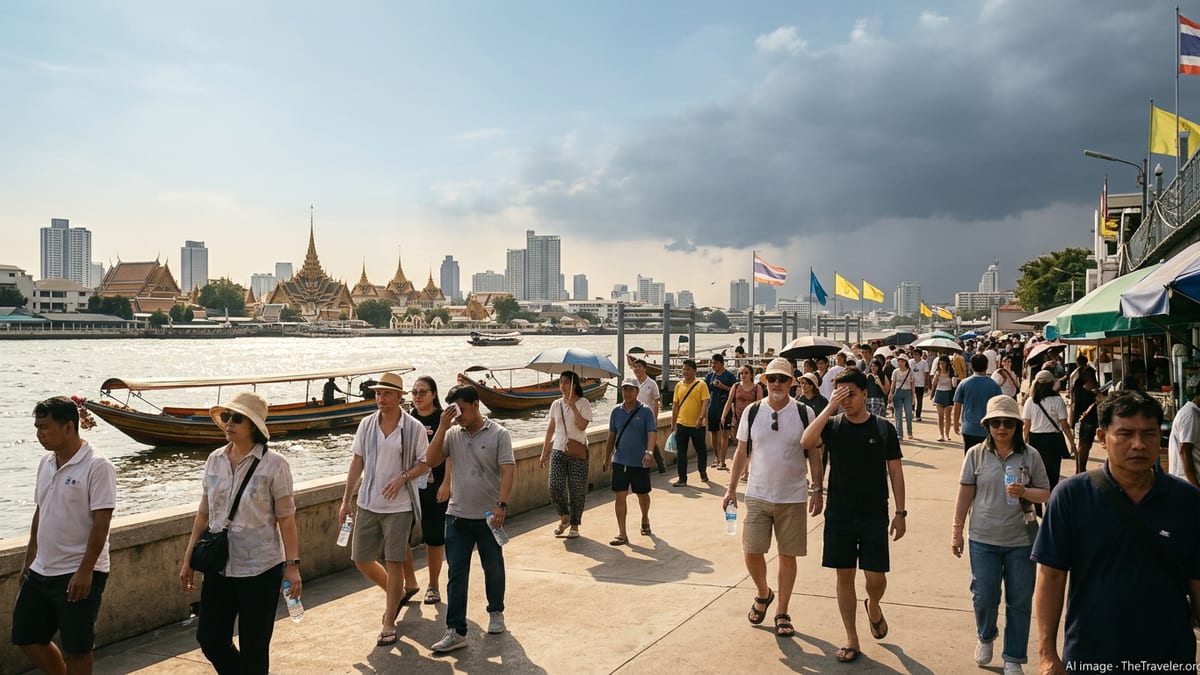
A Hot Season That Started Early and Is Running Hotter
Thailand officially entered its 2026 hot season on February 22, with meteorologists warning that temperatures in some northern and northeastern provinces could surge above 42 degrees Celsius. Forecasts from the Thai Meteorological Department indicate that this year’s heat is likely to be more intense than last year, driven in part by a strengthening El Niño pattern expected to peak between March and May.
The early onset of extreme heat is particularly noticeable in Bangkok and other low-lying urban centers, where the heat index regularly climbs well above the actual air temperature. Concrete-heavy cityscapes trap warmth, making evenings only marginally cooler and pushing demand for air conditioning sharply higher in hotels, malls, and transport hubs.
Tourism businesses are already adjusting. Many operators report shifting popular excursions to earlier in the morning or closer to sunset, while mid-day city walks and outdoor temple tours are quietly disappearing from suggested itineraries. Some European and North American travelers, who might once have booked March or April for city-heavy trips, are now asking agents to push their visits to November through February instead.
In northern destinations such as Chiang Mai and Sukhothai, where historical parks and open-air attractions are central draws, the heat is altering how visitors move through the day. Guides describe more guests cutting tours short, asking for more shaded rest stops, or opting for private vehicles instead of bicycles under the afternoon sun.
Bangkok’s Cooling Centers Signal Just How Hot It Is
In Bangkok, authorities have opened more than 250 temporary cooling centers as the city braces for repeated spikes in the heat index into the “danger” range for human health. These facilities, set up in community halls, schools, and public buildings, offer air-conditioned relief for residents, outdoor workers, and increasingly, overheated visitors caught out in peak afternoon temperatures.
Health officials have been urging people to limit strenuous activity outdoors between late morning and late afternoon, stay hydrated, and recognize early signs of heat exhaustion. Travel insurers and embassies are echoing those messages in advisories, telling visitors to plan their sightseeing around the coolest parts of the day and to treat the heat as a genuine safety issue rather than a mere inconvenience.
For hotels and tour operators, the city’s response underscores a broader reality. Many are building flexible schedules into packages, encouraging guests to spend the hottest hours inside air-conditioned museums or shopping centers instead of on river cruises or walking tours. Some riverside properties report more demand for shaded poolside cabanas and indoor spa treatments in place of open-air rooftop bars during the afternoon.
At the same time, Bangkok’s reputation as a year-round city break is being subtly recalibrated. While demand for nightlife, dining, and shopping remains high, agents are increasingly steering first-time visitors who cannot tolerate heat toward cooler months, while positioning March to May as a period better suited to experienced travelers who understand tropical conditions.
Summer Storms Add Sudden Disruption to Scorching Days
The heat is not the only challenge. In late February and early March, the Thai Meteorological Department issued a series of warnings about summer storms sweeping across the North, Northeast, Central Plains, and parts of the East. These systems, triggered by a clash between hot air over the country and cooler air masses from the north, have brought bouts of strong winds, lightning, and localized downpours.
On the eastern seaboard, including Pattaya and nearby coastal resorts, authorities have urged residents and tourists to stay alert for rapidly changing skies. Short but intense storms can drive beachgoers off the sand within minutes, kick up rough seas that halt small boat services, and create flash flooding on low-lying roads. Hot and sunny mornings can still give way to late-afternoon thunderstorms, forcing last-minute changes to island-hopping and water-activity plans.
In Bangkok and other major cities, storm warnings have prompted periodic disruptions to local transport. Sudden cloudbursts can overwhelm drainage, causing knee-deep water on some streets and slowing traffic to a crawl. While these episodes are typically short-lived, they can be enough to delay airport transfers, complicate same-day connections, or force airlines to briefly suspend ground operations during lightning.
Travel agents report that more clients are now building “buffer time” into itineraries, especially when connecting from domestic flights to long-haul departures. Some carriers and tour companies are also advising travelers to avoid scheduling tight connections in the late afternoon and evening, when storm activity is most likely to peak.
Tourism Patterns Are Shifting, but Thailand Remains Open
Despite the weather challenges, Thailand remains firmly open for tourism. Government and industry forecasts still expect tens of millions of international arrivals in 2026, although early-year visitor numbers show a modest decline compared with 2025. Analysts point to a mix of factors, including global air travel disruptions and economic uncertainty, with weather-related concerns now playing a growing supporting role in traveler decision-making.
Rather than cancel outright, many visitors are adjusting where they go within the country. Coastal destinations that benefit from sea breezes, such as parts of the Andaman and Gulf coasts, are attracting travelers eager to escape the stifling heat of inland cities. Island resorts are highlighting shaded beachfront areas, mangrove excursions, and snorkeling trips scheduled for cooler times of day.
Domestic tourism is also evolving. Thai travelers, already familiar with the climate, are increasingly seeking shorter, more frequent trips rather than long holidays during the hottest weeks. Weekends in cooler, higher-elevation areas and stays at resorts with strong air conditioning and pools are gaining favor over urban getaways.
For the industry, the twin pressures of heat and storms are accelerating investments in resilience. Hotels are upgrading cooling systems, improving drainage, and training staff to respond quickly to weather alerts. Tour operators are drafting clearer contingency plans, with alternative indoor activities prepared when conditions turn unsafe outdoors.
How Travelers Can Adapt Their Thailand Plans This Summer
The shifting climate picture in Thailand does not mean travelers need to avoid the country’s hot season altogether. It does require more thoughtful planning. Prospective visitors for March through May are being urged by local tourism bodies, airlines, and consulates to pay close attention to official weather advisories in the days before departure and to remain flexible once on the ground.
Practical adjustments can make a significant difference. Planning core activities before 10 a.m. and after 4 p.m., choosing accommodation with reliable air conditioning, and building in rest periods during the middle of the day are now standard advice. Travelers with health conditions, children, or older companions are being encouraged to discuss heat risks with medical professionals in advance and to travel with appropriate medications and rehydration options.
Storms, meanwhile, call for patience rather than panic. Many heavy downpours pass within an hour or two, and tour operators are accustomed to rescheduling boat trips and outdoor excursions around local conditions. Having a loose itinerary, extra time between key connections, and travel insurance that covers weather-related disruption can help turn an interrupted day into only a minor inconvenience.
As Thailand’s summers grow hotter and less predictable, the country’s tourism playbook is evolving. For travelers willing to adapt, that means a different rhythm to the day, more emphasis on early mornings and dusky evenings, and a new awareness that the country’s famed sunshine now comes with a sharper edge.