


More news on this day
Millions of Americans preparing to hit the road or take to the skies for Thanksgiving are being urged to watch the weather closely, as long range guidance from the Farmers’ Almanac and other seasonal outlooks points to an increased risk of snow and wintry conditions across parts of at least 17 U.S. states during the holiday period.
Get the latest news straight to your inbox!
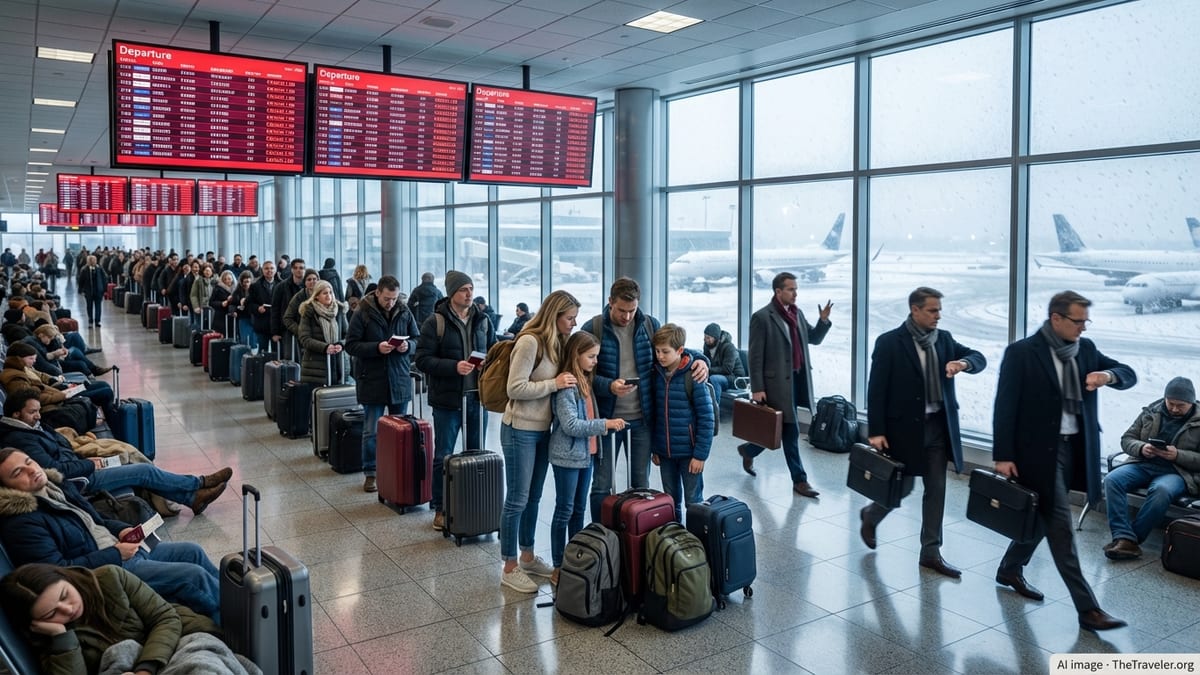
Almanac outlook hints at snowy Thanksgiving corridor
The 2026 edition of the Farmers’ Almanac, which provides long range seasonal guidance for the United States, indicates a colder, snowier pattern for the 2026 to 2027 winter in large portions of the central and eastern country. The publication’s extended forecast highlights the potential for early season snow events affecting travel in the Midwest, Great Lakes, interior Northeast and higher elevations of the Rockies around late November.
While the Almanac does not issue day by day forecasts, its regional breakdown points to a broad swath where wintry weather may overlap with peak Thanksgiving travel. Based on those regional descriptions, the zone of elevated snow risk around the holiday includes at least parts of Colorado, Wyoming, Montana, the Dakotas, Minnesota, Wisconsin, Michigan, Iowa, Nebraska, Kansas, Missouri, Illinois, Indiana, Ohio and upstate areas of New York and Pennsylvania.
In previous years, similar long range signals have coincided with disruptive Thanksgiving storms, particularly in the northern Plains and Great Lakes. Publicly available storm summaries from 2025 describe winter storm warnings stretching from Montana to Ohio during the post holiday weekend and multiple road closures in the Dakotas as heavy snow and high winds affected major routes. Those case studies are being cited by forecasters and travel analysts as examples of how an early season pattern can quickly create cascading delays at one of the busiest times of the year.
The Almanac’s 2026 outlook is being read alongside experimental seasonal snow projections that show a tendency toward above normal snowfall from the southern Rockies into parts of the central Plains, while the northern tier and New England lean closer to or below average. For holiday travelers, that combination suggests that trouble spots this year may extend farther south and west than in some past Thanksgiving weekends, rather than being confined only to the traditional lake effect snow belts.
How far ahead can Thanksgiving snow really be predicted
Despite the attention surrounding the Farmers’ Almanac, meteorological agencies stress that specific snowfall amounts and the exact timing of storms along Thanksgiving routes cannot be predicted with precision several weeks or months in advance. Seasonal outlooks from the federal Climate Prediction Center focus on temperature and precipitation trends over multi week periods and explicitly avoid detailed snow accumulation forecasts beyond about one week.
According to publicly available discussions of the 2026 to 2027 winter outlook, forecasters expect large scale climate drivers such as El Niño and its transition phase to shape temperature and precipitation patterns across the United States. These patterns increase or decrease the probability of colder and wetter conditions in certain regions but do not guarantee a particular storm on Thanksgiving Day or the surrounding weekend.
Analyses of past Thanksgiving periods by NOAA show that impacts have ranged from relatively mild and dry conditions, with only localized rain, to years in which strong frontal systems have produced heavy snow, freezing rain and strong winds across major corridors. In 2025, for example, federal forecasts ahead of the holiday noted a combination of heavy rain in the East and accumulating snow in the Rockies and northern Plains, leading to warnings of “widespread travel troubles” on some of the peak days.
Travelers comparing the Farmers’ Almanac with official outlooks should understand that the Almanac uses its own proprietary methods to produce long range guidance, while agencies such as NOAA rely on ensemble models, ocean temperature data and historical analogs. Weather researchers and local meteorologists often view publications like the Almanac as one informal input among many, rather than a stand alone forecast on which to base critical decisions.
Regions and routes most exposed to potential disruption
Given the current long range signals, transportation analysts are watching a broad band from the central Rockies through the upper Midwest and into the interior Northeast for possible Thanksgiving snow and mixed precipitation. In practical terms, that means drivers and airlines serving key stretches of Interstate 25 in the central Rockies, Interstate 70 and 80 across the Plains, and interstates 29, 35, 90 and 94 through the northern tier could encounter wintry episodes if one or more systems sweep across the country in the days before or after the holiday.
Further east, lake effect belts downwind of the Great Lakes and higher terrain in states such as Pennsylvania and upstate New York are perennial candidates for Thanksgiving snow if cold air is in place. Storm reviews from recent seasons note that relatively narrow but intense snow bands can quickly reduce visibility and create hazardous conditions on portions of interstate corridors while nearby areas remain mostly wet.
Aviation data from previous years show that even moderate early winter systems can ripple through the national airspace as aircraft and crews become misaligned, especially when snow and low clouds affect hub airports in Chicago, Denver, Minneapolis, Detroit and Cleveland. News coverage from the 2025 holiday period highlighted hour long delays at major Midwest hubs as snow and mixed precipitation moved through, with knock on effects for connecting passengers bound for warmer destinations in the South and West.
Rail travel is generally less sensitive to snow than highways and air, but passenger rail operators have also faced reduced speeds and schedule adjustments during stronger holiday storms when visibility drops or when freezing rain complicates signaling and switching operations. Travelers planning to rely on trains through the interior Northeast or Chicago hub routes may want to track service alerts if a sizeable Thanksgiving system appears in short range forecasts.
What travelers can do now as forecasts evolve
With Thanksgiving 2026 still outside the reliable short term forecast window, the most useful steps for travelers involve flexibility and early planning rather than reacting to any single long range map. Travel experts advise that those heading through the 17 state snow risk corridor consider booking flights earlier in the holiday week, building in longer connection times and avoiding tight same day transfers through snow prone hubs when possible.
Motorists mapping long distance drives across the Plains, Midwest and interior Northeast are encouraged to identify alternate routes that avoid higher elevation passes or historically vulnerable stretches where closures are common during winter storms. Publicly available state transportation archives from recent holidays show that closures or heavy restrictions have occurred on some interstate segments in the northern Plains and Rockies when snow falls at more than an inch per hour combined with high winds.
Travel planners also point to the importance of monitoring updated outlooks from the Climate Prediction Center and local National Weather Service offices as the holiday approaches. Ten day and seven day outlooks provide a clearer picture of whether a particular storm system is likely to coincide with peak departure days, while 48 hour and 24 hour forecasts refine expectations about snow amounts, rain snow lines and wind speeds along specific routes.
For those who must travel on fixed dates, preparation may be the most effective hedge against uncertainty. That includes allowing additional driving time, ensuring that vehicles are equipped with winter tires or chains where required, and having contingency plans for overnight stays if road conditions deteriorate along key mountain passes or open Plains stretches.
Reading the Farmers’ Almanac in context
The renewed attention to the Farmers’ Almanac heading into Thanksgiving 2026 comes as the Maine based publication prepares what it has indicated will be its final annual edition after more than two centuries in print. Coverage of the decision to wind down the Almanac notes that many readers have long used its tables and forecasts as one input in planning everything from road trips to outdoor events, even as modern numerical models have taken the lead in operational forecasting.
Weather historians point out that long range publications occasionally line up with major events, such as early season blizzards that occur within a window highlighted as “stormy” or “snowy,” which can reinforce public perception of accuracy. At the same time, retrospective studies and informal reviews on science and weather forums frequently describe hit or miss performance when long range maps are compared against observed snowfall patterns over many years.
For holiday travelers, the practical takeaway is to treat the Almanac’s Thanksgiving snow signals as an early heads up rather than a guarantee. The indication that up to 17 states in the Rockies, Plains, Midwest and interior Northeast could see increased chances for wintry weather during the holiday period serves as a reminder to pay closer attention as November begins and as shorter range forecasts come into focus.
As millions of people prepare to gather with family and friends on Thursday, November 26, the evolving blend of traditional long range guidance and modern, high resolution forecast tools will shape how they navigate the busiest travel week of the year. Whether the emerging pattern ultimately delivers a major Thanksgiving snow event or only scattered flurries, the heightened awareness may help some travelers avoid the worst of any holiday weekend weather surprises.