


I first opened the Traveloka app with the same mild suspicion I reserve for any online travel agency. I expected the usual mix of enticing prices, messy fine print and a stressful battle when plans inevitably change. Instead, what I found was that Traveloka, almost quietly, has become very good at solving one of the most painful booking problems in modern travel: how to keep your plans flexible without losing control of your time, your money or your sanity.
Get the latest updates straight to your inbox!
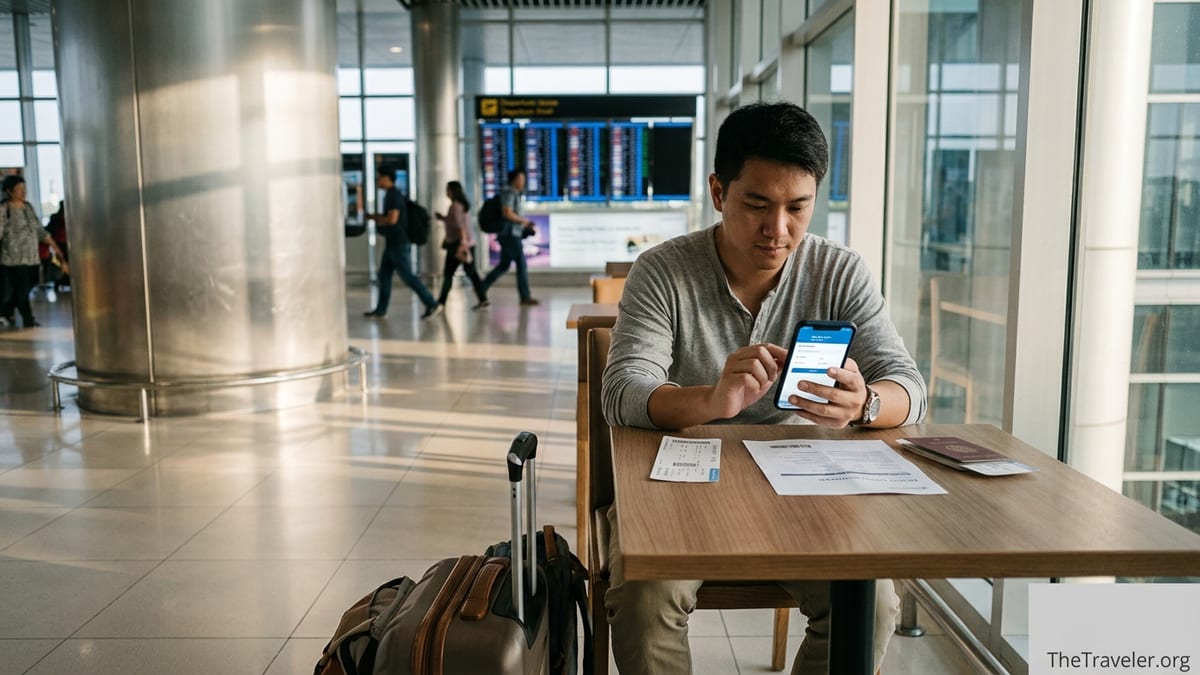
The Real Booking Problem Modern Travelers Face
If you travel regularly, you already know the problem. Booking is easy when everything goes according to plan. It is when life interferes that things get complicated: a visa delay, a sick child, a storm that closes an airport, a business meeting that moves by 24 hours. The real issue is not just getting the cheapest flight or hotel. It is securing options that you can change or salvage later without spending hours in call center limbo or absorbing the full cost as a loss.
Consider a fairly typical scenario for Southeast Asia: a traveler from Jakarta books a weekend in Bangkok. They find a low-cost carrier round-trip and a nonrefundable city-center hotel via an online travel agency. A week later, their employer shifts a key meeting and they need to move the whole trip by one day. The airline will charge a change fee and fare difference, the hotel is “nonrefundable,” and the OTA tells them to talk to the hotel directly. Suddenly, all of the savings vanish in penalties and friction.
What makes this worse is the fragmentation behind the scenes. Airlines have their own change rules, hotels have their own cancellation windows, and many intermediaries sit between the traveler and the original provider. When a booking is rescheduled or canceled, everyone points at someone else. This is the core booking problem that most travelers now face: plenty of choice at search time, very little control once you have paid.
Traveloka is far from perfect, and user complaints about customer service and occasional system glitches still surface. Yet one area where it has quietly pulled ahead of many rivals is in how it centralizes and simplifies rescheduling, especially for flights and hotels in Southeast Asia, where last-minute disruptions and shifting plans are common rather than exceptional.
How Traveloka Turns Rescheduling From Crisis Into Workflow
The first surprise with Traveloka is that rescheduling is treated as a product in its own right rather than a buried support option. The company’s Easy Reschedule functionality for flights is deeply integrated into the core booking flow. Once a flight is ticketed, travelers can open the booking in the app, tap into the Refund & Reschedule section, and see clear options for changing dates, routes or passengers, with the fees and conditions made visible before committing to anything.
In practical terms, that means a traveler flying from Kuala Lumpur to Bali who realizes their return date no longer works does not have to call the airline, sit on hold and hope the front-line agent interprets the rules favorably. Instead, they can open the Traveloka app, select the segment they want to change, view a calendar of alternative flights and immediately see what they will pay in terms of fare difference and change fees. Payment happens inside the app, and once processed, a new e-ticket is issued directly to their email and to the “My Booking” section.
For hotels, Traveloka extends a similar concept with Easy Reschedule for eligible stays. If your booking is refundable or partially refundable and the property participates, you can open the voucher, tap Manage Booking and then Reschedule. The app walks you through selecting a new check-in date and length of stay, then shows available rooms and any additional amount due if your new dates fall in a more expensive period such as a weekend or local holiday. Travelers no longer need to negotiate directly with a hotel front desk in a second language or hope that a generic OTA support line can persuade the property to cooperate.
This does not magically override every airline or hotel policy. If you booked a deeply discounted nonchangeable fare or a rock-bottom advance rate with no flexibility, even Traveloka cannot rewrite the rules. What it does better than expected is remove guesswork and friction: the app becomes a single console where you can see whether your booking is movable, what it will cost in real currency, and whether it is worth salvaging instead of starting again from scratch.
Concrete Scenarios Where Traveloka Actually Saves a Trip
To understand how this works in practice, imagine a Singapore-based traveler booking a family trip to Yogyakarta for school holidays. They reserve low-cost carrier flights and a three-night stay at a midrange hotel near Malioboro Street using Traveloka. Two weeks before departure, the airline shifts their outbound flight to much later in the day, wiping out most of their first afternoon. In many parts of the world, this would trigger a maze of conditions and long calls to customer service.
In this situation, the traveler can open their booking in Traveloka, where the re-timed flight will be reflected. From the same booking screen, they can request a reschedule to an earlier or next-day flight based on the airline’s policy, with Traveloka acting as intermediary. If the change is approved under the carrier’s disruption rules, any applicable change fees and fare differences are calculated in-app. Instead of juggling airline hotline menus and uncertain hotel check-in adjustments, the entire process is managed in a single environment.
A second example: a traveler from Manila books a hotel in Kuala Lumpur using Traveloka’s PayLater installment feature. A week before check-in, they learn that a work commitment requires them to shift their trip by three days. Because their room type is marked as refundable with Easy Reschedule eligibility, they open the booking, submit a reschedule request, and search for new dates. The app surfaces rooms at the same property and nearby alternatives, immediately showing whether the existing funds from the original booking can be carried over and what, if anything, they need to top up.
Even in more modest use cases, the difference is tangible. A solo traveler in Hanoi who misreads a date and accidentally books the wrong return day can open the Traveloka app as soon as they notice. If the ticket type allows it and the carrier supports Easy Reschedule, they can shift the flight by a day without navigating unfamiliar call centers or airport ticket desks. That is not glamorous, but when you are already stressed and far from home, the ability to resolve it through a few taps is the kind of practical value travelers remember.
Flexible Payments and Local Reality: Why It Matters
Traveloka’s approach to the booking problem is tied to another area where it distinguishes itself from global giants like Booking.com and some Western-focused OTAs: it is deeply rooted in local payment habits. In Indonesia, Vietnam, Thailand and the Philippines, large numbers of people either do not have international credit cards or prefer to use bank transfers, local wallets or pay-on-arrival options. Traditional rescheduling flows were built around the assumption of a single credit card on file.
Traveloka’s integration with local payment methods, including bank transfers and regional wallets, helps make rescheduling accessible for these travelers. When a change requires additional payment, users can often top up through the same mix of options they used to pay in the first place. Combined with Traveloka’s PayLater installment product for hotels, this can turn what would be a financially painful last-minute shift into a manageable adjustment spread across future payments.
For example, a young couple in Surabaya might book a beach resort in Lombok using PayLater, choosing to spread the cost over several months. When they decide to extend their stay by one night, they can process the change inside the app and add the incremental amount into their existing installment plan, subject to eligibility. They are not forced to suddenly find a large lump-sum payment just to preserve their original trip concept.
This is particularly relevant in a region where weather disruptions, ferry cancellations and shifting public holiday calendars are common. By combining flexible reschedule options with payment methods that match local realities, Traveloka makes it more feasible for travelers to adapt their plans instead of canceling outright or absorbing unnecessary losses when circumstances change.
Transparency, Limitations and the Fine Print You Still Need to Read
Traveloka’s reschedule tools do not eliminate the need for careful reading. Airline fare rules still dictate whether a ticket can be changed, how many times, and at what cost. Hotel cancellation windows still govern whether a stay can be rescheduled for free, partially refunded or treated as fully consumed. Traveloka’s own terms and conditions emphasize that travelers are responsible for reviewing refund and reschedule policies before confirming a booking.
In practice, the app helps by surfacing key conditions at search and booking time: whether a room is refundable, whether a flight supports Easy Reschedule, and how strict the change penalties appear to be. When you tap into product details on a flight, you can view a dedicated Reschedule Info section that outlines general policy, validity and potential fees. For hotels, the cancellation and reschedule eligibility is shown near the room description and reiterated on the booking summary.
There are, however, real limitations. Some low-cost carriers in the region still sell nonchangeable fares where any modification effectively means buying a new ticket. Certain budget hotels or small guesthouses participate only minimally in reschedule schemes or insist on strict no-change policies for sale rates. Travelers who book the absolute lowest price in every situation will not magically obtain flexibility just because they used Traveloka. The platform is an organizer for options that already exist and a negotiator with suppliers, not a policy-maker of last resort.
What Traveloka does offer, better than many competitors, is a clear path to see those limitations in advance and act on them when necessary. Instead of discovering at the airport check-in desk that a no-show policy has wiped out the value of a ticket, users can often see from the app when their change window is closing and what actions are still available. That does not remove the sting of fees, but it does reduce the surprise.
How Traveloka Compares to Other Popular Booking Platforms
To understand the gap Traveloka fills, it is useful to compare it to the experience many travelers report with other global platforms. Sites like Booking.com and large Western OTAs excel at putting huge inventories of hotels and flights in one place, and many travelers have used them for years without a single problem. Yet complaints frequently arise around what happens when a booking goes wrong or needs to change, especially when separate suppliers start pointing fingers.
Common stories involve arriving at a property to discover no record of a reservation, or learning that a hotel has canceled without proper notice, leaving the traveler scrambling on arrival. In some of these cases, the booking platform eventually issues a refund or helps find alternative accommodation, but the process can take days, emails and repeated calls. For flights, pricing inconsistencies and delayed ticket issuance by third-party agents have also been a pain point, occasionally leaving travelers with reservations that were never fully ticketed.
Traveloka is not immune to these types of issues. There are documented cases of system bugs, booking errors and slow responses from support. However, the platform’s strong focus on Southeast Asia and its investment in localized customer operations means that, in many practical situations, it can intervene faster with regional airlines and hotels than more globally diffuse competitors. Combined with its reschedule-first design philosophy, this often means less back-and-forth for the traveler when plans shift or something on the supplier side breaks.
The key distinction is not that Traveloka never fails where others do. It is that the company has put real product design effort into the post-booking phase. Many booking sites treat this as a messy back-office problem. Traveloka, by contrast, surfaces rescheduling, refunds and disruption management inside the same clean interface people use to search and pay, which nudges travelers to handle problems early and digitally instead of waiting for them to explode at the check-in desk.
What Smart Travelers Still Need to Do Themselves
Even with Traveloka’s stronger handling of the booking problem, savvy travelers still have responsibilities. The first is to choose flexibility consciously. If you know a trip could move due to work, health or family reasons, it is often worth paying a bit more for a refundable hotel rate that supports Easy Reschedule or a flight fare class that allows changes at a reasonable cost. The app makes these distinctions visible, but it is on the traveler to resist the temptation of the absolute lowest price when flexibility clearly matters.
The second is to act fast when something changes. If an airline revises your departure time, do not wait until airport day to see how it affects your connections. Open the Traveloka app immediately, check your options, and, where appropriate, submit a reschedule or refund request while the full range of alternatives may still be open. Early movers tend to have more choice of replacement flights or rooms, especially around peak travel dates or public holidays.
Third, document and communicate inside the platform wherever possible. If a hotel cannot honor your booking or a flight cancellation is not reflected properly, use Traveloka’s in-app channels rather than relying solely on phone calls with the supplier. Keeping the paper trail within the platform simplifies escalation and gives Traveloka more leverage when pushing for a resolution on your behalf.
Finally, keep your app updated and check your notification settings before major trips. Many of Traveloka’s reschedule tools require current app versions, and disruptions are often flagged via push alerts or in-app banners. Treat Traveloka not just as a place where you bought a ticket two months ago, but as an active control center for the trip in the days leading up to departure.
The Takeaway
Traveloka did not eliminate every frustration of modern travel, and its own ecosystem still produces occasional stories of miscommunication, bugs and slow refunds. Yet for a growing number of travelers across Southeast Asia and beyond, the platform meaningfully addresses the central booking problem of our era: what happens after you click “pay.”
By building rescheduling and disruption management directly into its product, tying those tools to local payment realities and presenting policies in a relatively transparent way, Traveloka has turned what used to be a chaotic, phone-based crisis into a mostly digital workflow. A missed connection, a delayed visa or a shifted meeting no longer automatically spells financial disaster.
If you are willing to read the fine print, choose flexible options when they matter and respond quickly to changes, Traveloka can be much more than yet another search box with prices. It can be the practical control panel that keeps your trip intact when the world around it refuses to sit still, solving the booking problem better than many travelers expect until they actually put it to the test.
FAQ
Q1. What booking problem does Traveloka mainly solve?
Traveloka focuses on simplifying what happens after you book, especially rescheduling and managing disruptions for flights and hotels, so you can change plans with less friction and clearer costs.
Q2. Is every Traveloka booking eligible for Easy Reschedule?
No. Eligibility depends on the airline fare rules or hotel cancellation policy. Nonrefundable or heavily restricted tickets and rooms may not support Easy Reschedule.
Q3. Can I reschedule flights directly in the Traveloka app?
Yes, for supported airlines and ticket types you can open your booking, go to the Refund & Reschedule section, choose new dates or routes and pay any fees in-app.
Q4. How does Traveloka handle hotel date changes?
If your hotel booking is refundable and enrolled in Easy Reschedule, you can request new check-in dates, see available rooms and pay any price difference directly through the app.
Q5. Will Traveloka waive airline or hotel change fees?
Generally no. Airlines and hotels set their own fees. Traveloka’s role is to surface those costs clearly and process the change, not remove supplier-imposed penalties.
Q6. What happens if an airline changes my flight schedule?
You will usually see the change reflected in your Traveloka booking and can request alternative options according to the airline’s policy, with Traveloka helping to coordinate the reschedule or refund.
Q7. Can I pay reschedule fees using local payment methods?
In many Southeast Asian markets Traveloka supports local payment channels such as bank transfers and regional wallets, which you can also use for additional reschedule payments when available.
Q8. Is Traveloka better than Booking.com or other OTAs?
It depends on where and how you travel. Traveloka tends to excel in Southeast Asia with integrated rescheduling and local payments, while global platforms may have broader worldwide hotel coverage.
Q9. What should I check before confirming a Traveloka booking?
Always review whether the booking is refundable, if Easy Reschedule applies, the change and cancellation windows, and any potential fees shown in the product details.
Q10. Does using Traveloka guarantee a problem-free trip?
No platform can guarantee that. What Traveloka offers is a stronger set of tools to handle changes and disruptions digitally, which often reduces stress and financial loss when plans shift.