


It was not the lobby chandelier, the rooftop bar, or even the loyalty perks that changed how I judge hotel brands. It was a tiny, almost forgettable detail inside a perfectly ordinary Hilton room. The moment I noticed it, I realized how much a hotel’s smallest choices reveal about its priorities, its staff culture, and ultimately whether I want to give that brand my money again.
Get the latest updates straight to your inbox!
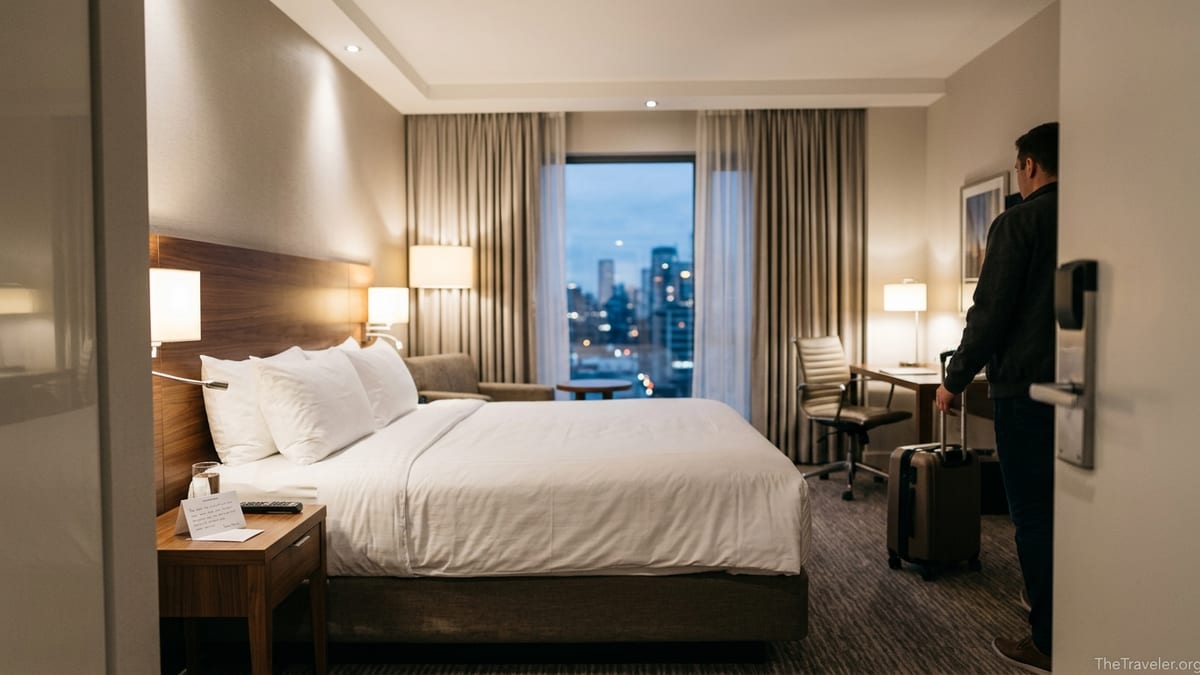
The Stay: An Unremarkable Hilton Night, Until It Wasn’t
The stay itself could not have been more routine. I was at a midscale Hilton property on the edge of a U.S. business park, the kind of place road warriors know well: airport shuttle every 30 minutes, breakfast buffet with make-your-own waffles, a lobby that blends into a hundred others. The rate hovered around the 150 to 180 dollar range, typical for a weekday in a secondary city.
Hilton, like most global chains, has sharpened its focus on consistency in recent years. Programs such as Hilton CleanStay, with its emphasis on visible cleaning practices and room seals after housekeeping finishes, are designed to give guests immediate reassurance the moment they reach the door. When I arrived late that night, my expectations were modest: a clean bed, working Wi-Fi, and a quiet room so I could be on my laptop by 7 a.m. and on the road by 8.
Check-in took less than two minutes. I had already chosen my room in the app and used a Digital Key, one of the brand’s most practical innovations. I bypassed reception, took the elevator to the fourth floor, and found the familiar Hilton-style room layout waiting for me: desk to the left, bed to the right, bathroom door just inside the entrance. It was exactly what I expected. Until I walked over to the nightstand.
There, next to a small carafe of water and a fresh glass, was a folded card with my name handwritten in neat, careful script. Underneath, a single sentence explained that the housekeeper had personally checked the room after cleaning, invited me to call if anything was not to my satisfaction, and wished me luck on my meetings the next day. That one sentence, written by a person who would never see my face, completely changed how I thought about hotel brands.
The Small Detail: A Handwritten Housekeeping Card
Handwritten notes in hotels are not new, of course. Luxury properties have left welcome cards and amenity notes for decades. What made this one different was where it appeared and what it represented. It was not from the general manager. It was from the room attendant, signed with a first name and a small, slightly wobbly smiley face.
The card was printed with the hotel’s logo and a short checklist of items that had been double-checked: remote sanitized, high-touch surfaces wiped, shower pressure tested. At the bottom, next to the signature, was a direct extension number to reach housekeeping. It aligned with Hilton’s CleanStay messaging but went one step further by putting a specific human being behind the promise. It turned a corporate standard into a personal commitment.
I noticed something else: the card was tucked beside the light switches and USB outlets on the nightstand, not buried among marketing flyers or breakfast coupons. It was impossible to miss, yet it did not feel like a sales pitch. It felt like a quiet statement of pride: someone had spent 20 minutes in this room and was willing to put their name on the result.
In an era when many U.S. hotels have moved to housekeeping by request for shorter stays, particularly in focused-service brands, this little card served another subtle purpose. It reminded me that while some services are scaled back, the basics still matter. Cleanliness, working fixtures, properly made beds: these are not extras. They are the foundation of the brand promise. Seeing that card made me far less tolerant, later in the same trip, when I checked into a competing brand and found dust on the headboard and a sticky nightstand with no acknowledgement from staff at all.
Why That Note Changed How I Judge Hotel Brands
Standing in that Hilton room, card in hand, I realized I had been judging hotels mostly by macro factors: loyalty benefits, footprint in the cities I visit, design of the lobby, the chance of an upgrade. Those still matter, especially for frequent travelers. But this small detail revealed something deeper: the culture behind the brand standards.
Hilton, like other global groups, publishes detailed housekeeping standards: how beds should be made, how many minutes to spend in each room type, how to sequence cleaning a bathroom, even which surfaces get extra disinfection focus. Yet any traveler knows that implementation varies widely from property to property, especially in franchised hotels. The card suggested that at this particular hotel, management had chosen to emphasize accountability and pride in work. Someone had thought carefully about the guest’s first two minutes in the room and decided that a human touch there mattered more than another brand slogan on the TV splash screen.
From that night on, I started mentally scoring hotels based on these small, revealing details. Does the brand promise daily or every-other-day housekeeping, and does the reality match that promise when you walk into the room? If the property is part of a midscale collection like Tru by Hilton or a soft brand like Curio Collection, do the small touches support the story they tell about being playful, local, or upscale? Does the staff seem empowered to personalize the experience, or are they just following scripts?
That Hilton card became my private benchmark. If a midscale Hilton near an airport could make me feel seen with a generic printed card and thirty seconds of handwriting, what excuse did higher-priced brands have for ignoring similar opportunities? I found myself noticing when other hotels skipped the basics: a 250 dollar city-center property with scuffed walls and no welcome of any kind, or a trendy lifestyle brand that spent heavily on neon lobby art but left the bathroom amenities half-empty. Once you start seeing the gap between marketing language and room-level details, you cannot unsee it.
From Hilton to Everyone Else: How the Bar Quietly Moved
The ripple effect showed up almost immediately on subsequent trips. A month later, I checked into a different Hilton family property, this time a Hampton by Hilton off an interstate in the American South. There was no handwritten card, but the housekeeper had left the remote control in a branded CleanStay sleeve and placed two neatly folded towels on the bed in the shape of a simple fan. It was not elaborate, just a tiny sign that someone had taken a moment beyond the minimum.
On that same itinerary, I stayed at a competing midscale brand in a nearby city. The nightly rate was similar, hovering around 140 dollars. In the room, the first thing I noticed was the absence of any personal touches. The TV cycled through corporate promos, the laminated fire escape plan peeled slightly at the edges, and the bathroom door stuck halfway closed. Housekeeping had clearly done the basics, but there was no sense that anyone on staff wanted to claim this room as their work.
At an upscale property later that year, a non-Hilton in a major European capital charging over 350 dollars a night, the contrast was even sharper. The lobby was stunning, the bar was buzzing, and the check-in staff delivered the kind of smooth, multilingual welcome you expect at that level. Yet in the room, the coffee station had mismatched cups, the bathroom mirror was smudged, and the bedside power outlets were so loose that plugs fell out overnight. There was no note, no indication anyone had really inspected the room since the last guest left.
These experiences did not make me blindly loyal to Hilton. Instead, they recalibrated my expectations. If a straightforward Hilton Hotels & Resorts property or a Hampton could deliver those small, thoughtful details consistently, then any brand charging similar or higher rates had to at least match that level of care. The simple card effectively raised the standard against which I now measure every hotel, regardless of logo.
What That Detail Revealed About Brand Culture
Hotel brands are fond of talking about pillars and promises: effortless stay, authentic local experience, playful design, smart value. But the real test of brand culture happens at the level of the door lock, the light switch, and the bed corner. Seeing that Hilton housekeeping card crystallized what those glossy phrases look like in real life.
First, it showed that the hotel invested thought into the guest’s first minute in the room. They knew that many travelers walk in tired, slightly disoriented, and immediately scan for signs of cleanliness and comfort. The card was placed exactly where your eyes naturally land as you look for the light. It did not require an app or a QR code. It met the guest in a moment of vulnerability with reassurance, not marketing.
Second, it suggested that staff were not invisible. In many hotels, housekeeping teams are the backbone of operations yet remain anonymous. At this Hilton, putting a name on the card acknowledged the person behind the work. For a guest, that makes it easier to treat problems as shared challenges rather than complaints hurled into a void. A scuffed towel or a missing amenity becomes something you can call down about because you feel invited to do so.
Third, it highlighted a broader shift in how chains compete. As Hilton refines brands like Tru, Hampton, and its flagship Hilton Hotels & Resorts, the race is less about adding more gadgets and more about getting the fundamentals right every single time. Guest surveys repeatedly show that cleanliness and staff attitude matter more than design flourishes. The handwritten card sat at the intersection of those two factors: evidence of cleanliness, delivered with a dose of human warmth.
How Travelers Can Use Small Details to Judge Any Hotel Brand
You do not need a branded card on the nightstand to understand a hotel’s real priorities. Once you start paying attention, a handful of small, concrete details can tell you almost everything you need to know about a property’s culture, whether it belongs to Hilton, Marriott, Accor, Hyatt, or an independent collection.
Begin at the door. Is there a visible sign of recent, thoughtful housekeeping, such as a properly placed privacy hanger, a door that opens smoothly without wrestling the lock, or a room that smells neutral instead of strongly perfumed? Inside, check the highest-touch items: light switches, remote controls, faucet handles. If these are clean and functioning well, it is a strong indicator that the hotel’s cleaning procedures are not just theoretical.
Look for small, low-cost gestures that go beyond minimum compliance. At one Tru by Hilton property I visited, the staff used a light-hearted printed card to explain how the pancake machine in the breakfast area worked, complete with a staff member’s favorite toppings handwritten at the bottom. At another Hilton Garden Inn, the evening front desk agent quietly set aside a bottle of water and a snack for late-arriving guests, even when the pantry technically closed earlier. In both cases, these choices cost the hotel very little but signaled that somebody thought about the guest’s real-world experience.
Finally, observe how easily the hotel acknowledges and solves minor issues. When a bedside lamp failed at a Hilton in the U.S. Midwest, the front desk agent apologized without defensiveness and had maintenance at my door in less than ten minutes. At a similarly priced competitor in another city, a broken thermostat was met with a shrug and a suggestion to open the window. The hardware problem was similar; the response revealed the difference in service culture.
Practical Tips: Reading Between the Lines of Brand Promises
For travelers trying to decide where to stay, especially when price and location are similar, paying attention to these small markers can help cut through marketing noise. Brand-level promises matter, but property-level execution matters more. That Hilton housekeeping card became my reminder to look for proof instead of just believing slogans.
When comparing options, start by checking recent guest photos and descriptions of rooms, not just polished promotional images. Guests will often mention whether a property feels newly maintained, whether the housekeeping schedule is truly daily or more limited, and whether small amenities are refreshed consistently. If a Hilton, Hampton, or Tru in the same price band consistently scores higher on cleanliness and staff friendliness than a competitor down the street, that is a strong clue that the brand’s culture has taken root at that property.
On arrival, give yourself a two-minute ritual. Walk into the room, place your bag down, and do a quick scan: bed corners, bathroom grout, dust on surfaces at eye level, and the small touches. Is there any sign of individualized care, whether a note, a welcome message on the TV that gets your name right, or a well-arranged coffee station rather than a jumble of sachets? None of these details cost much money, but they do require attention.
If something is off, test the response. Politely call the front desk or housekeeping and see how they handle your concern. A strong hotel, regardless of brand, will fix small issues quickly and thank you for pointing them out. A weak one will minimize or ignore them. Over time, your mental map of reliable brands and specific properties will sharpen, just as mine did after that first Hilton note.
The Takeaway
That single handwritten card in a mid-priced Hilton room did not just brighten a long workday. It reshaped how I evaluate hotels. It proved that brand culture is most visible in the smallest, most easily overlooked details: the way a room is handed over from one guest to the next, the pride a housekeeper shows in signing their name, the thought invested in the guest’s first minute alone behind a closed door.
Since that stay, I have become less impressed by grand lobbies and more attuned to quiet signals of care. Whether I am checking into a Hilton in a highway suburb, a boutique independent in a historic district, or an upscale brand in a capital city, I now judge them all by the same standard: do they show, in tangible ways, that someone takes ownership of my experience?
Travelers today have endless choice and plenty of information. But details still matter. The next time you swipe your keycard and push open a hotel door, pause. Look at the nightstand, the bed, the bathroom, even the placement of a simple note. Somewhere in those small decisions is the truth about the brand you chose. It might just change how you judge every hotel that comes after.
FAQ
Q1: Do all Hilton hotels leave handwritten housekeeping cards in rooms?
Not all Hilton properties use handwritten cards. Some do, particularly where management emphasizes personal touches, but others rely on digital messages or standard printed materials instead.
Q2: Are these small touches guaranteed at every hotel in a brand like Hilton or Hampton?
No, they are not guaranteed. Many Hilton family hotels follow core standards on cleanliness and amenities, but execution varies by property, ownership, and local management priorities.
Q3: Should I choose a hotel brand based only on housekeeping details?
Housekeeping is crucial, but it should be one factor among others such as location, safety, price, cancellation flexibility, and loyalty benefits when choosing where to stay.
Q4: How can I tell from reviews whether a property pays attention to small details?
Look for repeated mentions of cleanliness, staff friendliness, and well-maintained rooms in recent guest reviews. Specific examples, like spotless bathrooms or quick responses to issues, are strong indicators.
Q5: Are midscale brands like Tru by Hilton or Hampton by Hilton worse or better on details than upscale hotels?
Price level does not automatically predict attention to detail. Many travelers report that well-managed midscale hotels can outperform more expensive properties on basics like cleanliness and staff attitude.
Q6: What should I do if I arrive and my room clearly has not been cleaned properly?
Call or visit the front desk immediately, explain the specific issues, and request either a thorough recleaning or a new room. Good hotels will address the problem promptly and often apologize or offer a goodwill gesture.
Q7: Do digital keys and app check-in make it harder to get personalized service?
They do not have to. Some hotels pair digital tools with personal touches, like welcome notes or quick follow-up messages. Others treat them as a substitute for interaction, which can feel impersonal.
Q8: Is daily housekeeping still standard at most U.S. hotels?
Practices vary. Some full-service hotels have returned to daily housekeeping, while many limited-service and extended-stay properties offer it every other day or on request, especially for short stays.
Q9: How can I politely check whether a hotel takes room inspections seriously?
You can ask at check-in whether rooms are inspected after cleaning or simply observe details like bed making, bathroom condition, and small touches that suggest a supervisor has done a final walkthrough.
Q10: Are personal notes and small gestures something I can reasonably expect, or are they a bonus?
They are best seen as a bonus rather than a right. However, when a hotel consistently offers such touches, it often signals a culture of care that usually shows up in other parts of the stay as well.