


More news on this day
Air travel across Asia faced another turbulent day as publicly available tracking data indicated 3,348 delayed flights and 310 cancellations across major hubs including Bangkok, Tokyo, Seoul, Kuala Lumpur, Singapore, and key airports in China and Türkiye, disrupting operations for Thai Airways, Korean Air, Japan Airlines, Malaysia Airlines, and numerous regional carriers.
Get the latest news straight to your inbox!
Disruptions Mount Across Major Asian Gateways
Aggregated data from flight tracking dashboards and operational summaries show that a fresh wave of delays and cancellations has rippled across Asia, affecting both regional and long haul services. The disruption has been most visible at busy hubs such as Bangkok Suvarnabhumi, Tokyo Haneda and Narita, Seoul Incheon, Kuala Lumpur International, Singapore Changi, and major Chinese and Turkish gateways. While individual airports reported varying levels of impact, the combined total for delays and cancellations reached into the thousands, creating knock on effects throughout the day.
In Thailand, monitoring platforms pointed to heavy congestion at Bangkok as departures to regional leisure destinations, including popular routes to Japan, South Korea, and key points in China, left later than planned or were pulled from schedules. Similar patterns were recorded in Singapore, where multiple services to Japan and Southeast Asia were retimed, and in Tokyo, where previous technical glitches and recent weather related adjustments have kept schedules tight.
South Korea and Malaysia also reported significant operational strain, with Seoul Incheon and Kuala Lumpur International handling banks of late running flights that affected connections onward to Europe, North America, and Australia. In Türkiye and China, publicly accessible aviation analytics indicate that pressures on outbound demand and evolving route strategies have combined with short notice operational changes to raise cancellation figures on selected routes.
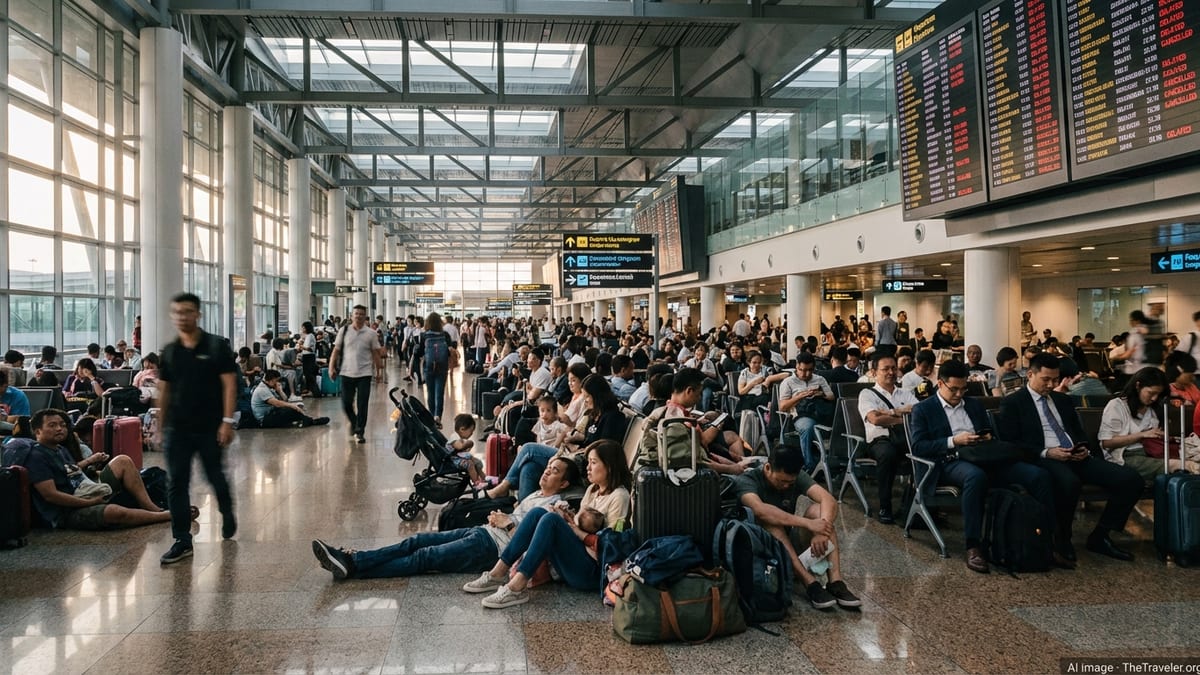
Across these interconnected hubs, the overall picture was one of rolling delays rather than full standstills, but the cumulative effect left terminals crowded and many passengers facing extended waits or missed onward journeys.
Airlines From Thailand, Japan, Korea And Malaysia Hit Hard
The disruption has been particularly acute for major national and regional airlines that rely on Asian hubs as transfer points. Publicly available flight data and industry coverage highlight schedule disruptions for Thai Airways at Bangkok, where services connecting Europe, South Asia, and Northeast Asia have experienced recurrent delays on some of the network’s busiest days.
In Japan, Japan Airlines and All Nippon Airways have recently had to adjust schedules in response to a combination of weather events, infrastructure issues, and air traffic control constraints. Earlier traffic control problems at Tokyo’s Haneda, along with more recent operational tweaks on domestic and regional routes, have kept on time performance under pressure, and the latest cluster of delays has added to that strain.
Korean Air and other South Korean carriers operating from Seoul Incheon have also been affected, particularly on routes to Southeast Asia and the United States that depend on tight waves of arrivals and departures. When one or two flights in a bank depart significantly behind schedule, the impact can cascade, leaving aircraft and crews out of position for subsequent rotations.
Malaysia Airlines and low cost operators serving Kuala Lumpur and secondary Malaysian airports have likewise faced schedule volatility on popular routes to Thailand, Singapore, China, and Japan. Aviation market analyses focusing on China’s outbound segment suggest that airlines have been trimming or reconfiguring selected routes, which can translate into higher cancellation numbers on short notice as carriers rebalance capacity between Japan, Southeast Asia, and domestic Chinese markets.
Weather, Operational Glitches And Network Realignment Drive Delays
Multiple factors lie behind the latest wave of Asian flight disruptions. Recent weather systems across East Asia, including strong winds and seasonal storms in parts of Japan and the Korean Peninsula, have prompted airlines to retime or cancel flights for safety and spacing reasons. Regional media reports have documented cases where storms approaching Japan led to the rescheduling of flights between Singapore and Japanese cities, reducing the margin for recovering punctuality elsewhere in the network.
In addition to weather, technical and operational issues remain a recurring challenge. Earlier air traffic control system glitches at airports such as Tokyo Haneda resulted in significant delays and isolated cancellations, underscoring how dependent high density hubs are on seamless data and communications. Even when subsequent days do not see new glitches, the adjustments needed to restore normal patterns can lengthen turnaround times and constrain capacity.
Another layer of complexity comes from strategic network changes, especially involving China related routes. Industry commentary indicates that Chinese and foreign carriers operating between major cities such as Shanghai, Guangzhou, and Shenzhen and popular destinations like Thailand and Malaysia have been cancelling or consolidating flights more frequently. The changes reflect shifting demand, evolving regulatory conditions, and currency and cost pressures that have cooled some outbound markets, particularly to Japan.
These operational and strategic adjustments filter through to regional hubs. When flights are removed, delayed, or downgraded, repositioning aircraft and crews can take several days, leaving schedules vulnerable to further disruption if additional weather or technical problems arise.
Passenger Experience: Missed Connections And Packed Terminals
For travelers, the headline numbers of 3,348 delays and 310 cancellations translate into missed connections, extended airport stays, and rebooked itineraries that may arrive a day or more later than originally planned. With Asian hubs functioning as major transfer points between Europe, the Middle East, Oceania, and North America, even a modest percentage of flights arriving late can leave long haul passengers stranded mid journey.
Reports from passenger forums and social media show images of packed departure halls and long check in and rebooking lines at several major airports, particularly in Bangkok, Singapore, and Kuala Lumpur. While most flights eventually departed, the volume of schedule changes created uncertainty for travelers trying to plan ground transport and accommodation at either end of their trips.
In situations where cancellations have occurred, airlines operating in the affected markets have been providing rebooking options or refunds in line with their published policies. However, the combination of high seasonal demand and limited spare capacity has made same day alternatives difficult on certain routes, particularly between Southeast Asia and Northeast Asia or Europe.
Travel industry observers note that such disruption days can also have a lingering impact, as some passengers choose to reroute future trips away from the most heavily affected hubs or to avoid tight connections that leave little room for schedule slippage.
What Travelers Can Expect In The Coming Days
Looking ahead, aviation analytics and regional weather forecasts suggest that Asia’s flight network is likely to remain sensitive to further disruption, even as airlines and airports work to clear backlogs. Seasonal storm patterns over the Northwest Pacific, combined with persistent thunderstorms across parts of Southeast Asia, continue to pose a risk of sudden airspace restrictions and temporary closures on certain approaches and departure paths.
Airlines serving the hardest hit hubs are expected to continue employing dynamic scheduling tools, adjusting departure times, consolidating lower demand services, and rotating aircraft to routes where demand remains strongest. Industry monitoring notes that carriers in China and Türkiye, in particular, are still fine tuning capacity in response to changing demand on both domestic and international routes, which could translate into further short notice cancellations.
Travel advisers and airport information platforms are broadly aligned in recommending that passengers flying through Bangkok, Tokyo, Seoul, Singapore, Kuala Lumpur, and major Chinese and Turkish airports build in additional buffer time for connections and monitor flight status closely on the day of travel. For those with nonessential trips, some commentators suggest considering more flexible ticket types or travel dates outside of known peak periods to reduce exposure to cascading disruption.
Although the vast majority of flights across Asia continue to operate, the latest figures on delays and cancellations highlight how quickly operational pressures can spread across an interconnected network, turning a handful of localised problems into a region wide challenge for airlines and travelers alike.