

More news on this day
Thousands of travellers were left stranded across Australia and New Zealand on Wednesday, 4 March, as a cascading wave of cancellations and delays by Virgin Australia, Air New Zealand, Emirates, Qatar Airways, Qantas and other carriers crippled flight schedules at major hubs including Sydney, Auckland, Melbourne, Brisbane, Perth and Adelaide.
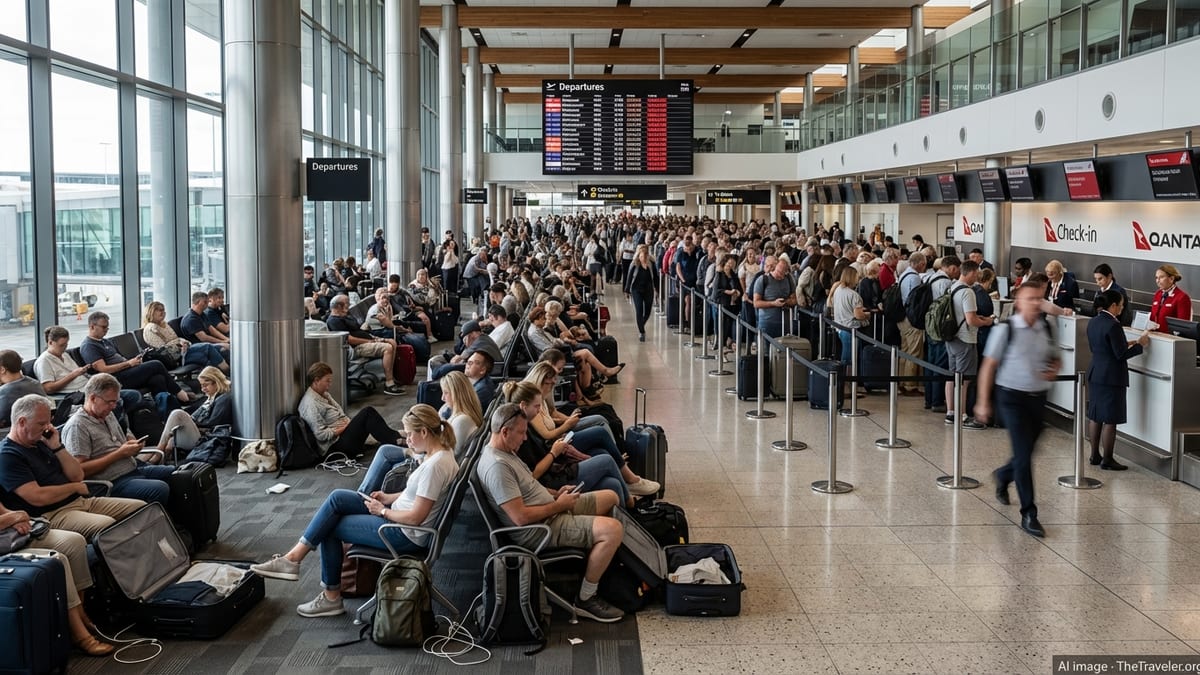
Knock-on Effects of Gulf Airspace Closures Hit AUNZ Hubs
The disruption across Australasia is the latest ripple effect from the closure and tight restriction of key Gulf airspaces since late February, which has forced Emirates, Qatar Airways and other Middle East carriers to suspend or sharply curtail services. With Dubai and Doha serving as primary long-haul transit points for Australians and New Zealanders bound for Europe, the United Kingdom and parts of Africa, the shutdown has rapidly propagated to airports at the far end of those networks.
By Wednesday, airport departure boards in Sydney, Melbourne, Brisbane, Perth, Adelaide and Auckland were dominated by “cancelled” and “delayed” notices for flights either operated by or codesharing with Middle East carriers. Aviation data cited by local industry outlets indicated that at least 54 flights involving Australia and New Zealand were cancelled within a 24-hour period, while more than 800 were delayed as airlines scrambled to reroute aircraft and crew or await clearance for limited emergency corridors.
Domestic carriers have also been caught in the turbulence. Virgin Australia and Qantas, both heavily reliant on codeshare traffic to and from Gulf hubs, have been forced to axe a string of services or operate near-empty positioning flights as their international partners ground large portions of their fleets. Air New Zealand has reported schedule changes and extended delays on some long-haul sectors, particularly where aircraft and crew were originally rostered to connect with disrupted Middle East services.
Airports have warned passengers that the disruption is likely to remain fluid for several days, with on-the-day cancellations and rolling delays expected as airlines receive updated airspace permissions and attempt to clear an unprecedented backlog of displaced travellers.
Scenes of Confusion and Fatigue at Major Airports
At Sydney Airport’s international terminal, travellers on Wednesday described scenes reminiscent of early-pandemic shutdowns, with long queues at airline service desks, families stretched out on terminal floors and makeshift charging stations clustered around every available power point. Similar reports emerged from Melbourne and Brisbane, where passengers arriving in the pre-dawn hours discovered their overnight flights had been scrubbed while they were en route to the airport.
Some travellers spoke of multiple days of uncertainty. Several Emirates and Qatar Airways passengers reported being rebooked two or three times before their flights were finally cancelled outright, often with little notice and conflicting information between airline apps, airport departure boards and call centre staff. In Melbourne, some stranded travellers said airport screens reflected cancellations long before official airline channels were updated, adding to the confusion over whether to proceed through security or seek alternative arrangements.
At Auckland Airport, a smaller but still significant cohort of passengers faced lengthy waits as flights to and from the Middle East remained largely suspended and knock-on delays hit trans-Tasman and Pacific connections. With many New Zealanders and Australians returning from extended holidays or overseas family visits, social media filled with accounts of missed weddings, disrupted business trips and rapidly mounting accommodation bills in already expensive gateway cities.
Despite the chaos, there were isolated signs of movement. A single Emirates service from Dubai to Sydney operated on Wednesday via a specially approved emergency air corridor, carrying a mix of repatriating Australians and transfer passengers. However, officials in both Australia and New Zealand stressed that such flights remained the exception rather than the norm, and should not be seen as an indication that normal schedules were close to resuming.
Governments Press Airlines for Clarity as Backlogs Grow
The New Zealand government said it was seeking urgent updates from airlines in the United Arab Emirates and Qatar about when regular services to Auckland and Christchurch might restart. Officials acknowledged that there were likely thousands of New Zealand citizens spread across the Middle East and beyond whose journeys home had been interrupted, many of whom had not yet registered with consular agencies.
In Canberra, Australian authorities signalled that they were closely monitoring the situation but stopped short of announcing formal repatriation flights, instead urging travellers to remain in close contact with their airlines and travel agents. Civil aviation regulators in both countries have issued advisories underscoring that the disruptions stem from security and airspace restrictions rather than technical or scheduling failures, a distinction that carries significant implications for passenger entitlements.
While some Middle East carriers have begun operating limited repatriation services and emergency corridors, industry experts say it could take three to five days or longer to clear the immediate backlog, assuming no further deterioration in the regional security environment. Aircraft and crew rotations have been thrown out of alignment across multiple continents, leaving carriers to juggle complex logistics while fielding an avalanche of refund and rebooking requests.
Travel industry bodies in Australia and New Zealand have called for clearer, more consistent communication from airlines, warning that confusion over which flights are operating, which are subject to waivers and how to access refunds is compounding the stress for stranded passengers. They argue that, at a minimum, airlines should ensure that official apps, websites and airport displays are synchronised so that travellers are not making critical decisions on the basis of outdated information.
Limited Options for Stranded Travellers Seeking Alternatives
For many travellers, especially those holding economy tickets on Emirates and Qatar Airways itineraries, the most immediate challenge is finding any viable route home at all. With Gulf hubs constrained, demand has surged on alternative pathways via Southeast Asia, North Asia and North America, pushing up fares and quickly filling remaining seats on airlines such as Singapore Airlines, Qantas, Air New Zealand and regional partners.
Travel agents across Australia and New Zealand reported a rush of inquiries from passengers willing to accept long detours, additional stopovers or extended layovers simply to secure confirmed itineraries in the next week. However, the surge in demand, coupled with the limited availability of aircraft that are not already committed to existing schedules, means many are facing delays of several days before they can be rebooked.
Consumer advocates have urged travellers to carefully examine their airline’s waiver policies before paying out of pocket for new tickets. In many cases, carriers are offering free date changes or route alterations within a restricted window, but not necessarily providing hotel accommodation, meals or transport to and from airports. The distinction has left some passengers sleeping in departure halls or paying for last-minute hotel rooms out of their own funds, with only a partial prospect of reimbursement.
Travel insurers, meanwhile, are bracing for a fresh wave of claims. Because the disruption is directly linked to airspace closures and regional conflict, some standard policies may limit or exclude certain benefits, leaving travellers reliant on airline goodwill or credit card protections. Experts recommend that passengers retain all documentation, including boarding passes, cancellation notices and receipts for incidental expenses, to bolster any subsequent claims.
What Travellers Should Do Next
Authorities and industry groups across both countries are urging affected travellers not to head to the airport unless their flight has been explicitly confirmed by their airline for that specific day and time. With terminals already crowded and check-in counters overwhelmed, unconfirmed arrivals risk adding to congestion without improving their chances of securing a seat.
Instead, passengers are being advised to monitor airline apps and official channels, maintain contact with travel agents where bookings were made through third parties, and register with consular services if stranded overseas for an extended period. Those with flexible travel dates or non-essential journeys have been encouraged to postpone travel until after airlines publish revised schedules and clear the most urgent backlog.
For travellers still planning new trips that would normally route through Dubai or Doha, agents are recommending alternative routings via Asia or North America where feasible, even if it involves longer flight times or additional stopovers. While such workarounds are far from ideal, they may offer the most reliable path for time-sensitive travel in the coming days.
With Middle East airspace restrictions showing few signs of an immediate, comprehensive resolution, Australia and New Zealand’s role as endpoints of disrupted global routes is likely to keep their airports under pressure. For the thousands of travellers left in limbo this week, the priority remains simply getting home, even if that means taking the long way around the world.