

More news on this day
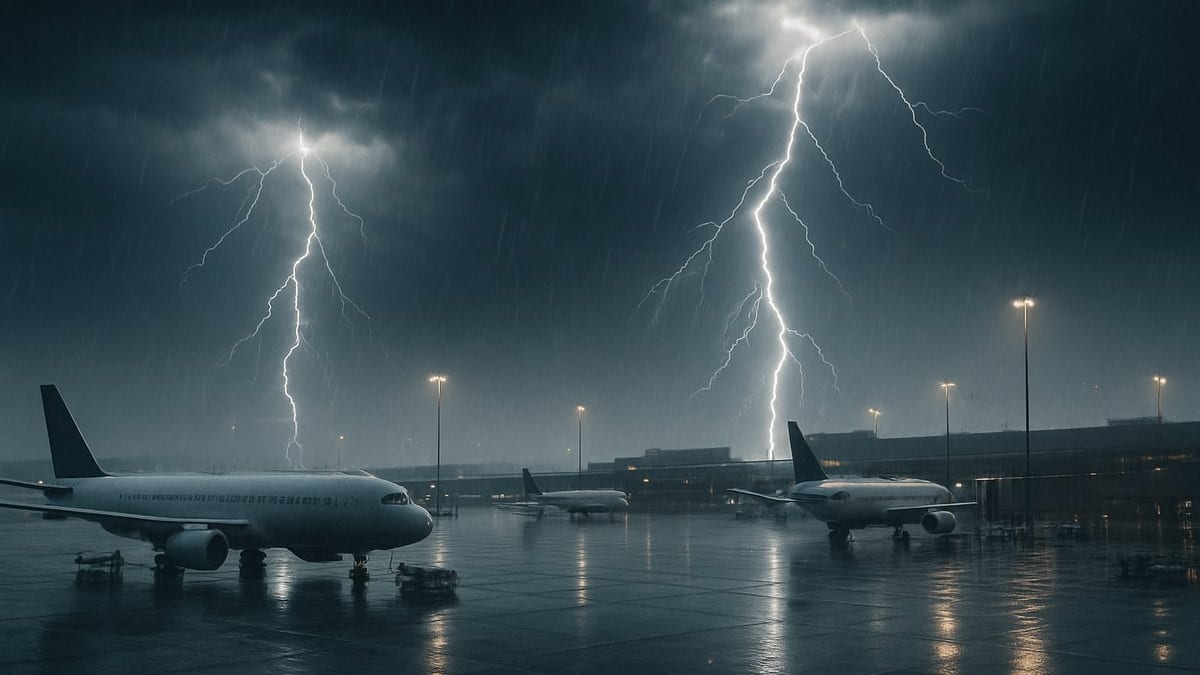
A fast-moving band of thunderstorms sweeping across the Bay Area forced a temporary ground stop at San Francisco International Airport on Saturday evening, triggering hundreds of flight delays and exposing how quickly severe weather can snarl the nation’s air travel network.
Get the latest news straight to your inbox!
Ground Stop Freezes Traffic at Bay Area Hub
Publicly available airport operations data indicate that aircraft movements at San Francisco International Airport were temporarily halted around 5:20 p.m. local time on Saturday after a line of thunderstorms brought heavy rain, gusty winds and lightning to the peninsula. The pause, described as a ground stop affecting both arrivals and departures, remained in place for more than an hour while conditions stabilized.
Flight-tracking platforms showed average arrival and departure delays building to nearly an hour during the ground stop window, with some individual flights facing significantly longer waits. By early evening, reports indicated that more than 350 flights at SFO had been delayed, alongside a growing tally of cancellations as airlines reworked schedules and repositioned aircraft.
While storms regularly affect air traffic across the United States in spring, a full ground stop at a major coastal hub such as SFO remains relatively uncommon. The episode highlighted how quickly operations at the airport can slow when thunderstorms intersect with its already constrained runway layout and complex airspace.
Why Thunderstorms Hit SFO Especially Hard
Weather primers and operational briefings published by SFO describe how the airport’s closely spaced parallel runways limit flexibility when visibility drops or convective weather threatens. In clear conditions, simultaneous arrivals and departures on parallel runways allow a relatively high landing rate. When rain, low cloud or thunderstorms move in, traffic is often shifted to different runway configurations that reduce the number of aircraft that can safely arrive each hour.
Aviation analyses of the Bay Area’s air traffic patterns note that San Francisco routinely experiences more significant weather-related delays than nearby airports in Oakland and San Jose, even when all three facilities sit under the same storm system. The combination of coastal wind shifts, marine layer clouds and limited runway separation means SFO’s capacity can fall sharply as controllers space aircraft farther apart.
Thunderstorms add additional complications beyond reduced visibility. Strong wind shear, lightning risk for ground crews and rapidly changing storm cells often prompt conservative spacing and temporary pauses in ground handling activities. The result is that even a relatively short-lived storm line can create a sizable backlog of flights waiting to land, depart or access gates.
Cascading Delays Across the National Network
Flight-tracking dashboards on Saturday showed the impact of SFO’s ground stop extending well beyond the Bay Area. Aircraft bound for San Francisco from other regions were held at origin or assigned extended departure times as air traffic managers sought to meter arrivals into the constrained airport. That pushed delays onto connecting passengers at upstream hubs who suddenly found themselves sitting on aircraft without a confirmed arrival slot into SFO.
Airline performance data reviewed by travel industry observers indicated that delays associated with San Francisco’s storms rippled through evening bank structures at several major U.S. hubs. Flights that could not depart on time for SFO missed their next rotations, leaving aircraft out of position for late-night and early-morning services on Sunday. In some cases, carriers turned to larger aircraft or consolidated departures in an effort to recover lost capacity once the ground stop lifted.
Experts who study air traffic management point out that ground stops and ground delay programs are designed to protect safety and prevent airborne holding close to busy airports. However, as seen on Saturday, these tools can also magnify disruption across the broader network when storms hit at peak travel hours or intersect with already tight crew and aircraft schedules.
Passengers Face Long Lines and Limited Options
For travelers inside SFO’s terminals, the thunderstorm-induced halt translated into crowded gate areas, lengthy customer service queues and rapidly shifting departure boards. Social media posts from passengers described multiple rolling departure time changes, aircraft waiting far past scheduled pushback and connections evaporating as the evening wore on.
Consumer advocates monitoring the disruption noted that some passengers were able to take advantage of weather waivers and rebooking options offered by several airlines. Others, particularly those on the last flights of the day to smaller markets, faced the prospect of overnight stays as aircraft and crews ran out of legal duty hours. Hotel availability near the airport was reported to be tight, reflecting both disrupted travelers and strong weekend leisure demand.
Travel planners emphasize that when a ground stop hits a major hub, the most practical tools for passengers are often airline mobile apps and self-service channels, which can provide alternate routing options more quickly than in-person counters. In situations like Saturday’s storm, same-day alternatives may involve connecting through secondary hubs or shifting to flights into Oakland or San Jose, then continuing by ground transport into San Francisco.
Spring Weather Puts Pressure on Fragile Schedules
The SFO thunderstorms arrived during an already volatile early spring period for U.S. aviation, marked by convective storms across multiple regions and brisk post-holiday travel demand. Recent analyses of national flight data have documented how even localized weather events can push a system operating near capacity into widespread disruption when spare aircraft and crew resources are limited.
Industry reports highlight that airlines have worked to rebuild networks and staffing following the pandemic years, but many carriers still operate tightly banked schedules with limited slack, particularly at coastal hubs. In this environment, a thunderstorm line that briefly shuts down runway operations at a single airport can trigger knock-on delays at distant cities hours later, as aircraft are pulled off their planned rotations.
For SFO, the latest ground stop underscores a persistent reality for Bay Area travelers as the stormy season lingers. When thunderstorms or strong frontal systems collide with the airport’s constrained runway geometry and heavy schedule, even a short-lived weather event can lead to hundreds of delayed flights, stranded passengers and a reminder of how sensitive modern air travel remains to the atmosphere above.