


More news on this day
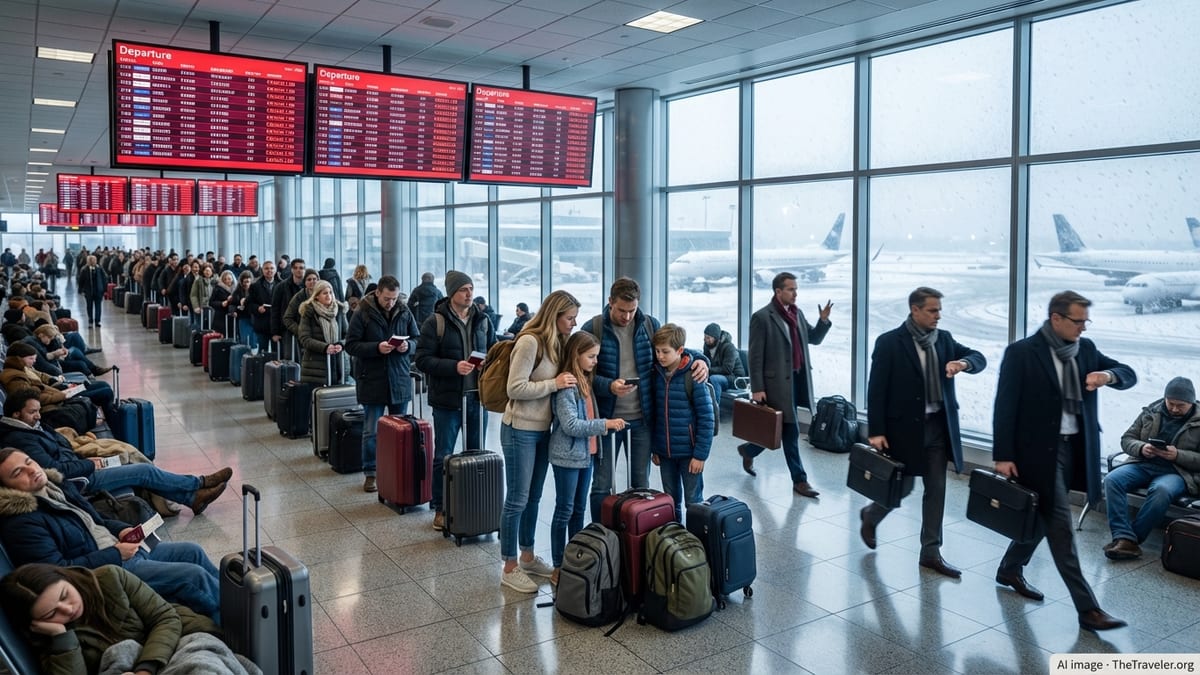
Severe thunderstorms over southeast England on Saturday have triggered hundreds of flight delays and cancellations at London’s Heathrow and Gatwick airports, leaving passengers stranded and airline schedules in disarray at the height of the summer travel rush.
Get the latest news straight to your inbox!
Hundreds of services disrupted as storms sweep southeast England
Publicly available flight-tracking data for Saturday 27 June indicates that more than 800 flights linked to Heathrow and Gatwick have been delayed, with reports of delays stretching from several hours to, in some cases, close to half a day. At both airports, a combination of late departures and aircraft waiting for stands has slowed operations to well below normal levels.
Figures cited by multiple outlets show Heathrow bearing the brunt of the disruption, with well over 500 arrivals and departures experiencing significant delays and more than 100 cancellations. Gatwick has also seen several hundred flights delayed and dozens cancelled as airlines struggle to reposition aircraft and crew around active storm cells.
The disruption follows an intense early-summer heatwave across eastern and southeastern England, which gave way overnight to unstable air and powerful thunderstorms. Heavy rain, frequent lightning and low cloud have affected the London area and parts of northwestern Europe, creating difficult conditions for air traffic management.
Eurocontrol and the UK’s provider of air navigation services introduced temporary flow restrictions over southeast England and neighbouring sectors, reducing the number of aircraft allowed to arrive and depart each hour. This has had an immediate impact on busy hubs such as Heathrow and Gatwick, where runway capacity is already tightly constrained even in normal weather.
Passengers report hours on grounded aircraft and in terminal queues
Travellers posting on social media platforms have described being kept on grounded aircraft for several hours as departures were repeatedly pushed back while storm cells passed over the capital. Some passengers reported being asked to remain seated on the tarmac while crews awaited updated departure slots and weather clearances.
Others described long queues at check-in, security and customer service desks, as airlines attempted to rebook those whose flights had been cancelled outright. With many services already heavily booked for the peak weekend, options to switch to later departures have been limited, particularly on short-haul leisure routes.
Images shared online from both Heathrow and Gatwick show crowded departure halls and information screens filled with delayed and cancelled flights. Travellers arriving from unaffected parts of the country and Europe have also faced lengthy waits for gates and baggage handling, as aircraft arriving late disrupt stand availability and ground operations.
Reports from UK and international media indicate that some passengers have experienced total journey disruptions of up to 10 or 11 hours, particularly where connecting flights have been missed or where aircraft have been diverted to alternative airports to wait out the worst of the weather.
Airlines adjust schedules as air traffic control slows movements
Airlines operating at Heathrow and Gatwick, including major carriers such as British Airways and easyJet, have implemented pre-emptive cancellations and tactical schedule changes in response to the storms. Publicly available statements indicate that carriers have focused on trimming the most delay-prone services and consolidating some frequencies to reduce knock-on disruption later in the weekend.
Flight trackers show that a number of services that would normally transit southeast England have instead been rerouted, extended or diverted as air traffic controllers balanced safety margins with the limited capacity available in affected airspace. In some cases, aircraft have been held on the ground at departure airports to avoid airborne holding around London once the storms move through.
The slower flow of arrivals and departures has a compounding effect on hub operations. When aircraft cannot depart on time because of weather or slot restrictions, they continue to occupy gates needed for inbound flights, forcing arriving aircraft to wait on taxiways. Ground handling teams then face shorter turnaround windows, which can lead to further minor delays building into significant schedule disruption.
Industry data and operational briefings suggest that airlines are prioritising long-haul intercontinental services where possible, due to the limited number of daily frequencies and the complexities involved in rebooking. Short-haul and intra-European flights are proving more vulnerable to same-day cancellations and extended delays.
Weather warnings and knock-on impacts for wider travel network
The UK Met Office has issued thunderstorm warnings covering parts of eastern and southeastern England, noting that intense downpours, hail and lightning are possible as the unstable air mass continues to move across the region. Forecasters expect further thundery outbreaks later on Saturday and into Sunday, raising the prospect of continued disruption for at least another 24 hours.
Heavy rain and localised surface water have the potential to affect road and rail links serving Heathrow and Gatwick, adding another layer of uncertainty for travellers attempting to reach or leave the airports. Publicly available travel advice encourages passengers to allow extra time for journeys to the terminals and to monitor live traffic and rail updates in addition to checking their flight status.
Travel industry analysts note that the timing of the storms, coinciding with a busy summer getaway weekend, has amplified their impact. Many flights are operating close to full capacity, reducing the availability of spare seats to accommodate disrupted passengers and making it harder for airlines to recover their schedules quickly once conditions improve.
While both airports continue to operate, the combination of weather-related airspace restrictions and full peak-season schedules means that even modest additional delays could cascade through the network into the evening and potentially into Sunday, particularly for aircraft and crews that have already exceeded normal duty periods.
Advice for travellers heading to or through London’s main hubs
Publicly available information from Heathrow, Gatwick and major airlines strongly advises passengers to check the latest status of their flight before setting out for the airport, using official airline channels and airport departure boards. Same-day timetable changes, gate moves and aircraft substitutions remain possible as airlines work around storms and air traffic control constraints.
Travellers starting their journeys in the UK are being urged by travel providers and consumer groups to build in additional time for security screening, potential queues and slower ground transport. Those with separate tickets for onward connections, or journeys that involve transferring between Heathrow and Gatwick, are considered particularly exposed to missed flights if delays continue.
Passenger rights regulations in the UK and European Union may entitle travellers to care provisions such as meals, refreshments and accommodation during extended delays, along with rerouting or refunds in the event of cancellations. However, the severe weather that triggered today’s disruption is generally treated as outside airline control, which can limit eligibility for additional financial compensation.
With further thunderstorms forecast and schedules already stretched by the weekend rush, aviation observers expect residual delays to persist even after the most intense cells move away from London. Travellers are being encouraged to remain flexible with their plans, stay informed through official channels and be prepared for last-minute changes as Heathrow and Gatwick work to restore normal operations.