


More news on this day
Egypt’s flag carrier EgyptAir is moving to capture surging summer demand on the country’s Mediterranean coast by launching new direct connections from Saudi Arabia to Alamein, underscoring the North Coast city’s fast-growing status as a regional tourism hotspot.
Get the latest news straight to your inbox!
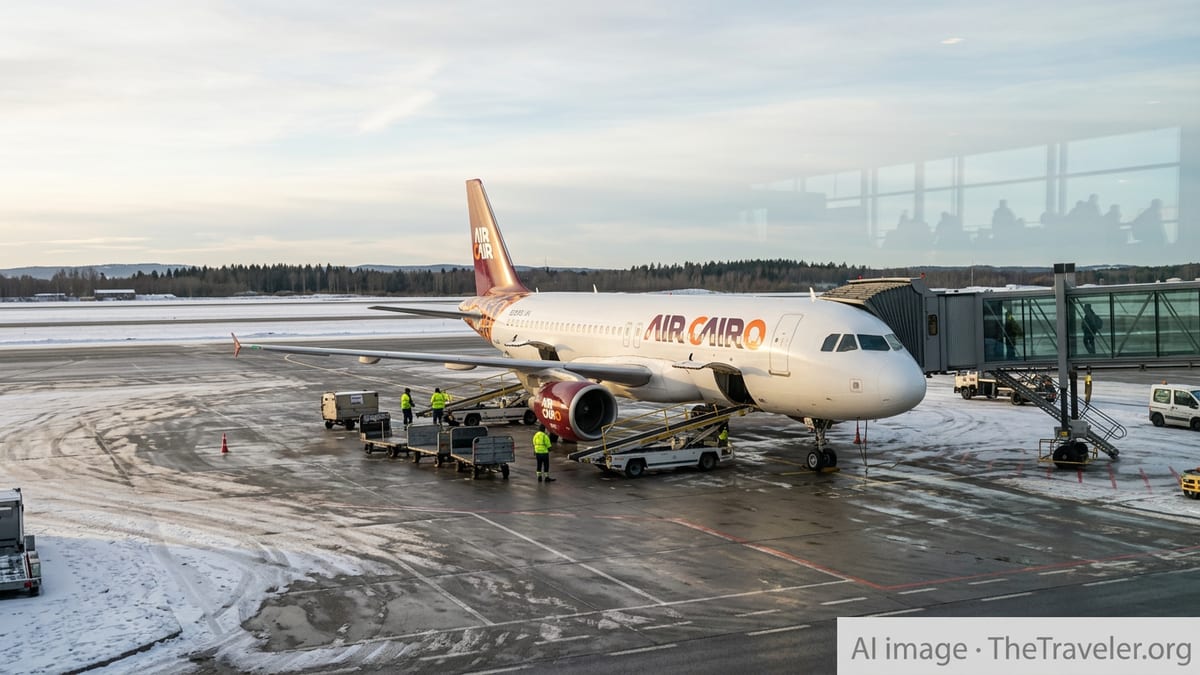
New Saudi–Alamein links expand EgyptAir’s summer network
According to publicly available timetable data and local aviation coverage, EgyptAir has scheduled seasonal direct services linking Saudi airports with El Alamein International Airport for the peak summer months, in addition to its domestic Cairo–Alamein operation. The move places the national airline directly into a competitive corridor that has seen a sharp rise in Gulf–Mediterranean traffic over the past two seasons.
Earlier reports already showed EgyptAir operating night flights between Cairo and Alamein during July, using narrow-body aircraft to feed the resort city from the capital. The decision to extend that presence to point-to-point routes from Saudi Arabia signals confidence that demand no longer comes only from domestic holidaymakers but from a broader base of Gulf visitors seeking cooler summer temperatures on Egypt’s North Coast.
Industry data indicates that Saudi–Egypt traffic has been one of the most resilient segments in the wider Middle East market, supported by religious travel, family visits and leisure. By positioning Alamein alongside established Egyptian gateways such as Cairo, Sharm el Sheikh and Hurghada, EgyptAir is aiming to channel a portion of this steady flow directly into the Mediterranean resort belt.
The new flights also complement services offered by EgyptAir’s partners and subsidiaries, creating additional one-stop options to Alamein from beyond Saudi Arabia. This layered network approach is intended to make the destination more visible in international booking systems and to ease access for travelers who might previously have routed through Alexandria or Borg El Arab before continuing by road.
Gulf carriers accelerate direct access to Egypt’s North Coast
EgyptAir’s expansion into Saudi–Alamein routes comes as regional competitors ramp up their own presence at the Mediterranean resort. Over recent seasons, Saudi low-cost and full-service airlines have added or expanded direct services from Riyadh and Jeddah to El Alamein, while Gulf carriers based in the United Arab Emirates have increased summer frequencies to the city.
Public flight schedules for the upcoming summer indicate multiple weekly direct flights from Riyadh to Alamein, operated by Saudi carriers alongside EgyptAir’s offerings. Services from Jeddah are also scheduled several times per week, creating a pattern of near-daily connectivity from the kingdom’s two largest cities to Egypt’s North Coast during July and August.
Travel industry observers note that this level of capacity would have been difficult to imagine only a few years ago, when Alamein did not feature prominently on regional route maps and summer traffic to Egypt’s beaches was focused on the Red Sea. The rapid shift underlines how airlines are responding to evolving traveler preferences, as Gulf residents look for short-haul coastal breaks that combine resort facilities with familiar language and cuisine.
The expanded air links are being supported by coordinated marketing campaigns from carriers and tourism stakeholders, highlighting Alamein’s seafront promenades, entertainment districts and festival calendar. For airlines, the destination offers the opportunity to deploy narrow-body fleets on high-demand leisure routes during months when corporate travel typically softens.
New Alamein positions itself as a Mediterranean lifestyle hub
The surge in flight activity reflects a broader transformation of New Alamein from a wartime landmark into a master-planned Mediterranean city. Government statements and planning documents describe the project as a flagship “fourth generation” urban development, with residential towers, marinas, conference venues and cultural sites spread along a long stretch of coastline.
In recent summers, the city has hosted high-profile concerts, cultural festivals and political gatherings, further raising its profile among regional audiences. High-rise beachfront developments, branded hotel residences and new retail complexes have contributed to a skyline that is markedly different from Egypt’s older coastal resorts.
The authorities view New Alamein as a key release valve for seasonal population pressure in Cairo and Alexandria, encouraging Egyptians to spend the hottest months on the North Coast while also courting affluent visitors from the Gulf. The arrival of direct Saudi flights through EgyptAir and other carriers is central to this strategy, shortening journey times and making weekend breaks more feasible.
Urban planners and tourism analysts point out that air accessibility is often the decisive factor in whether a new coastal city becomes a regional hub or remains a primarily domestic destination. With Alamein now appearing on route maps of multiple Gulf airlines, its trajectory increasingly resembles that of other Eastern Mediterranean resorts that grew rapidly once they were connected by frequent short-haul flights.
Tourism momentum and economic stakes for Egypt
The push to link Saudi Arabia directly with Alamein is unfolding against a wider backdrop of efforts to boost foreign currency earnings and diversify Egypt’s tourism base. Visitor numbers to the country have rebounded in recent years, supported by relaxed entry procedures for several nationalities and renewed interest in cultural and beach destinations.
By attracting higher-spending Gulf travelers to the Mediterranean coast, policymakers aim to extend the tourism season and distribute visitor flows more evenly across regions. North Coast resorts traditionally see intense activity for only a few peak weeks, with occupancy dropping sharply outside local holiday periods. Regular scheduled flights from Saudi Arabia create scope for a longer calendar of events and promotions.
The economic stakes extend beyond hotels and resorts. Increased flight frequencies can support jobs at Alamein’s airport, stimulate demand for ground transport, and encourage investment in retail, dining and entertainment. Aviation and tourism are also tied closely to construction and real estate, sectors that have been central to the New Alamein project since its inception.
Analysts caution, however, that maintaining momentum will require careful management of infrastructure and pricing. Ensuring smooth airport operations, competitive fares and reliable on-the-ground services is viewed as essential if Alamein is to retain repeat visitors from demanding Gulf markets that have many alternative beach destinations within a similar flight time.
Regional connectivity and the race for Mediterranean leisure travelers
EgyptAir’s direct Saudi flights to Alamein illustrate a broader regional competition for Mediterranean leisure demand. Across the Middle East, airlines and tourism authorities are seeking to position their coastal cities as preferred gateways for summer travelers who want to avoid long-haul journeys.
Within this landscape, Egypt holds several advantages, including cultural proximity, Arabic as a shared language, and a long-established reputation for hospitality. Adding Alamein to the country’s network of international-capable airports strengthens its ability to offer varied products, from Red Sea diving to Mediterranean beach clubs, all accessible on relatively short flights from the Gulf.
The latest route decisions also interact with Saudi Arabia’s own tourism ambitions. As the kingdom develops Red Sea and Gulf coast resorts of its own, airlines are simultaneously deepening outbound links to neighboring countries. Industry commentators suggest this reflects a belief that growing the overall regional tourism market can benefit all players, provided they differentiate their offerings.
For travelers, the practical outcome is a wider choice of nonstop options for summer holidays. With more carriers publishing schedules into Alamein and EgyptAir reinforcing its role as the national connector, the city’s place on the Mediterranean tourism map appears increasingly secure as the 2026 peak season approaches.