


More news on this day
Severe thunderstorms over southeast England have triggered hundreds of flight delays and cancellations at London’s Heathrow and Gatwick airports on Saturday, leaving travellers stranded on aircraft and in terminals as operations struggle to recover.
Get the latest news straight to your inbox!
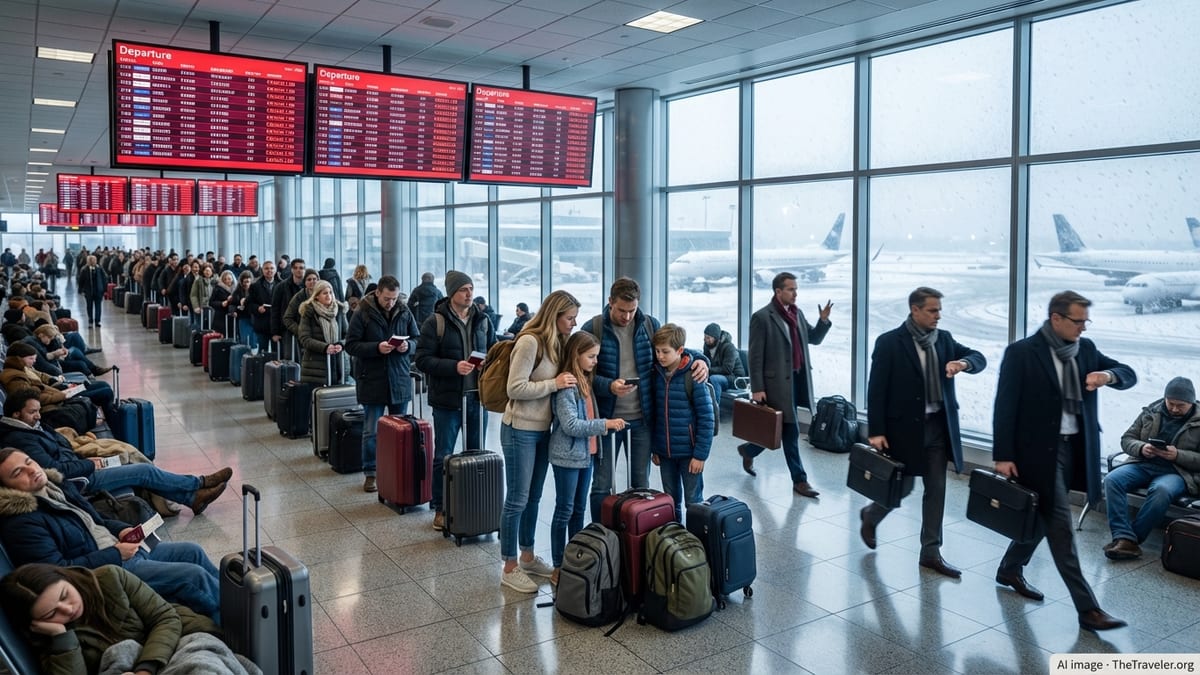
Storm Cells Force Sharp Slowdown in London Air Traffic
Publicly available flight tracking data and media reports for Saturday 27 June 2026 indicate that both Heathrow and Gatwick were forced to reduce arrivals and departures as intense storm cells moved across the London area overnight and into the morning.
According to figures cited by outlets including ITV News and other UK media, more than 400 flights at Gatwick were delayed, with around 100 cancellations recorded, while close to 600 services at Heathrow faced delays and more than 100 were cancelled as air traffic managers imposed temporary flow restrictions for safety.
The disruption followed a record-breaking June heatwave in parts of England, with the arrival of cooler, unstable air over already hot ground fueling thunderstorms, frequent lightning and intense downpours. Aviation-focused coverage notes that the combination of active storm cells and saturated ground conditions can quickly overwhelm tightly scheduled airport operations.
Operational updates from the airports and airlines show that many of Saturday’s delays extended for several hours, with some services pushed into late evening departure slots as carriers attempted to reposition aircraft and crew and clear the backlog of passengers.
Passengers Report Hours on the Tarmac and Overnight Disruption
Accounts shared across social platforms and referenced in broadcaster and newspaper reports describe passengers being held on board aircraft at stands or on taxiways for prolonged periods as departure slots were repeatedly revised. Some travellers reported spending four to five hours on planes at Gatwick before flights were ultimately cancelled.
Coverage of the disruption highlights examples of families separated or rebooked onto indirect routings after missed connections at Heathrow, with travellers bound for long-haul destinations being moved onto alternative services via other hubs once original flights slipped outside crew duty limits.
Images and video circulating online show long queues at check-in and rebooking desks, as well as crowds around information screens listing extensive delays for both European and domestic services. For some short-haul routes, delay times of six hours or more were recorded, while a minority of services saw potential knock-on impacts approaching 10 to 11 hours when aircraft and crews were displaced.
Reports also describe growing frustration among stranded passengers as accommodation in nearby airport hotels became scarce, particularly for those whose late-night departures were cancelled after extended waits at the gate.
Airlines Cite Weather and Air Traffic Restrictions
Public statements published by major carriers serving Heathrow and Gatwick attribute the disruption to adverse weather conditions and the resulting air traffic control restrictions over southern UK and parts of continental Europe. British Airways, easyJet and Wizz Air are among the airlines reported to have adjusted schedules, with a mix of pre-emptive cancellations and rolling delays throughout the day.
According to published coverage, British Airways indicated that reduced air traffic capacity over London meant changes were required to protect the wider schedule, while emphasising that the majority of its customers would still travel, albeit in some cases at revised times.
Low-cost operators at Gatwick reported pre-emptive cancellations on selected routes in anticipation of bottlenecks, citing the need to keep aircraft and crew in position for later rotations. Some services were consolidated or re-routed where possible, with passengers offered rebooking options or refunds consistent with standard disruption policies.
Travel industry analysts noted in public commentary that thunderstorms are treated as adverse weather events outside airline control, limiting compensation rights in many jurisdictions, although carriers remain responsible for duty-of-care assistance such as refreshments and, where necessary, overnight accommodation.
Heatwave Break Brings New Operational Challenges
Meteorological data referenced by UK media indicate that the thunderstorms arrived on the heels of a record or near-record late June heatwave in parts of eastern and southeastern England, where temperatures on Friday climbed into the high 30s Celsius.
Weather specialists quoted in open reports describe the pattern as typical of a rapid transition from hot, stagnant air to a cooler, unstable air mass, creating ideal conditions for severe thunderstorms with lightning, hail and intense downpours. Such systems can force temporary suspension of ground operations, including refuelling, and sharply reduce the number of aircraft allowed to land or depart each hour.
Airports such as Heathrow and Gatwick have previously identified extreme weather as a growing operational risk in published planning documents, noting that more frequent heavy rainfall and convective storms can lead to runway closures, ground handling disruptions and wider network knock-on effects.
Forecasts for the remainder of the weekend suggest that conditions may gradually stabilise, but aviation commentators warn that residual disruption could continue into Sunday, depending on how quickly airlines are able to retrieve aircraft and crew rotations.
Advice for Travellers as Disruption Continues
Public guidance from airports, airlines and travel organisations strongly advises passengers due to fly into or out of London’s major hubs to check their flight status frequently before setting out for the airport. Many carriers have issued flexible rebooking policies for affected services, allowing changes without additional fees within specified travel windows.
Travel experts quoted across broadcast and online coverage recommend allowing extra time for journeys to Heathrow and Gatwick in case surface transport is also affected by heavy rain or localised flooding, particularly where rail links and motorways pass through storm-affected areas.
Passengers already abroad and due to connect through London are being urged to monitor airline apps and email alerts closely, as some long-haul services are being retimed or rerouted to avoid peak congestion periods. Those facing overnight delays are encouraged to confirm entitlement to accommodation, meals or transport vouchers under the relevant airline’s disruption policy.
With thunderstorms increasingly cited in official planning documents as a key climate-related challenge for aviation, the latest wave of disruption at Heathrow and Gatwick is likely to intensify debate over how Europe’s busiest air hubs can build greater resilience into their schedules during periods of volatile summer weather.