


Most visitors crossing Dubrovnik’s polished limestone streets glance at the Church of St Blaise, snap a photo of its Baroque facade, and move on toward the city walls or the harbor. Yet for locals, this relatively small church on Luža Square is the emotional and spiritual heart of Dubrovnik, a place where centuries of faith, fear, pride, and resilience are quietly stored in stone, silver, and ritual. Understanding why it matters so deeply can transform a quick stop into one of the most meaningful moments of a trip to Croatia.
Get the latest updates straight to your inbox!
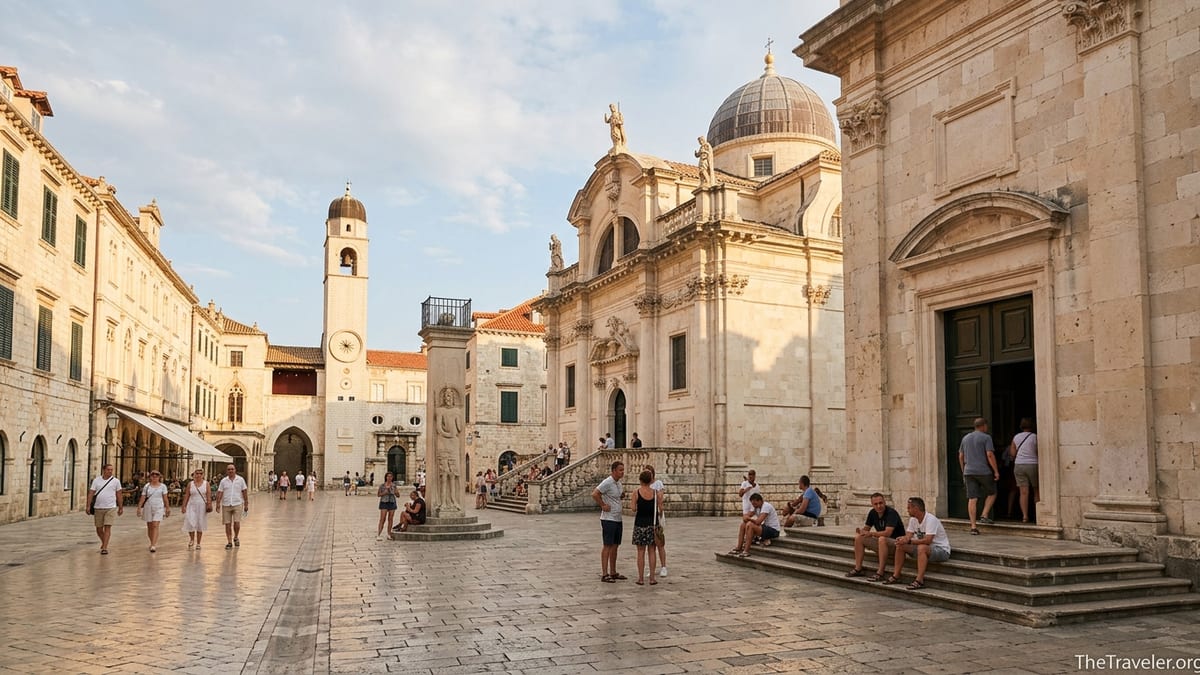
The Modest Church at the Center of a Former Republic
Stand in Luža Square at almost any time of day and you will see the Church of St Blaise anchoring the eastern end of Stradun, Dubrovnik’s main promenade. It is not the largest church in town, nor the tallest. The nearby cathedral has a more imposing dome, and the Jesuit St Ignatius Church sits atop a grand staircase that looks straight out of a film set. Yet it is St Blaise that locals instinctively call “our” church, even if they live in other parishes.
The present Baroque building dates from the early 18th century and was completed around 1715, built after a devastating earthquake in 1667 destroyed much of the earlier Romanesque church on the same site. Today’s structure, designed in the Venetian Baroque style, rises from a broad staircase that almost functions as a public living room; you will see children perched on the steps eating gelato, couples meeting before dinner, and elderly residents resting with their shopping bags in the late afternoon shade.
Look closely at the facade and you notice four Corinthian columns, richly carved niches, and above them a balustrade crowned by a statue of St Blaise himself. He holds a model of Dubrovnik as it looked before later destruction and rebuilding, preserving in stone a lost version of the city. For most tourists it is simply a picturesque figure; for locals it is a reminder that their patron saint is literally seen as the protector holding the city in his hands.
Because the church sits at the junction of Stradun, Sponza Palace, Orlando’s Column, and the city bell tower, many walking tours pause here. Guides often give a brief description before hurrying on, but those willing to linger and step inside discover a space that explains far more about how Dubrovnik sees itself than any viewpoint on the walls.
St Blaise: From Distant Martyr to Dubrovnik’s Guardian
To understand why this church matters, you need to know something about St Blaise himself. Blaise was an early Christian bishop and martyr traditionally associated with the city of Sebaste in present-day Turkey or Armenia. Over time he became widely venerated as a healer, particularly of throat ailments, which is why in many Catholic countries people still have their throats blessed with crossed candles on his feast day in early February.
In Dubrovnik, the story takes an even more local turn. According to legend, in the 10th century St Blaise appeared in a vision to a local priest and warned him that Venetian ships anchored offshore were planning a surprise attack on the city. Forewarned, the citizens prepared their defenses and the attack failed. From then on, the people of Dubrovnik adopted him as their patron and protector. This legend is not a dry medieval story for locals; it is retold to schoolchildren and echoed in flags, paintings, and sculptures across the city.
Walk through any of the main gates into Dubrovnik’s Old Town and you will see the saint carved above you, usually holding that same model of the city. He appears over Pile Gate, Ploče Gate, and on countless corners and fountains. The image on the Church of St Blaise is simply the most prominent and beloved. Just as New Yorkers casually recognize the silhouette of the Statue of Liberty, Dubrovnik residents instantly recognize the bearded bishop with a city in his hands.
For travelers, this means that visiting the Church of St Blaise is less like stepping into a random historic site and more like visiting the headquarters of a city’s guardian. Even if you are not religious, the idea that an entire republic once believed an invisible protector watched over its walls helps explain the stubborn independence and strong civic identity that still define Dubrovnik today.
Inside the Sanctuary: Relics, Silver, and Living Devotion
Many visitors push open the heavy door of St Blaise, glance around for a few seconds, and step back out. Slow down, and the interior begins to reveal why this space is so central to Dubrovnik’s memory. The church is laid out as a single nave with a short transept, topped by an oblong dome that filters in soft daylight. Elaborate Baroque altars, gilded details, and marble columns frame the main altar where a statue of St Blaise takes pride of place.
Behind and around that altar are some of Dubrovnik’s most precious treasures: reliquaries containing fragments associated with St Blaise and other saints. These are not displayed behind glass like museum pieces. Instead, they are kept as part of the church’s living liturgical life, carried in processions and touched by the faithful. On an ordinary weekday morning, you might notice a handful of locals quietly lighting candles at side altars, tourists sitting respectfully on benches, and the occasional murmur of a whispered rosary.
The church is usually free to enter, and there is no ticket desk or turnstile. A small donations box near the entrance suggests a few euros if you can spare it. Compared with the 35 to 40 euro price tag for a walk on the city walls, or the typical 15 to 20 euros for a terrace coffee and cake on Stradun, this open-door policy feels almost radical. It embodies the idea that St Blaise’s protection and the church’s symbolism belong first to the people and only secondarily to the economy built around tourism.
One detail worth seeking out is the stained glass installed in the 20th century by local artist Ivo Dulčić. If you pass by at night, the church is often illuminated from within, and the colored glass glows softly onto the square. Sit on the steps across by Orlando’s Column and watch as people cross the square, framed by that warm light. It is an entirely different mood from Dubrovnik’s busy daytime selfie culture, and it costs nothing more than a half hour of your time.
The Feast of St Blaise: A Thousand Years of Processions
Every year on 3 February, the Church of St Blaise becomes the epicenter of a celebration that has been held in Dubrovnik for more than a millennium. The Festivity of St Blaise is so deeply rooted in local identity that it has been recognized by UNESCO as an item of Intangible Cultural Heritage. For most of the year, visitors see only a beautiful Baroque building. Come in early February and you will see an entire city moving around it.
The day typically begins with early morning Mass in the church, after which clergy and laypeople emerge carrying elaborate silver reliquaries, each one designed to hold a relic associated with St Blaise or other saints important to Dubrovnik’s history. These reliquaries, some shaped like arms or heads, are carried up and down Stradun in a procession that includes traditional costumes, church banners, and delegations from surrounding villages.
For travelers, watching this procession can feel like stepping back into the era of the Republic of Ragusa, when Dubrovnik was a maritime power trading with Venice, the Ottoman Empire, and beyond. Locals line the route, often dressed in regional folk attire, and visitors are welcome to join the crowd, provided they respect the religious nature of the event. Unlike a staged folkloric show with tickets and fixed seating, this is a living ritual that locals take seriously. A good practical tip is to arrive at least 30 to 45 minutes early to find a spot near Orlando’s Column or in front of the church steps, since the square fills quickly.
Throughout the day, priests offer the traditional blessing of throats using crossed candles, a custom linked to St Blaise’s reputation as a healer. Whether you choose to participate or simply observe, it is a vivid reminder that the church is not just an architectural landmark but the focal point of an ongoing relationship between the city and its patron. For those who come in high summer, when the square is full of cruise ship tours and souvenir stands, it can be surprising to learn that only a few months earlier the same space was dominated not by commerce but by ritual and prayer.
Witness to Earthquakes, Wars, and Everyday Resilience
The Church of St Blaise has also stood as a witness to earthquakes and wars that have repeatedly threatened Dubrovnik. The 1667 earthquake, which killed thousands and destroyed much of the medieval city, brought down the earlier church on this site. Rebuilding it in Baroque style was not just an aesthetic choice; it was a statement that the republic would rise again, with its patron saint still watching over it.
More recently, during the conflict of the early 1990s, shells fell on Dubrovnik’s Old Town, damaging roofs, streets, and monuments. The Church of St Blaise did not escape unscathed. Restoration work carried out in the decades since has repaired structural damage and cleaned smoke-blackened stone, but older residents still remember seeing the church scaffolded and wounded. Today, small plaques and interpretive signs in the Old Town describe the shelling and restoration; standing on the church steps and looking up at the dome, it is hard not to imagine the anxiety locals must have felt seeing their spiritual center under threat.
Because of its role as a symbolic heart of the city, the church often becomes the place where Dubrovnik responds to both tragedy and celebration. When a local sports team wins a major title, spontaneous gatherings sometimes spill onto the square in front of St Blaise. When accidents or national tragedies occur, candles often appear on the church steps. None of this is organized for visitors, yet travelers paying attention can often sense the mood of the city simply by noticing whether the space around the church feels festive, reflective, or subdued.
For a visitor, knowing this background changes how you experience an ordinary scene: a bride and groom posing for wedding photos on the steps, children chasing pigeons while a busker plays nearby, or a group of uniformed students filing out after Mass. These are not random glimpses of “local color” but pieces of a long story in which the church has served as a steady reference point through upheavals that would have erased lesser cities.
How Travelers Can Engage More Deeply
Understanding why the Church of St Blaise matters is only the first step. The next is engaging with it respectfully and thoughtfully. One simple approach is to plan a short break in your sightseeing specifically here, rather than treating the church as another quick stop between the city walls and the cable car. For example, you might visit the walls in the morning, then around midday step into the church when it is usually quieter, take a seat in a back pew, and simply absorb the atmosphere for ten or fifteen minutes.
If you are traveling on a budget, the church offers a rare opportunity to connect deeply with the city at no cost. A typical coffee on Stradun can easily run 4 to 6 euros, and a simple lunch in the Old Town might cost 15 to 25 euros per person. Setting aside some of that time to sit on the steps of St Blaise instead, perhaps with a takeaway pastry from a nearby bakery, can be equally memorable. You will see wedding parties emerging, local children weaving through tourist groups, and occasionally hear the organist practicing for an evening Mass.
Those interested in photography will find that the church rewards patience. Early morning light falls gently on the facade, and at that hour the square is mainly occupied by delivery carts and a few locals heading to work. Late evening, when the church is lit from within and the surrounding buildings glow softly, is another ideal time. Instead of joining the crush on the western harbor for sunset, consider spending one evening simply watching how the character of the square changes as day-trippers leave and locals reclaim the space around their patron’s church.
Finally, if you have time and interest, consider attending a Mass. Services are primarily in Croatian, but the rhythm of the liturgy is familiar to many visitors from Catholic backgrounds, and the congregation is used to seeing respectful travelers slip quietly into the back rows. Even if you are not religious, being present during a service offers insight into how the church functions on an ordinary weekday, not just on its famous feast day.
Connecting St Blaise to the Rest of Dubrovnik
Once you start noticing St Blaise at his church, you will begin to see him everywhere. One rewarding way to explore Dubrovnik is to treat the Church of St Blaise as your starting point and then set out to find other depictions of the saint throughout the Old Town. Walk to Pile Gate and look up to see him above the entrance. Pass by the cathedral and notice his statue in one of the facade niches. Wander the side streets and you will spot small reliefs of his figure over doorways, sometimes worn by centuries of sea air and sun.
This informal “St Blaise trail” helps link different parts of the city into a coherent story. For instance, you might start at the church on Luža Square, then cross to Sponza Palace where the city’s historical archives are kept, then continue to Orlando’s Column, once used as a symbol of Dubrovnik’s independence and trading privileges. All of these elements form a tight knot of civic pride, and the church is the spiritual thread running through them.
Guided tours increasingly recognize this connection. Some local guides now structure their Old Town walks around the theme of the Republic of Ragusa’s identity and its symbols, spending more time at St Blaise and less on generic photo stops. If you are booking a tour online or through your hotel, it is worth asking whether the itinerary includes a meaningful stop at the church rather than just a brief exterior explanation. A guide who cares about the city’s stories will usually light up when you mention St Blaise.
Even practical details of city life pass through the square in front of the church. During summer festivals, stages and seating often appear nearby, but organizers are usually careful to respect the view of the facade. Markets, concerts, and civic ceremonies all take the church into account, and that quiet priority itself tells visitors something about its status in local minds.
The Takeaway
For many travelers, Dubrovnik is a checklist of visual highlights: city walls, red roofs, sea views, perhaps a “Game of Thrones” location or two. The Church of St Blaise risks becoming just another stop on that list, a pretty Baroque backdrop for a quick photograph. Yet to see it only as a facade is to miss one of the clearest windows into how Dubrovnik understands itself, past and present.
This church is the house of the city’s guardian, the anchor for thousand-year-old rituals, a survivor of earthquakes and wars, and a stage for everyday scenes of joy and grief. It is free to enter, easy to overlook, and infinitely richer when approached with curiosity. If you give it more than a passing glance, you will walk away not only with better photographs, but with a deeper sense of why Dubrovnik, despite the crowds and cruise ships, still feels like a place with a strong, beating heart.
On your next wander down Stradun, allow yourself to pause at the steps of St Blaise. Watch the square for a while, step inside for a moment of quiet, and remember that beneath the tourist bustle lies a centuries-old relationship between a city and its patron. Understanding that relationship is one of the surest ways to experience Dubrovnik as more than just a beautiful backdrop.
FAQ
Q1. Where is the Church of St Blaise located in Dubrovnik?
The Church of St Blaise stands on Luža Square at the eastern end of Stradun, opposite Sponza Palace and close to Orlando’s Column and the city bell tower.
Q2. Is there an entrance fee to visit the Church of St Blaise?
Entry is typically free, though visitors are encouraged to leave a small donation in the box near the entrance to support the church’s upkeep and community work.
Q3. What are the usual opening hours for the Church of St Blaise?
Opening hours can vary by season, but the church is generally open during daylight hours and around scheduled Mass times. It is wise to visit in the morning or late afternoon.
Q4. Can visitors attend Mass at the Church of St Blaise?
Yes, visitors are welcome to attend Mass. Services are mainly in Croatian, but respectful travelers can sit quietly in the back and observe the liturgy.
Q5. Why is St Blaise so important to Dubrovnik?
St Blaise is regarded as the city’s patron and protector, linked to a legend in which he warned Dubrovnik of an impending attack, helping preserve the city in its early history.
Q6. What is special about the Feast of St Blaise on 3 February?
On 3 February the city celebrates with Mass, processions along Stradun, the display of silver reliquaries, traditional costumes, and blessings of throats with crossed candles.
Q7. How long does a typical visit to the Church of St Blaise take?
A quick look inside can take ten minutes, but allowing 30 to 45 minutes lets you appreciate the artwork, observe local devotion, and spend time on the steps watching the square.
Q8. Are photos allowed inside the Church of St Blaise?
Photography is usually permitted without flash, but visitors should be discreet, avoid disturbing worshippers, and refrain from taking photos during services or private prayer.
Q9. How does the Church of St Blaise differ from Dubrovnik Cathedral?
The cathedral is larger and dedicated to the Assumption of the Virgin Mary, while the Church of St Blaise is more intimate and directly linked to the city’s patron and civic identity.
Q10. What is the best time of day to visit for atmosphere and photos?
Early morning offers soft light and fewer crowds, while evening provides warm interior illumination and a lively yet relaxed atmosphere on the square in front of the church.