

More news on this day
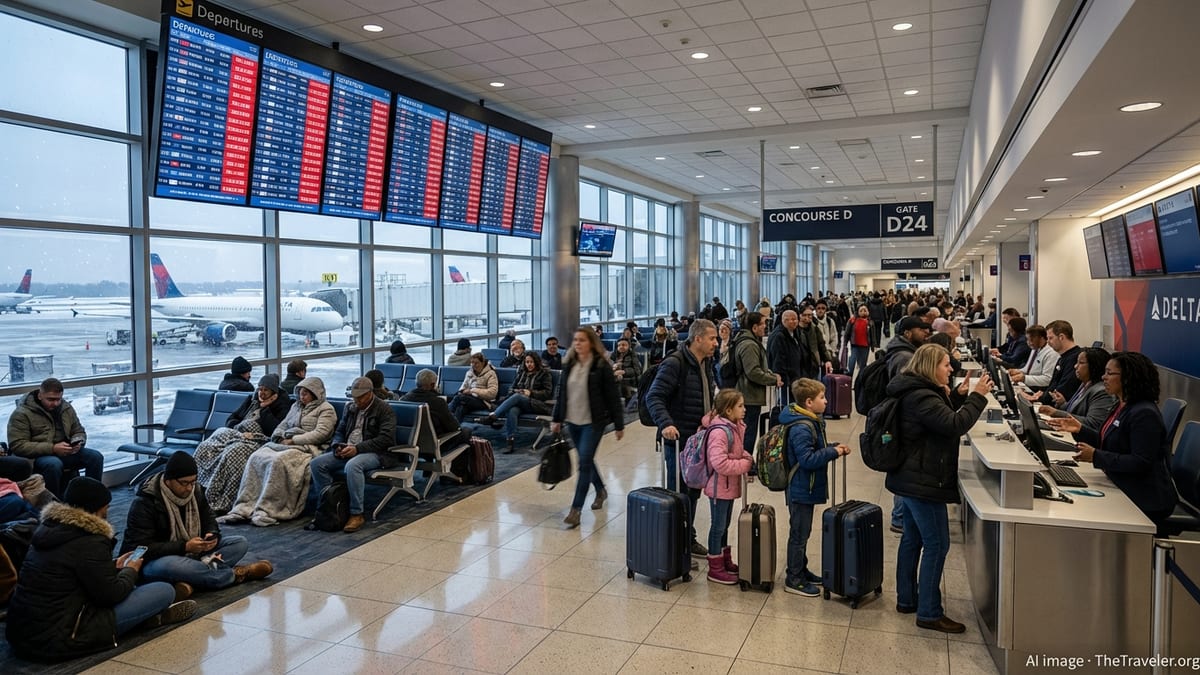
Thunderstorms sweeping across the Denver metro area on June 21 triggered extensive delays at Denver International Airport, with nearly 400 flights reportedly affected as airlines and air traffic managers worked to keep operations moving safely at one of the nation’s busiest hubs.
Get the latest news straight to your inbox!
Storm Cells Slow One of the Nation’s Key Hubs
Publicly available tracking data for June 21 show Denver International Airport experiencing severe schedule disruptions as clusters of thunderstorms passed across the Front Range, reducing arrival and departure rates and forcing extended waits on the ground and in the air. By midafternoon, close to 400 flights were listed as delayed, with some departure pushes slipping by an hour or more as convective storms built and decayed over the region.
Denver’s location near the foothills of the Rocky Mountains frequently exposes operations to fast-changing weather, including sudden wind shifts, lightning and heavy rain. Aviation case studies published by federal meteorological services describe how storm development along the Front Range can quickly limit usable airspace and runway configurations, even when conditions remain flyable elsewhere in the network. In those scenarios, arrival flows must often be throttled to maintain safe spacing between aircraft.
On June 21, those familiar patterns translated into slower traffic management rates into and out of Denver. Arrivals were occasionally metered to allow storms to move clear of approach paths, while departures waited on taxiways for release times from air traffic control. For passengers inside the terminal, the result was a familiar early-summer scene of crowded gates, shifting departure boards and extended lines at concessions as travelers waited out the weather.
Knock-on Delays Across Airline Networks
The disruption in Denver occurred as airlines nationwide were already contending with a challenging summer travel environment. Consumer advocacy reports summarizing federal data indicate that flight delays and long tarmac waits have risen in recent years, with 2025 on-time performance among the weakest since the mid-2010s. Weather remains one of the leading triggers for breakdowns in punctuality, particularly when storms hit major connecting hubs.
Denver is a critical connecting point for several large carriers, linking coastal cities with mountain and plains destinations and serving as a gateway to both domestic and international routes. When thunderstorms slow operations there, the effect often spreads across multiple time zones. Aircraft and crews scheduled to turn quickly in Denver can find themselves out of position for later legs, amplifying the impact of each delay far beyond the Front Range.
Published analyses of recent weather events underscore how quickly these ripple effects can accumulate. During a winter storm earlier in the year, Denver recorded more than a thousand delayed or canceled flights over a short period as heavy snow and low visibility reduced operational capacity. While the June 21 thunderstorms were not of that magnitude, the combination of busy summer schedules and a geographically central hub meant that even modest capacity reductions translated into hundreds of disrupted itineraries.
Safety-First Operations in Convective Weather
The delays on June 21 were driven largely by the need to maintain safe separation from hazardous weather, including lightning, strong updrafts and potentially severe turbulence. Training materials and case studies from aviation weather programs describe how storm tops, outflow boundaries and rapid vertical wind changes can create unsafe conditions near convective cells, prompting controllers to reroute traffic around the worst of the weather.
At airports such as Denver, where multiple runways intersect and departures often rely on specific climb corridors over the plains or toward the mountains, strong storm cells can temporarily block commonly used paths. Even if conditions at the runway itself remain within operational limits, downfield weather may require restrictions on departures until a safer route opens. This can lead to a sequence of ground delays in which aircraft push back from gates but hold on taxiways awaiting updated clearances.
Industry data and pilot discussions consistently note that weather-related delays are often as much about airspace management as they are about the conditions immediately overhead. When large storm complexes blanket wide areas of the central United States, alternate routing options can be limited, and aircraft may need to accept holding patterns, longer tracks or reduced speeds to remain clear of the worst weather. Those precautions increase travel times and contribute to further logjams as schedules cascade through the day.
Passenger Options During Widespread Disruptions
For travelers caught in Denver’s latest round of delays, options depended largely on itinerary flexibility and the specific policies of each airline. Publicly available guidance from carriers typically advises passengers to enroll in mobile notifications, monitor airline apps for gate and time changes, and consider rebooking when significant weather is forecast along their route. In some cases, carriers introduce temporary travel waivers that allow itinerary changes without additional fees when storms are expected to affect large regions.
Transportation analysts often recommend that passengers traveling through weather-prone hubs build additional buffer time into their plans, particularly for connections. Data examined by consumer groups show that even when a majority of flights operate close to schedule, a sizable minority encounter significant delays, making tight connections risky during peak storm seasons. Choosing earlier departures, avoiding the busiest afternoon banks when possible and opting for nonstop routes can reduce vulnerability to cascading disruptions.
At the airport level, Denver has been working through multi-year capacity and infrastructure initiatives, including runway and taxiway projects documented in federal construction outlook reports. While these improvements are designed to increase resilience and efficiency over the long term, temporary closures or constraints associated with construction can reduce flexibility during severe weather events, underscoring the challenge of managing growth, maintenance and safety in a dynamic operating environment.
Storm Season Heightens Focus on Reliability
The June 21 disruptions at Denver International Airport come as airlines, regulators and passenger advocates are increasingly focused on reliability during peak travel periods. Recent studies of national performance highlight how closely air travel punctuality is tied to the interplay between weather patterns, air traffic control capacity and airline scheduling practices. Even incremental increases in convective activity or congestion can translate into noticeable changes in on-time arrival statistics.
For Colorado travelers and those connecting through Denver to destinations across North America and beyond, the experience underscores how susceptible modern air travel remains to the atmosphere above it. As warming temperatures feed more frequent or intense thunderstorms in some regions, aviation planners and meteorologists are exploring refinements in forecasting, routing tools and traffic management initiatives intended to help keep more flights on schedule without compromising safety.
In the meantime, episodes like the nearly 400 delays recorded in Denver serve as a reminder that flexibility is increasingly valuable for air travelers. Building extra time into itineraries, maintaining up-to-the-minute awareness of changing conditions and understanding airline policies can help passengers navigate the intersection of crowded skies and volatile summer weather.