


More news on this day
Massport is cautioning travelers to expect possible delays at Boston Logan International Airport as a multi‑year runway safety program advances, temporarily reducing capacity and shifting some flight operations while critical work is carried out.
Get the latest news straight to your inbox!
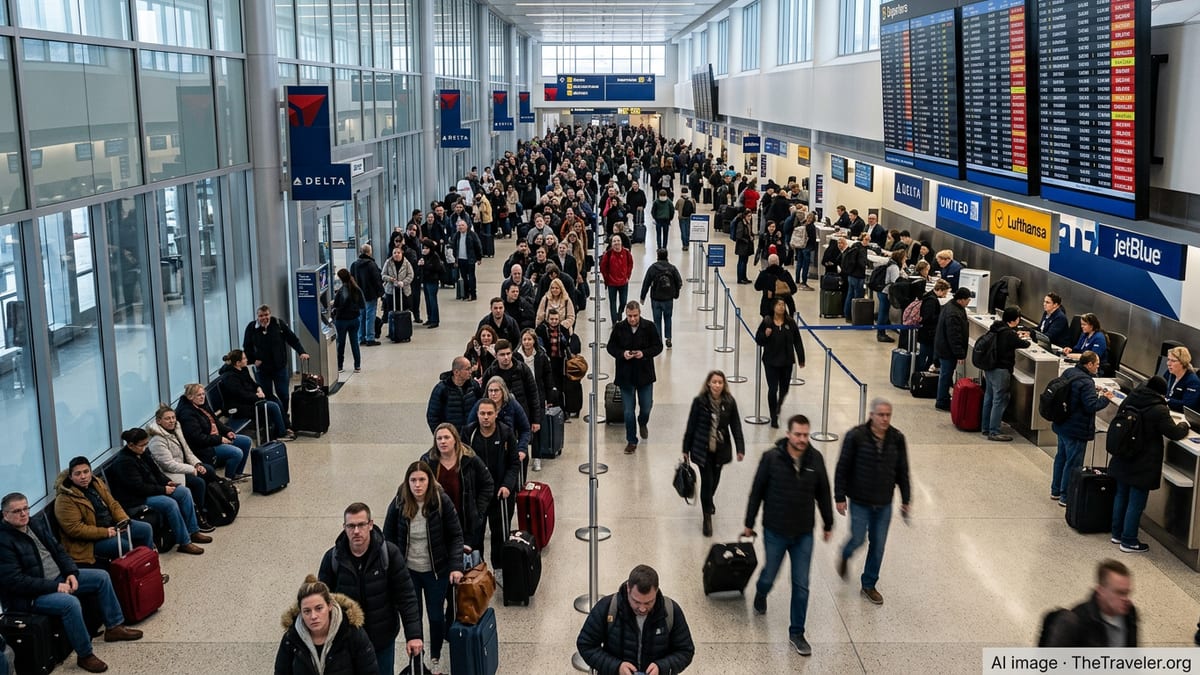
Runway safety upgrades narrow capacity at busy New England hub
The new warning centers on a series of runway safety area improvements that are required under Federal Aviation Administration standards and are now moving from planning to construction phases at Logan. Publicly available planning documents indicate that Massport, which operates the airport, is prioritizing upgrades at the ends of key runways used for both domestic and international traffic.
Recent environmental review material describes the Runway 27 End Runway Safety Area Improvements Project as a mandatory safety initiative designed to improve protection for aircraft and passengers in the event of an overrun or other emergency event. The work is described as not extending the runway or changing the types of aircraft that can use it, but it will involve a complex construction zone directly adjacent to active airfield operations.
Separate presentations on the rehabilitation of Runway 15R/33L, one of Logan’s primary runways, outline previous and ongoing safety‑related pavement and geometry work that required full closures and altered runway use patterns for weeks at a time. During those periods, planning materials note that the airport relied on alternative three‑runway configurations to keep flights moving, while acknowledging that delays and shifts in community overflights were likely.
As the latest phase of the safety program begins, Massport is signaling that even with careful scheduling and coordination, the combination of construction activity, weather and peak travel demand could create noticeable pressure on Logan’s already busy airfield.
Closures and construction windows expected to affect flight schedules
Massport’s own meeting minutes and environmental filings point to extended construction windows tied to runway safety work, including a two‑year period for the Runway 27 safety project with closures during construction hours once work begins. While exact day‑to‑day schedules are typically set closer to the start of each phase, publicly posted timelines suggest that key runway surfaces will be unavailable at various times during the height of the travel week.
Operational plans referenced in Massport community briefings state that the airport and air traffic controllers intend to sequence construction in ways that preserve as many arrival and departure options as possible. In practice, that usually means shifting more traffic to remaining runways, especially during favorable wind conditions, and adjusting departure and arrival flows to fit into the reduced configuration.
Industry research on airport performance indicates that when a major hub loses even one primary runway for construction or maintenance, the system often experiences longer taxi times, holding patterns and knock‑on delays across the network. At an airfield like Logan, where the runway layout is already described in planning documents as constrained and congested, the loss of one end of a runway for safety work can quickly ripple through the schedule during busy hours.
Travelers are therefore being advised through public messaging and news coverage to budget extra time at the airport and to monitor airline notifications closely, particularly on days when weather could already be challenging operations in the Northeast corridor.
Travelers may see new noise patterns as traffic shifts to other runways
The reshuffling of runway use during safety projects is also expected to be noticeable in neighborhoods under Logan’s flight paths. Community information sessions previously held on the Runway 15R/33L rehabilitation note that when that runway was closed, aircraft delays and “temporary shifts in runway use and community overflights” were anticipated, with patterns dependent on wind and weather.
Environmental filings for the current safety program emphasize that preferred runway configurations are being developed to balance operational efficiency with community impacts. However, during periods when safety work closes a runway end or limits available length, controllers may need to rely more heavily on remaining runways that route takeoffs and landings over different parts of Boston and surrounding cities.
Local advisory committees that track Logan operations have previously called attention to the importance of early communication around such shifts so residents understand why they may see or hear more aircraft than usual over particular neighborhoods. Meeting summaries show repeated requests for clear timelines, maps of anticipated runway use and regular updates as construction progresses.
With the new safety project moving forward, observers expect similar outreach to continue, particularly as the airport heads into late‑summer and holiday travel peaks when both flight volumes and community sensitivity to noise tend to be elevated.
Massport urges early arrivals and use of ground transport alternatives
Publicly available information from Massport stresses that safety remains the primary driver behind the runway program, but it also highlights a series of passenger‑facing steps intended to reduce disruption. These include longstanding guidance to arrive well ahead of departure times and encouragement to use transit links and Logan Express buses to free terminal roadways for airline and airport operations.
Past advisory materials linked to runway work and winter weather disruptions at Logan have recommended that passengers check flight status frequently, sign up for airline alerts and build in extra time for connections, especially when traveling through other congested hubs. Ground transportation options such as free connections from Logan to Boston’s rapid transit network and suburban bus services are positioned as ways to avoid potential roadway bottlenecks around the terminals during peak construction periods.
Analyses of delay patterns at large airports suggest that passengers who arrive closer to departure times are more vulnerable to missed flights when airfields are operating with reduced runway capacity, because any short‑term disruption can quickly erode the buffer built into airline schedules. By encouraging earlier arrivals and wider use of off‑site parking and transit, Massport is seeking to shift some of that risk away from the tightest parts of the travel day.
For now, airlines serving Logan are expected to adjust schedules selectively, with some carriers likely building in longer ground times or minor frequency changes while the most intensive runway safety work is underway. That approach, combined with Massport’s operational planning, is aimed at keeping Boston’s primary international gateway functioning reliably even as construction crews reshape critical safety areas at the edge of the runways.