

Thailand has a way of turning even a short trip into a lifelong memory. Golden temples shimmer over chaotic city streets, jungle-clad mountains fall into turquoise seas, and quiet Buddhist rituals unfold just a few steps away from lively night markets. Whether you are planning your first visit or returning to explore a different corner of the country, some places illuminate Thailand’s culture, history, and landscapes more vividly than others. These are the top attractions you should not miss if you want to understand why this Southeast Asian nation captivates so many travelers.
Bangkok’s Grand Palace and Temple Heartland
For many visitors, Thailand begins in Bangkok, and there is no better introduction to the country’s history and spirituality than the Grand Palace and the temples that surround it. The Grand Palace complex, begun in the late 18th century as the royal residence of the Chakri dynasty, is an intricate patchwork of gilded halls, prang spires, murals, and ceremonial courtyards. Within its walls sits Wat Phra Kaew, home to the Emerald Buddha, Thailand’s most revered religious image. The detail here is almost overwhelming: tiny mirrored tiles flash in the sun, guardian statues tower overhead, and long cloister walls are covered with mythological scenes in rich reds and golds.
Just a short walk or boat ride along the Chao Phraya River brings you to two of Bangkok’s other star attractions. Wat Pho, one of the city’s oldest and largest temples, is best known for its Reclining Buddha, a 46 meter long gold-leaf covered statue that nearly fills its hall. Outside, chedis decorated with colorful porcelain rise among shady courtyards and prayer halls, while the temple’s traditional massage school still teaches and practices one of Thailand’s most famous healing arts. Across the river stands Wat Arun, the Temple of Dawn, whose central tower is decorated with shards of Chinese porcelain that catch first light beautifully. Climbing partway up rewards you with sweeping views of the river and old city.
These three sites together form Bangkok’s sacred core, but they also reveal layers of Thai identity. Royal symbolism, Buddhist devotion, and centuries of trade all intersect here, reflected in everything from architectural styles to imported ceramics worked into temple walls. Visiting earlier in the morning helps you appreciate the atmosphere before the mid-day crowds and heat build, and dressing modestly, with covered shoulders and knees, is essential for entry.
Beyond the major temples, the surrounding historic district offers quieter glimpses of old Bangkok. Narrow lanes hold wooden shophouses and small shrines where locals stop briefly to light incense or offer garlands. Taking time to wander on foot or by riverboat lets you step away from Bangkok’s expressways and skyscrapers and see how the city grew from a canal-based trading port into the capital of a modern nation.
Chiang Mai and the Temples of the North
In northern Thailand, Chiang Mai provides a gentler contrast to the capital. Enclosed by remnants of brick walls and a defensive moat, the Old City is dotted with temples that reveal the distinctive character of Lanna culture, which once flourished in this region. Within a small area you can visit ornate wats with multi-tiered wooden roofs, carved gables, and quiet courtyards shaded by frangipani trees. Many travelers base themselves here for a few days, using the city as both a cultural base and a gateway to the surrounding mountains.
One of the area’s most important religious sites is Wat Phra That Doi Suthep, which perches on a mountain overlooking Chiang Mai. Reached by a winding road and a naga-flanked staircase, the temple’s golden chedi shines above a terrace ringed with bells and shrines. On clear days you can look back over the entire city and surrounding valley. Pilgrims come from across Thailand to pay respects here, and the sound of chanting often drifts through the complex in the early morning and evening, adding to the atmosphere.
Chiang Mai’s appeal is not limited to its famous mountaintop temple. The city also has quieter, more contemplative spaces like forest temples built among trees and ponds, as well as temples where monks run informal conversation programs so visitors can ask about Buddhism and monastic life. Night markets, cooking classes, and traditional craft villages nearby provide additional depth, but the temples remain central to understanding the region’s blend of religion, artistry, and daily life.
From Chiang Mai, many travelers venture further into the north, to smaller towns and hill country where hiking, waterfall visits, and village stays are possible. Even as these experiences increasingly cater to tourism, choosing operators who prioritize respectful cultural exchange and environmental care helps ensure that the landscapes and communities that make northern Thailand special remain healthy for future visitors.
Ayutthaya Historical Park: Ruins of a Former Capital
Just a short trip north of Bangkok lies Ayutthaya, once the thriving capital of a kingdom that dominated regional trade and diplomacy for centuries. Today its ruins form Ayutthaya Historical Park, a sprawling archaeological area where red-brick prang towers, monasteries, and chedis rise from grassy plains. The city was largely destroyed in the late 18th century during a Burmese invasion, but what survives gives a powerful sense of scale and ambition.
Among the park’s most photographed sights is the stone Buddha head entwined in tree roots at Wat Mahathat. Nearby, rows of headless Buddha statues and crumbling stupas hint at the violence the city endured. A short distance away, Wat Chaiwatthanaram stands dramatically on the riverbank, its central Khmer-style prang and surrounding chedis partially restored. Visiting in the late afternoon, when warm light catches the brickwork and the Chao Phraya River glows, is particularly atmospheric.
Ayutthaya is easy to explore by bicycle or tuk-tuk, with temples and palace remains scattered on an island ringed by rivers and canals. Simple street food stalls and local markets operate near the ruins, continuing a long tradition of trade that first made the city wealthy. Spending a day here offers a compact history lesson, connecting the glittering royal compounds of modern Bangkok to the earlier capitals that came before.
Because of its size, it is worth planning your visit around a few priority sites rather than trying to see everything. Many travelers combine river crossings, temple visits, and occasional breaks in shaded parks into a relaxed loop. This slower pace suits Ayutthaya, where the most memorable moments often come from quiet corners: a lone Buddha image framed by lotus ponds, or a local family making offerings in a small active shrine set amid ancient ruins.
Krabi and the Andaman Coast: Cliffs, Islands, and Emerald Seas
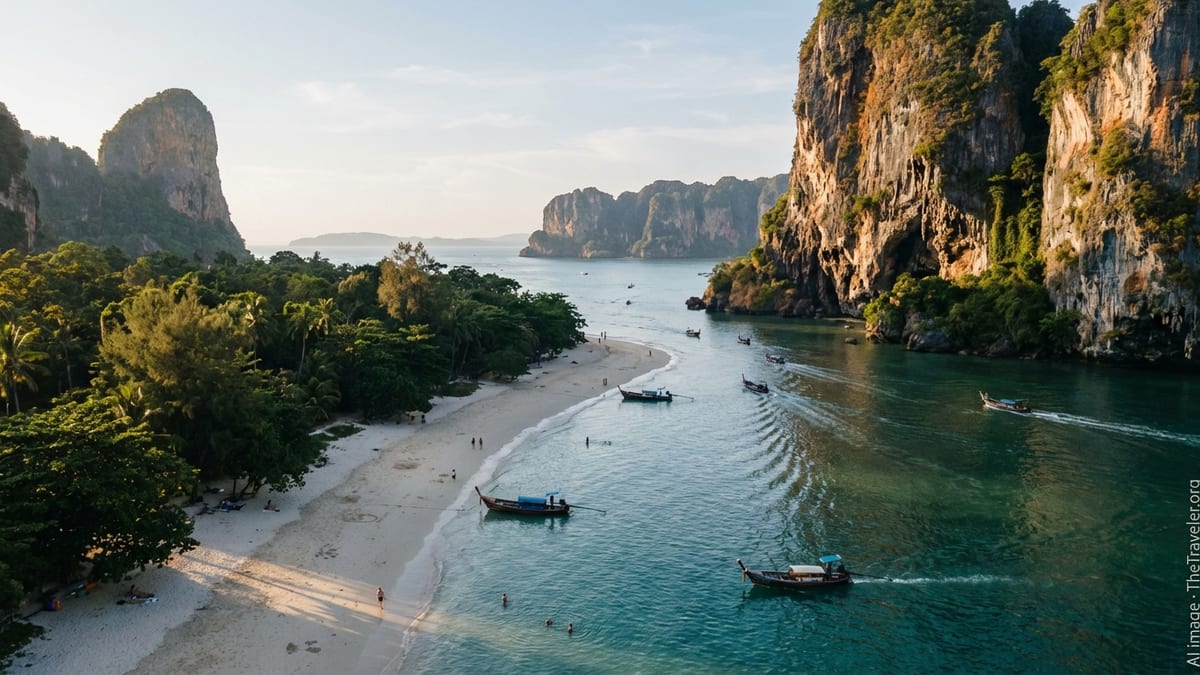
On Thailand’s southwest coast, Krabi province and the surrounding Andaman Sea offer some of the country’s most celebrated scenery. Sheer limestone cliffs plunge into clear water, longtail boats bob offshore, and dense mangroves hug sheltered bays. Railay, often reached by boat from Ao Nang, feels like a compact island even though it is technically part of the mainland, cut off by cliffs. Its beaches, especially West Railay and Phra Nang Cave Beach, are known for towering rock walls that catch dramatic evening light.
Offshore, small islands and rock pillars rise from the sea, forming a playground for kayaking, snorkeling, and sailing. The Phi Phi Islands, part of Hat Noppharat Thara–Mu Ko Phi Phi National Park, draw large numbers of visitors for their sheltered coves and viewpoints. Maya Bay, made famous by a late 1990s film, reopened with strict conservation rules that limit daily visitors, regulate boat access, and close the bay annually during August and September so coral and marine life can recover. This model of managed tourism reflects a wider shift along the Andaman coast toward protecting fragile ecosystems while still welcoming travelers.
Choosing tours that emphasize small groups, local ownership, and clear environmental guidelines makes a material difference here. National park entry fees help fund ranger patrols and reef restoration, and operators increasingly remind guests to avoid standing on coral, to use reef-safe sunscreen, and to respect seasonal closures. In return, wildlife has begun to rebound in some areas, with visitors now more likely to glimpse reef fish, healthy coral patches, and even small sharks in well-managed bays.
Back on shore, Krabi town itself offers a more local feel than busier resort hubs, with a night market, riverfront promenade, and access to inland attractions like hot springs and jungle pools. Nearby coastal provinces, including Phang Nga with its famous bay of karst islands, create a network of destinations that can fill an entire trip. While development is visible, especially in established beach towns, it remains possible to find quieter stretches and low-key guesthouses, particularly if you visit outside peak holiday periods.
Gulf Islands: Samui, Phangan, and Beyond
On the opposite side of the peninsula, in the Gulf of Thailand, a trio of popular islands offers a different coastal experience. Ko Samui, the largest, combines palm-lined beaches with a fairly extensive tourism infrastructure, including family resorts, wellness retreats, and long-established beach communities. Inland, coconut groves and waterfalls break up the resort strip, and small temples and Chinese shrines hint at the island’s trading history. While some areas are busy, especially in high season, you can still find quieter bays by exploring beyond the main beaches.
North of Samui, Ko Phangan has evolved from a backpacker stronghold into a more diverse destination. Party events still exist on certain beaches and dates, but much of the island is far more tranquil, especially on the north and east coasts. Than Sadet–Ko Pha-ngan National Park, which covers interior hills and sections of coastline, protects waterfalls, jungle trails, and small bays where simple bungalows nestle against forested slopes. Travelers interested in yoga, meditation, and long stays have created small communities in some villages, contributing to a slower rhythm than on many resort islands.
Further out, smaller islands such as Ko Tao attract divers and snorkelers with clear water and easily accessible reefs. Here, as elsewhere in Thailand, operators are increasingly aware of the environmental pressures that heavy visitation brings. Many dive centers now brief guests on buoyancy control, waste reduction, and reef etiquette, while local initiatives organize beach cleanups and coral checks. These changes reflect both regulatory pushes and a growing desire among visitors to leave a lighter footprint.
Reaching the Gulf islands typically involves a short flight or train or bus ride from Bangkok to a coastal hub such as Surat Thani, followed by ferry connections. Inter-island boats link Samui, Phangan, and Tao, making it easy to combine different atmospheres in one trip. Planning a balanced itinerary, with time both in developed areas and in more natural corners, lets you see the full range of what these islands offer.
Similan Islands and Thailand’s Marine National Parks
For travelers who value underwater life and wild seascapes, Thailand’s marine national parks are among the country’s most compelling attractions. The Similan Islands, off the coast of Phang Nga province, are especially renowned for their dive sites. This small archipelago, protected as a national park, is known for its clear water, striking granite boulders, and coral reefs that shelter everything from colorful reef fish to larger pelagic species. On land, forested hills and small beaches provide rest stops between dives or snorkel sessions.
Access to the Similans is regulated through limited visitor numbers and designated seasons, typically aligned with calmer, drier months. Boats operate as both day trips from the mainland and as liveaboards for divers who want to spend several days exploring different sites. Certain beaches are off-limits to protect turtle nesting areas, and park rules aim to minimize waste, anchor damage, and noise. Conditions can change seasonally, so checking current guidance when planning your visit is important.
Elsewhere along Thailand’s coasts, other marine and coastal parks offer similar combinations of scenery and conservation. In the south, Mu Ko Phetra National Park encompasses a largely intact stretch of Andaman shoreline and dozens of islands, many of them rarely visited compared with more famous neighbors. In the Gulf, newer protected areas wrap around parts of Ko Phangan and nearby islets. The common thread is an emphasis on preserving habitats while still allowing visitors to experience them, under the supervision of rangers and with modest entry fees that support management.
Booking through reputable operators, following local rules closely, and taking simple steps such as carrying reusable water bottles and bags can help ensure these parks remain vibrant. In return, you gain access to some of Thailand’s most pristine environments, where the night sky can still appear completely dark, and bioluminescent plankton may shimmer in the shallows as you return from a late boat ride.
Markets, Street Life, and Everyday Culture
Thailand’s major attractions are not limited to temples and landscapes. For many visitors, the most vivid memories come from everyday scenes in markets, side streets, and neighborhood festivals. In cities and small towns alike, local markets sell seasonal fruit, regional snacks, clothing, and household goods. Morning markets near temples may include fresh offerings for Buddhist ceremonies, while night markets turn into social hubs where families and groups of friends eat together at plastic tables under strings of lights.
Street food is fundamentally woven into Thai life. Regional differences are easy to taste: spicy salads and grilled meats in the northeast, rich curries and coconut-based dishes in the south, and a mix of influences from Chinese, Indian, and Malay communities in many urban centers. Sampling these dishes at modest stalls or small family-run shophouses can be as rewarding as a visit to any landmark, provided you choose busy spots with a strong flow of local customers and follow your own comfort level regarding spice and ingredients.
Floating markets near Bangkok and in some provincial towns add another layer of attraction. While a few have become heavily commercial, others retain a more local feel, with residents arriving by boat to trade fresh produce, flowers, and snacks. Observing how vendors manage both a boat and a small cooking station at once is impressive, and the scent of grilling fish and herbs over the water can be unforgettable. Visiting early in the day usually offers a more relaxed experience, before the busiest crowds arrive.
Beyond food, traditional festivals and religious observances provide windows into Thai culture for those who plan carefully. Songkran, the mid-April New Year festival, is best known internationally for exuberant water celebrations, but at its core it is about cleansing, respect for elders, and temple visits. Loy Krathong, usually in November, fills rivers and ponds with floating offerings of candles and flowers. If your travel dates align with these or with local temple fairs, they can easily become highlights of your trip, complementing visits to more well-known sites.
The Takeaway
Thailand’s appeal lies in the way its headline attractions connect with daily life. Grand palaces and ruined capitals show the sweep of history, while village markets and neighborhood temples reveal how that history still shapes the present. On the coasts, strict rules in marine parks and national efforts to restore famous bays show a growing recognition that the country’s natural beauty is both a treasure and a responsibility.
For travelers, the most rewarding itineraries balance well-known highlights with quieter experiences. Pair Bangkok’s monumental temples with a day wandering back alleys and riverside communities. Combine a busy beach town with time on a protected island or in a marine park. Spend a day among the ruins of Ayutthaya, then another learning to cook regional dishes or speaking with monks in a Chiang Mai temple.
By traveling with curiosity and care, you help support the communities and ecosystems that make Thailand such an enduring destination. The attractions described here offer a strong framework for a first or second visit, but they are only the beginning. Even after you have walked through palace courtyards, climbed temple steps at dawn, and watched the sun drop behind limestone cliffs, you may find that what stays with you longest are the small details: the sound of temple bells over city traffic, the smell of jasmine at a shrine, or a quiet conversation on a ferry deck as the islands slip by.
FAQ
Q1. What is the best time of year to visit Thailand’s top attractions?
The most popular months are typically November to February, when temperatures are more moderate and coastal seas are calmer, though regional variations and changing weather patterns mean shoulder seasons can also work well.
Q2. How many days do I need to see the main highlights of Thailand?
A trip of about 10 to 14 days allows time to experience Bangkok, a northern city such as Chiang Mai, and at least one coastal area, though shorter stays can still be rewarding with a more focused itinerary.
Q3. Do I need to book temple and historical site visits in advance?
Most temples and historical parks do not require advance booking for individual travelers, but checking current opening hours and any special regulations shortly before your visit is wise, especially around major holidays.
Q4. What should I wear when visiting temples in Thailand?
Dress modestly with shoulders and knees covered, avoid tight or transparent clothing, and remove shoes before entering main temple buildings, following any posted guidelines or advice from staff.
Q5. Is it safe to eat street food while exploring markets?
Many travelers enjoy street food without issues by choosing busy stalls with high turnover, observing basic hygiene, and starting with simpler, freshly cooked dishes while paying attention to their own dietary needs.
Q6. How are famous beaches like Maya Bay being protected?
Authorities limit daily visitors, control boat access, and close some bays during certain months to help coral and marine life recover, and travelers are expected to follow these rules closely.
Q7. Can I visit multiple regions of Thailand in one trip?
Domestic flights, trains, and ferries make it feasible to combine Bangkok, the north, and at least one island region in a single itinerary, provided you allow enough time for transfers.
Q8. Are Thailand’s marine parks suitable for beginners at snorkeling or diving?
Many parks have sheltered sites with relatively calm water and shallow reefs that are suitable for beginners, especially when visited with experienced guides who provide proper equipment and safety briefings.
Q9. How can I travel more responsibly around Thailand’s top attractions?
Choosing local guides and small-scale operators, reducing single-use plastics, respecting wildlife and cultural norms, and visiting lesser-known areas alongside famous sites all contribute to more sustainable travel.
Q10. Do I need a guide to explore places like Ayutthaya and Chiang Mai’s temples?
It is possible to explore independently using maps and on-site information, but hiring a licensed guide, even for a half day, can deepen your understanding of history, symbolism, and local customs.