


More news on this day
A fast-developing tornado warning near a major Delta Air Lines hub led to a temporary halt in departures and diversions on Tuesday, adding fresh disruption to an already volatile summer for U.S. air travelers.
Get the latest news straight to your inbox!
Severe Weather Triggers Ground Stop At Busy Hub
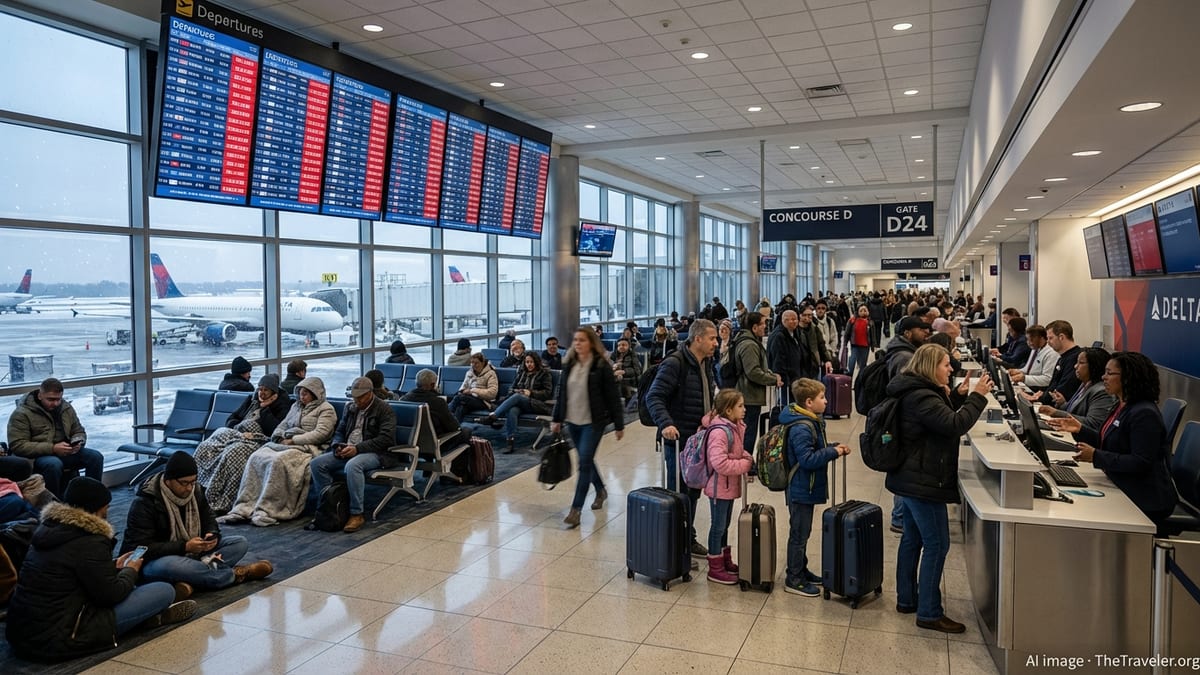
According to publicly available airport status boards and aviation tracking platforms, a tornado warning in the vicinity of one of Delta Air Lines’ primary hubs prompted air traffic managers to temporarily stop many outbound flights while storms moved through the area. The precaution effectively created a short-term ground stop, with aircraft held at gates and on taxiways until conditions were assessed as safe to resume departures.
Reports indicate that the warning followed a line of intense thunderstorms capable of producing strong winds, hail and localized rotation near the airfield. Under these conditions, ramp activity is often scaled back or suspended, as lightning and wind gusts present significant risks to crews working around aircraft and to aircraft movements themselves.
The hub involved is central to Delta’s domestic and international network, concentrating a large share of its daily departures. Even a brief operational pause at such an airport can ripple through the system, creating knock-on delays at outstation airports that depend on inbound aircraft and crews from the hub.
As the tornado warning window closed, departures gradually resumed, but many flights required new departure slots and routings, leading to extended wait times for travelers already on board and in terminal gate areas.
Passenger Impact Spreads Across Delta Network
Data from flight-tracking dashboards showed clusters of delayed Delta departures radiating out from the affected hub in the hours after the tornado warning was issued. Aircraft that had been scheduled to operate multiple legs in a single day quickly fell behind schedule, resulting in rolling delays on later flights that depended on the same jets and crews.
Travelers connecting through the hub reported missed onward flights and tight connections that became impossible once the ground stop took effect. For many, even short delays of 45 to 90 minutes were enough to upend itineraries that relied on the tightly timed bank structure typical of large hub operations.
Published coverage from aviation and consumer travel outlets notes that passengers on some routes faced rebooking onto later same day departures or, in more severely affected cases, overnight stays when the final legs of their journeys no longer had available seats. In several instances, flights heading toward other storm-exposed regions encountered additional air traffic control restrictions, compounding delays.
Publicly accessible airline status pages advised customers to monitor their flights closely and to allow extra time for connections through the hub, reflecting the continuing knock-on effects even after the storm cells had moved beyond the immediate airport area.
How Tornado Warnings Disrupt Airport Operations
Industry guidance on severe weather procedures explains that tornado warnings are treated as high-risk events in airport environments, even when no tornado ultimately touches down on or near the airfield. A warning signals that a tornado has been indicated by radar or reported in the area, prompting immediate protective measures for both ground personnel and aircraft.
When such warnings overlap active airport operations, air traffic managers may halt arrivals and departures, while airport operators restrict ramp access and move staff and passengers to interior shelter areas where necessary. Aircraft already in the air and approaching the hub may be placed into holding patterns, rerouted to alternate airports, or delayed at their origins until the warning period expires.
For airlines operating large hubs, these measures can quickly translate into dozens of delayed flights and a backlog that can take hours to clear. Once the weather moves out, controllers must re-sequence arrivals and departures, balancing safety margins with the pressure to move waiting aircraft and restore the planned schedule.
Travel analysts note that severe weather impacts such as tornado warnings, thunderstorms and low visibility events are among the most frequent triggers for ground stops, and they tend to have outsized effects at hub airports where traffic volumes are concentrated into tight departure and arrival waves.
Delta’s Weather Challenges Amid A Strained Summer
The tornado-related halt comes during a period in which Delta has faced heightened scrutiny over its operational reliability. Recent reports from aviation industry publications and travel advocacy sites have highlighted days with elevated cancellation and delay levels across the carrier’s network, particularly at hub airports where even minor schedule disruptions can cascade rapidly.
Analysts draw a distinction between weather-driven events like tornado warnings and internal causes such as crew scheduling issues or technology outages. However, they note that when an airline’s system is already stretched, severe weather can expose underlying vulnerabilities, turning what might otherwise be a manageable disruption into a broader network event.
Delta has emphasized in past public communications that safety remains the nonnegotiable priority, especially during rapidly changing weather conditions around major hubs. Aviation observers point out that suspending departures during a tornado warning, while disruptive, aligns with standard industry practice intended to protect crews, passengers and aircraft.
In the context of a busy summer travel season, the latest weather interruption illustrates how quickly conditions at a single hub can affect travelers across the country. With many flights operating near capacity, the margin for absorbing sudden disruptions remains thin, and recovery from even a short ground stop can extend late into the operational day.
What Travelers Can Do During Tornado-Related Delays
Travel experts recommend that passengers flying through large hubs during peak storm season build additional buffer time into itineraries, especially for trips involving critical connections or time-sensitive events. Booking earlier flights in the day and allowing longer connection windows can reduce the risk that a short weather-related ground stop will derail an entire journey.
Public guidance from consumer aviation resources advises travelers to rely on multiple sources of information during fast-moving weather situations, including airline apps, airport departure boards and official airspace status summaries. These tools can help passengers understand whether a delay stems from airport-specific weather, broader air traffic control initiatives, or airline scheduling constraints.
Experts also underscore the importance of preparing for the possibility of extended waits at the airport. Having essential items such as medications, chargers and a change of clothes in carry-on bags can make unplanned overnight stays or missed connections more manageable.
While tornado warnings and associated ground stops remain relatively infrequent compared to more common thunderstorm delays, the latest disruption at a key Delta hub demonstrates how sudden weather alerts can rapidly reshape travel plans for thousands of passengers, even when the period of intense weather is relatively brief.