


More news on this day
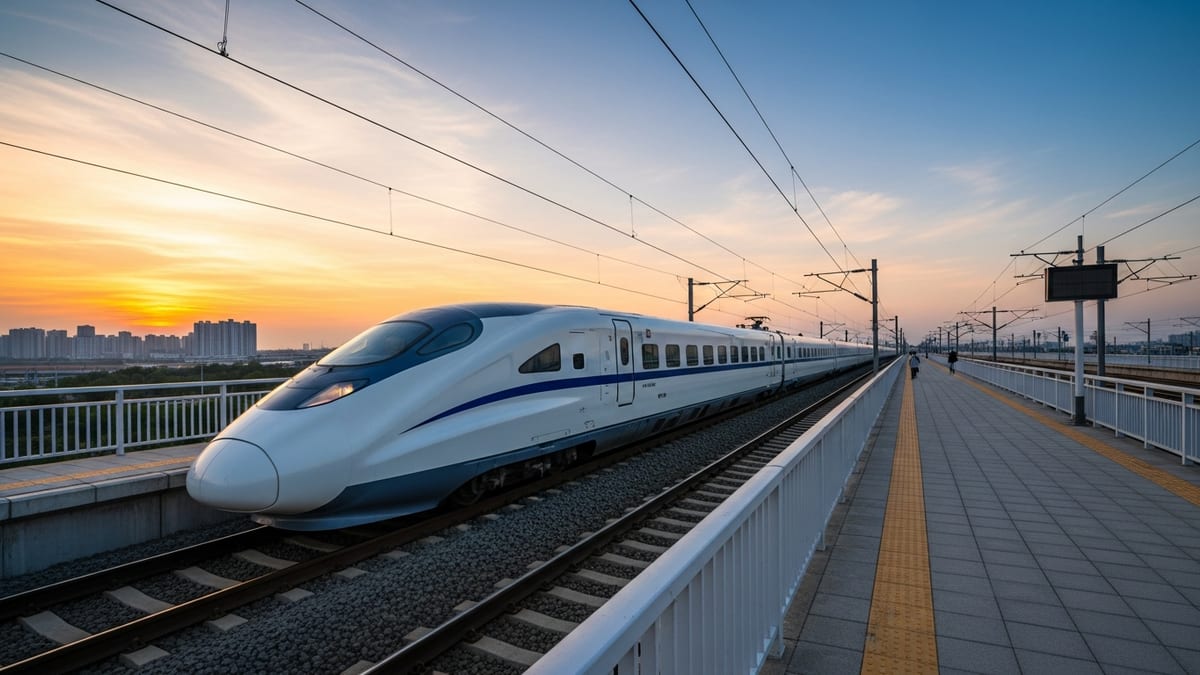
Japan’s latest N700ST high speed trains, nicknamed the “platypus” for their distinctive long-nosed profile, are now being prepared for shipment to Taiwan, marking a new phase in the island’s rail modernisation plans and the first export deployment of the N700S family in a 12-car configuration.
Get the latest news straight to your inbox!
New generation for Taiwan’s bullet train corridor
The N700ST fleet is being built in Japan as a dedicated export version of the N700S Shinkansen, tailored for Taiwan High Speed Rail’s 345 kilometre corridor between Taipei and Kaohsiung. Publicly available information shows that twelve 12-car trainsets, totalling 144 cars, were ordered from the Hitachi Toshiba Supreme Consortium, expanding a fleet that has relied exclusively on the earlier 700T series since services began in 2007.
Rail industry documentation indicates that the first N700ST sets are scheduled to arrive in Taiwan from August 2026, ahead of several months of static and dynamic testing on the island’s dedicated high speed line. Once in operation, the N700ST will run alongside the existing Japanese built 700T trains, gradually increasing capacity on routes that are often heavily booked during weekends and holidays.
The order, valued at around 124 billion yen at the time of signing, represents one of the most significant rolling stock investments for Taiwan’s transport sector in nearly two decades. The deployment also reinforces long standing industrial ties between Japanese manufacturers and Taiwan High Speed Rail, which pioneered the first export of Shinkansen technology when the 700T sets were delivered.
Why the “platypus” nose is coming to Taiwan
The N700ST inherits the characteristic “platypus” nose profile seen on the N700S running on Japan’s Tokaido and Sanyo Shinkansen routes. The elongated, slightly rounded nose is engineered to reduce aerodynamic drag and limit tunnel boom effects when trains enter tunnels at high speed, issues that are especially sensitive in densely populated regions.
Design material released in Taiwan and Japan indicates that the new trains retain this proven nose shape specifically to keep noise levels within strict environmental standards along the high speed corridor. Communities in southern Taiwan have previously expressed concerns about operational noise, and engineers have prioritised a balance between higher performance and acoustic control.
Behind the familiar front end, the N700ST incorporates a host of N700S derived technologies, including lighter car bodies and refined bogies aimed at smoother, more energy efficient running at up to 300 kilometres per hour. The trainsets are configured as fixed 12 car formations for Taiwan, reflecting the island’s strong point to point travel demand and station platform layouts.
Passenger experience upgrades inside the new fleet
While the most visible change is the new exterior livery and nose profile, passengers are set to notice substantial interior upgrades once the N700STs enter service. Company presentations and investor materials describe redesigned seating with individual power outlets at every seat, updated information displays, and modernised lighting intended to create a brighter cabin environment.
Accessibility features are also being enhanced, with new trains expected to offer improved wheelchair spaces, upgraded toilets and more intuitive wayfinding. The goal is to raise the onboard experience to the level of Japan’s most recent Shinkansen stock, while adapting layouts to Taiwan’s specific passenger flows and luggage needs.
The N700ST introduction comes at a time when Taiwan’s high speed line has become an everyday utility for commuters, business travellers and tourists alike. More comfortable seats, better connectivity options and refreshed interiors are positioned as key selling points for retaining ridership and attracting new users in a competitive domestic transport market.
Capacity boost and network ambitions
According to planning documents and public statements, all twelve N700ST sets are expected to be in commercial service by the end of 2028. Once the full fleet is deployed, Taiwan High Speed Rail forecasts that peak capacity on core sections of the line could rise by roughly a quarter compared with today’s levels.
This additional capacity is viewed as essential for handling sustained growth in north south travel and for providing headroom for any future line extensions. Environmental assessments have already examined a potential extension from Taipei toward Yilan, and policymakers continue to debate further expansion scenarios that would push high speed services into new regions.
The N700STs are therefore being framed not only as replacements or supplements to existing trains, but as strategic assets that underpin Taiwan’s broader high speed rail ambitions. Their arrival is expected to give operators more flexibility in scheduling, allow for denser peak timetables and create options for new limited stop patterns once testing and certification are complete.
International significance for Japanese high speed rail exports
The movement of the first N700ST trainsets toward Taiwan is being closely watched in rail industry circles as a new chapter in Japan’s export story. Taiwan’s 700T fleet was the first time Shinkansen technology left Japan, and the N700ST will be the first full length N700S family variant to operate exclusively overseas.
Corporate reports from Central Japan Railway and its partners describe the N700S platform as a modular, export ready design, and the Taiwan order is being treated as a reference project that could support future bids in other markets. For Japan’s rolling stock builders, on time delivery to Taiwan and smooth entry into service will be important demonstrations of capability at a moment when high speed rail projects are being considered in regions from Southeast Asia to North America.
For travellers, however, the story is simpler. Within the next few years, the long billed “platypus” trains will become a familiar sight racing along Taiwan’s west coast, adding seats on some of the island’s busiest intercity routes and reshaping expectations of what a high speed journey between Taipei and Kaohsiung can feel like.