


More news on this day
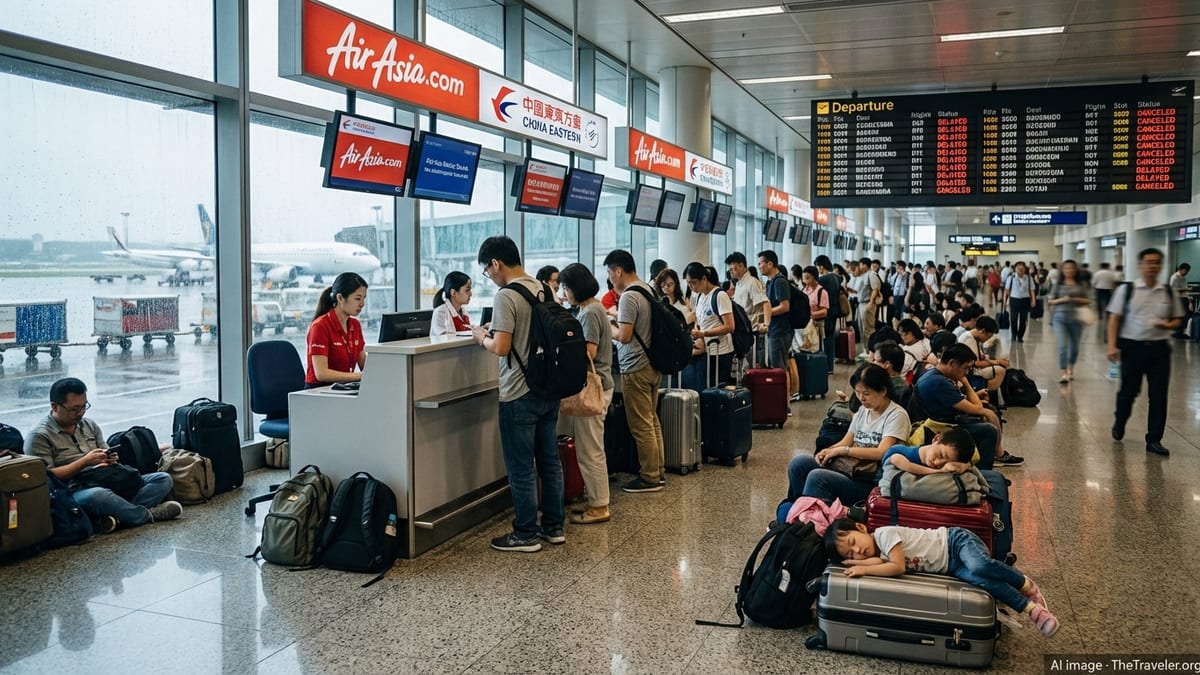
Intense rainstorms sweeping across southern China have caused widespread disruption to air travel, with hundreds of flights delayed at major airports and forecasters warning that heavy downpours are likely to persist through midweek.
Get the latest news straight to your inbox!
Storm System Soaks Key Southern Hubs
Weather maps and official bulletins show a large, slow moving rain system parked over southern China, bringing heavy to torrential rainfall to parts of Guangdong, Guangxi and neighboring provinces. The pattern, associated with the early summer "dragon boat" rainy season, has intensified since the weekend, saturating urban areas and river basins and triggering local flooding.
According to published coverage, heavy rain since June 14 has led to waterlogged streets, overflowing drains and rising river levels in several cities across the Pearl River Delta. Publicly available information from China’s meteorological authorities indicates that rainfall totals in some coastal and delta locations are forecast to reach 250 to 350 millimeters over a short period, a level that typically places serious pressure on transport infrastructure.
The China Meteorological Administration has raised its emergency response level for major meteorological disasters, with notices highlighting both prolonged heavy rain and severe convective weather such as thunderstorms and squalls. State and local weather centers report that the focus of the heaviest bands is shifting along the southern seaboard, keeping major population centers and transport corridors under repeated downpours.
These conditions have coincided with a busy early summer travel period, amplifying the impact on airports that serve as gateways for both domestic and regional routes across Asia.
Flight Delays Mount at Southern China Airports
Air transport data and domestic media reports indicate that airports across southern China have experienced mounting delays as the storms moved through. Major hubs in Guangdong and Guangxi, including key Pearl River Delta airports, have seen departures and arrivals pushed back as rain, low clouds and thunderstorms reduced operating capacity.
Coverage drawing on airport operation platforms shows that more than 30 departing flights at Shenzhen Bao’an International Airport were delayed on Monday alone as thunderstorms developed over the city and its surrounding airspace. While that figure reflects only one facility and one time window, similar patterns have been reported at other regional hubs as the weather system continued to drift east and west along the coast.
Industry monitoring platforms that track punctuality across China’s civil aviation network point to knock on effects from ground stops, spacing requirements between aircraft and temporary routing adjustments around storm cells. As aircraft and crews miss scheduled turns, downstream services later in the day and on connecting routes can also be delayed, extending disruption well beyond the initial periods of heaviest rain.
Published coverage from Chinese financial and transport outlets notes that rail services and some ferry links in the wider region have also been adjusted, reducing alternative options for travelers who might otherwise seek to bypass congested airports.
Emergency Responses and Broader Transport Disruptions
Provincial emergency management updates show that authorities in Guangdong and Guangxi have relocated thousands of residents from low lying and landslide prone areas as rainfall totals climbed. The national flood control headquarters has upgraded its emergency response for parts of southern China, reflecting heightened concern about flash floods, mountain torrents and urban waterlogging.
Transport authorities have introduced a range of measures to manage safety risks. Public information from railway operators indicates that train speeds have been reduced on certain lines, routes have been adjusted and some services temporarily suspended in areas where tracks are exposed to potential flooding or slope failures. On coastal corridors, at least two passenger rail services serving the island province of Hainan have been suspended for several days while the stormy conditions persist.
Road networks have also felt the strain. Local media describe drivers navigating standing water on expressways and city streets, with intermittent closures where underpasses or low sections become submerged. These factors make it more difficult for airline passengers to reach airports on time and may contribute to missed departures, longer check in queues and pressure on rebooking desks.
Together, the disruptions to road, rail and air transport illustrate how a concentrated period of extreme rainfall can ripple through interconnected travel systems, particularly in densely populated coastal regions.
Forecasts Signal Continued Heavy Rain and Travel Risk
China’s National Meteorological Centre and the China Meteorological Administration both forecast continued heavy to torrential rain across parts of southern China through at least Tuesday, June 16. Bulletins highlight the Pearl River Delta, southeastern Guangxi and sections of coastal Guangdong as areas facing the greatest risk of intense short duration downpours and localized severe storms.
Weather agencies have warned of elevated risks of urban flooding, landslides and secondary hazards in these zones, advising the public to avoid low lying areas and steep slopes where possible. For travelers, that guidance translates into an ongoing risk of flight delays as airports adjust runway use, spacing and ground operations to account for lightning, low visibility and saturated surfaces.
Airlines typically respond to such forecasts by planning additional buffer time between flights, reviewing crew duty limits and, in some cases, consolidating lightly booked services to free capacity for stranded passengers. Historical data from similar weather events in the region suggest that even when outright cancellations are limited, prolonged periods of moderate to heavy rain often result in hundreds of delayed flights as operations slow.
With the current system arriving relatively early in the seasonal rainfall period, meteorologists and transport analysts are also watching for signs of how a warming climate and evolving circulation patterns may be influencing the intensity and duration of south China’s summer deluges, with implications for future aviation planning.
What Travelers Can Expect in the Coming Days
For passengers already booked to fly into or out of southern China, publicly available guidance from airlines and travel agencies emphasizes the importance of monitoring flight status closely in the short term. Given the forecast of continued heavy rain, schedules are likely to remain fluid, with departure times subject to last minute adjustments as storm cells pass through critical approach and departure corridors.
Travel industry briefings suggest that early morning and late night flights may prove somewhat less vulnerable to convective storms, though heavy, steady rain can still lead to ground handling delays and longer taxi times. Where possible, travelers are encouraged to allow extra connection time between flights, especially when transferring between domestic and international legs routed through major southern hubs.
Experience from recent weather related disruptions in China and other regions indicates that digital tools, including airline apps and real time flight trackers, can provide the most up to date information on gate changes, boarding times and rebooking options. Many carriers operating in the region also publish irregular operations policies outlining when change fees can be waived due to adverse weather, which can help travelers make informed decisions about adjusting plans.
As the current round of torrential rain continues to test southern China’s airports and transport infrastructure, the situation underscores how quickly seasonal storms can upend travel across an entire region, and how important resilient scheduling, flexible ticket rules and accurate, timely weather information have become for both airlines and passengers.