


Grotto Falls is one of the most talked-about waterfall hikes near Gatlinburg, thanks to the rare chance to walk behind the cascade itself. But with so many waterfall options in Great Smoky Mountains National Park, limited vacation time, and ongoing trail and road projects that affect access, many travelers are asking a practical question: is Grotto Falls really worth visiting, or should you spend your time at another Smokies waterfall instead?
Get the latest updates straight to your inbox!
What Makes Grotto Falls Unique in the Smokies
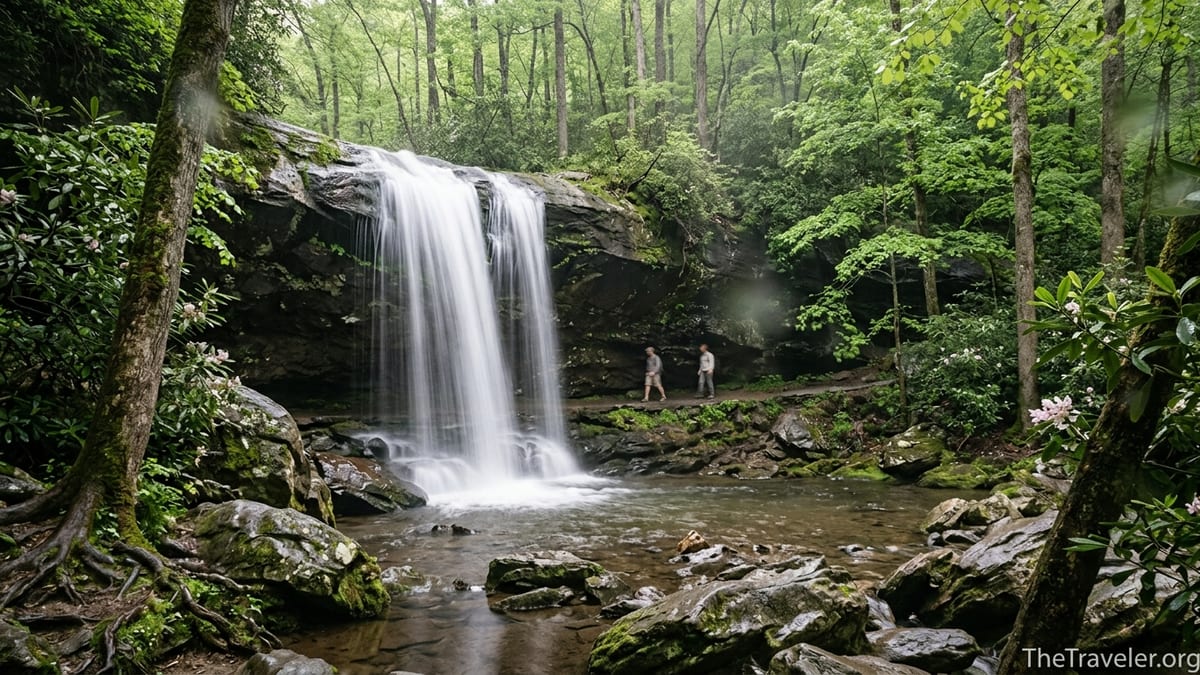
Grotto Falls is a 25-foot waterfall tucked into a cool, shaded cove forest off the Trillium Gap Trail, accessed from the Roaring Fork Motor Nature Trail just outside Gatlinburg. The hike is about 2.6 miles round trip with roughly 500 to 600 feet of elevation gain, putting it solidly in the “moderate but family‑friendly” category for most reasonably active visitors. Unlike roadside cascades where you simply step out of the car, you earn this waterfall with a real, if short, woodland walk.
The defining draw of Grotto Falls is that you can walk behind the curtain of water on a worn, rocky path at the base of the cliff. This is the only waterfall in Great Smoky Mountains National Park where the official trail actually passes behind the falls, creating a cave‑like feel with mist, echoing water, and a unique photo angle looking out from under the flow. That specific experience is something you will not get at more famous spots like Laurel Falls, Abrams Falls, or Rainbow Falls, where viewpoints are set in front of or beside the water.
Along the way, the trail passes through lush second‑growth forest dotted with rhododendron and, in spring, wildflowers that can include trillium, violets, and foamflower. The setting feels distinctly “Smokies”: moss‑covered logs, small stream crossings, and roots underfoot. Travelers who have done the hike in late spring or early summer often describe the air as noticeably cooler and damper around the falls, which is welcome on warm days and adds to the sense of escaping into a green hollow.
Because the Trillium Gap Trail continues far beyond Grotto Falls up to Mount LeConte, you also see a mix of casual day‑hikers and serious backpackers on this route. For many visitors staying in Gatlinburg or Pigeon Forge, Grotto Falls offers a manageable way to feel like you are on a “real” Smokies trail without committing to an all‑day mountain climb.
Current Access, Parking, and Seasonal Considerations
As of mid‑2026, Grotto Falls remains open, but access is affected by the seasonal status of the Roaring Fork Motor Nature Trail. This narrow, scenic loop road, which includes the small Grotto Falls parking area, typically operates from roughly May through late November. In winter and early spring, the road is closed to vehicles, which means you either cannot drive to the standard trailhead or must be prepared for a longer approach walk from the closure gate.
Even in peak season when Roaring Fork is open, parking for Grotto Falls is limited. The lot is small, and it is common to see vehicles lining the shoulder during busy times. On a sunny Saturday in June or October, you should realistically expect to circle for a spot or potentially walk a short distance up the road from where you manage to park. Many local cabin companies and guides advise guests to arrive before 8:30 a.m. or after late afternoon to avoid the heaviest mid‑day rush, particularly during school holidays and fall foliage season.
In 2026, road and trail work elsewhere in the park has had a ripple effect on visitor patterns. For example, Laurel Falls, one of the most popular paved waterfall hikes near Gatlinburg, is undergoing a long‑term rehabilitation project with closures that push many casual hikers toward alternative trails such as Grotto Falls and the Deep Creek waterfalls loop. Likewise, maintenance on the Gatlinburg Spur and other key corridors can mean heavier traffic at certain hours, making timing even more important if you want a smoother visit to Roaring Fork and Grotto Falls.
Weather is another factor. The trail to Grotto Falls can be muddy and slick after rain, especially at the stream crossings and on the rocks behind the falls. In shoulder seasons like April or early November, morning temperatures near the trailhead can sit in the 40s Fahrenheit even on sunny days, with colder, mist‑chilled air once you step behind the waterfall. If your itinerary is flexible, choosing a dry, mild day for this particular hike will significantly improve footing and comfort.
How Grotto Falls Compares to Other Smokies Waterfalls
To decide if Grotto Falls is “worth it,” it helps to compare it directly with a few of the park’s other headline waterfalls that are realistically in the same planning conversation: Laurel Falls, Abrams Falls, Rainbow Falls, and some lesser‑known options like Hen Wallow Falls or the Middle Prong cascades. Each offers a different balance of hike length, difficulty, crowd density, and “wow” factor at the end.
Laurel Falls is usually the first pick for families with strollers or mobility concerns because its lower section is accessed via a paved trail from Fighting Creek Gap near Sugarlands. The hike is about 2.6 miles round trip, similar to Grotto’s distance, but with pavement instead of roots and rocks. Laurel Falls is an attractive two‑tiered cascade, yet you cannot get particularly close to the water due to safety railings and erosion concerns. In peak season before its renovation closure, this trail was so crowded that walking felt more like navigating a city sidewalk. If your top priority is a paved path, Laurel would usually win, but with ongoing construction limiting access through at least part of 2026, Grotto Falls often becomes the more practical choice for an intermediate, not‑too‑long hike.
Abrams Falls, reached from the Cades Cove area, delivers one of the park’s most powerful waterfalls. The five‑mile round‑trip trail follows Abrams Creek and ends at a broad, thundering curtain that is dramatically larger in volume than Grotto Falls. However, it is a longer, hillier hike with more cumulative elevation gain, and the pool at the base has strong currents and submerged hazards, so swimming is strongly discouraged. For visitors staying near Gatlinburg or Pigeon Forge, simply driving to Cades Cove can take an hour or more in traffic. Travelers with only one Gatlinburg‑centric day may find Grotto Falls a more time‑efficient pick, while those dedicating a full day to Cades Cove often prioritize Abrams Falls.
Rainbow Falls, also near Gatlinburg, offers an 80‑foot, single‑drop waterfall, the tallest of its kind in the park. The hike to Rainbow Falls is similar in distance to Grotto, around 5.4 miles round trip, but noticeably steeper and rockier, with more than 1,500 feet of elevation gain. On sunny afternoons, mist can create the namesake rainbows near the base. Rainbow is the right choice if you want a strenuous climb with a big, vertical payoff. Grotto, by contrast, is better for travelers who want a moderate outing that still feels immersive but without sustained climbing.
Then there are quieter alternatives. Hen Wallow Falls, reached from the Cosby area, requires roughly 4.4 miles round trip, and the Middle Prong Trail near Tremont showcases a series of cascades and small falls along an old roadbed that many locals consider one of the best “value for effort” hikes in the park. These can be excellent options if your priority is escaping crowds. In a typical summer week, Grotto Falls will still see heavier use than these lesser‑known spots, especially when popular paved trails are under construction.
Who Will Love Grotto Falls, and Who Might Prefer Another Waterfall
Grotto Falls tends to be a strong fit for first‑time Smokies visitors who want a classic forest hike, mild adventure, and memorable photos without committing to an all‑day climb. Families with older kids who hike regularly, couples on a short Gatlinburg getaway, and friends who want to squeeze in a morning hike before an afternoon of attractions often come away happy. If you are staying in a cabin along the Glades Road arts and crafts community or on the east side of Gatlinburg, Roaring Fork and Grotto Falls are especially convenient.
If walking behind a waterfall is high on your bucket list, Grotto Falls is the obvious choice. Travelers frequently describe that moment as a highlight: stepping onto slick stones, feeling cool spray on your face, and hearing the water roar above your head. Amateur photographers appreciate the chance to shoot both the standard front‑on view and the rarer perspective from behind the water, with hikers framed in the opening.
On the other hand, some visitors report feeling underwhelmed by the falls themselves, particularly if they are comparing them to taller, more dramatic waterfalls elsewhere in the Southern Appalachians, such as Amicalola Falls in Georgia or Mingo Falls near Cherokee, North Carolina. At 25 feet, Grotto is more charming than grand. In late summer or during a dry spell, the flow can thin out, making the falls feel modest. Travelers who crave big, thundering water and do not mind a harder hike may get more satisfaction from Abrams or Rainbow Falls.
Grotto Falls is also not ideal for anyone with significant mobility limitations, balance issues, or very young children who are not steady on uneven ground. Tree roots, rocks, and narrow sections of trail are part of the experience. If you are traveling with a multi‑generational group that includes grandparents or toddlers in strollers, you might prioritize roadside views like The Sinks, Meigs Falls overlook, or, once reopened, the partially paved Laurel Falls trail instead of Grotto.
Practical Planning Tips: Crowds, Safety, and What to Expect
For most travelers, whether Grotto Falls feels “worth it” will depend less on the waterfall and more on how well the visit is planned. Timing is crucial. In peak summer and in October, arriving at the Roaring Fork entrance gate before 8 a.m. can make the difference between a relaxed start and a stressful parking hunt. Early hikers also enjoy softer light for photos and cooler temperatures on the uphill walk. If you are not a morning person, consider a late‑afternoon start, leaving enough time to finish the hike well before dark.
Footwear matters more here than on paved tourist paths. Closed‑toe hiking shoes or trail runners with decent grip are strongly recommended. The path behind the falls can be slick, even on dry days, because of constant mist. Many visitors who show up in fashion sneakers or flat sandals end up uncomfortable or nervous on the wet rocks. A small daypack with water, a light rain jacket, and perhaps trekking poles for extra stability will make the experience more enjoyable, especially for those less accustomed to hiking.
Safety at the falls themselves comes down to basic mountain common sense. The rocks around the base are uneven, and there are shallow pools and small drop‑offs where a fall could easily twist an ankle. Children often want to scramble close to the water, so adult supervision is essential. Unlike Abrams Falls, where swimming accidents are an ongoing concern, Grotto is less about deep water and more about slick surfaces. Staying on established paths and avoiding climbing right next to the main drop reduces risk significantly.
Finally, it is wise to build a backup plan into your day. Because parking at Grotto Falls is limited, it is possible that the lot will be full even at reasonable hours, especially on weekends or during holiday weeks. Savvy visitors often pair Grotto with a broader Roaring Fork outing: if the Grotto parking area is jammed, they continue driving the one‑way loop, stopping at historic cabins, overlooks, or short roadside walks. Similarly, if heavy rain makes the trail unappealing, you could pivot the day toward scenic drives such as Newfound Gap Road or a visit to the Oconaluftee Visitor Center and nearby elk meadows.
When Another Smokies Waterfall Might Be the Better Choice
There are several clear scenarios where choosing another waterfall instead of Grotto Falls is likely the better call. If any member of your party needs a paved surface or has very limited stamina, once Laurel Falls fully reopens after its rehabilitation, the paved portion of that trail will generally be more accessible than Grotto’s root‑laced path. Similarly, if you want an extremely low‑effort experience, roadside stops like The Sinks or Meigs Falls overlook require almost no walking beyond stepping out of the car and can be combined with a picnic or scenic drive.
If your main priority is maximizing “wow factor” for a single big waterfall hike and you are comfortable with more demanding terrain, Abrams Falls or Rainbow Falls may feel more rewarding. For example, a couple on a three‑day trip who hike regularly at home might plan a morning at Abrams Falls combined with a bike ride or scenic loop through Cades Cove, accepting the longer drive and hike in exchange for a bigger waterfall. Another traveler might tackle Rainbow Falls as a training hike for Mount LeConte, using the steeper path to test fitness.
Crowd‑averse visitors who are willing to drive a bit farther or head to less publicized corners of the park can also find more solitude than Grotto usually offers. The Deep Creek area near Bryson City features a popular loop that passes three waterfalls on a relatively easy route, and the Middle Prong Trail near Tremont reveals continuous cascades, boulder fields, and pools with significantly fewer people once you leave the first mile behind. For photographers or contemplative hikers who value time alone with moving water over any single “Instagram spot,” these alternatives may provide a better overall experience.
Season and weather may also tilt the decision. In winter, when Roaring Fork Motor Nature Trail is closed to vehicles, simply reaching Grotto Falls becomes more logistically complex, often adding road walking and turning a short outing into a longer excursion. At that time of year, waterfalls accessible from open roads, such as those along Little River Road, often make more sense. By contrast, in late spring, when rhododendron and wildflowers bloom along the Trillium Gap Trail and the motor road is open, Grotto Falls can be one of the most atmospherically pleasing short hikes near Gatlinburg.
The Takeaway
Grotto Falls is worth visiting for many, but not all, Smokies travelers. Its strengths are clear: a moderate 2.6‑mile forest hike, convenient access from Gatlinburg when Roaring Fork is open, and the singular experience of walking behind a Smokies waterfall. For first‑time visitors wanting an authentic trail that does not dominate the entire day, families with capable school‑age kids, and anyone who has dreamed of standing in the cool mist behind a cascade, Grotto Falls usually delivers exactly what they hope for.
At the same time, expectations matter. Grotto is not the tallest or most powerful waterfall in the region, and at 25 feet it can feel small to those who have traveled specifically for dramatic torrents. Its popularity, combined with limited parking, means you should not expect solitude during busy seasons unless you arrive very early or visit on a shoulder‑season weekday. Travelers who prioritize big, thunderous water, long challenging hikes, or complete quiet may be happier dedicating their limited time to Abrams Falls, Rainbow Falls, or quieter waterfall routes in less visited corners of the park.
Ultimately, the best way to view Grotto Falls is as one appealing piece of a broader Smokies itinerary rather than the singular “must see” of your trip. If your schedule and energy allow, pairing Grotto with another waterfall or scenic drive during your stay will give you a richer sense of how varied the park’s waterscapes can be, from gentle curtain falls in deep green coves to roaring whitewater tumbling through narrow gorges.
If your time is short and you are choosing between multiple waterfalls, use three questions to guide you: How much hiking are you honestly comfortable with? How willing are you to navigate crowds and parking constraints? And do you care more about a unique experience, like walking behind a falls, or about sheer size and power? If your answers lean toward “moderate effort, close to Gatlinburg, and a distinctive experience,” then yes, Grotto Falls is very likely worth your time.
FAQ
Q1. How long does it take to hike to Grotto Falls and back?
The hike to Grotto Falls is about 2.6 miles round trip. Most visitors take 1.5 to 2.5 hours total, depending on pace, photo stops, and trail conditions.
Q2. Is Grotto Falls suitable for young children or beginner hikers?
Grotto Falls can work for school‑age kids and reasonably fit beginners, but the trail has roots, rocks, and short climbs. Very young children or those in strollers will struggle, and it is not considered an accessible trail.
Q3. When is the best time of year to visit Grotto Falls?
The most popular times are late spring through early fall, roughly May to October, when Roaring Fork Motor Nature Trail is open and water flow is usually good. Spring brings wildflowers, summer offers lush greenery, and October adds fall color.
Q4. How crowded does Grotto Falls get?
On peak summer days and during fall foliage season, the trail can be very busy, especially between mid‑morning and mid‑afternoon. Parking often fills early. For fewer people, aim for early morning, late afternoon, or a weekday outside holiday periods.
Q5. Can I swim at Grotto Falls?
The shallow pools and stream near Grotto Falls are sometimes used for quick splashing, but they are cold, rocky, and not meant for full swimming. The rocks are slippery, so wading should be done carefully, and jumping or climbing close to the main drop is not recommended.
Q6. How does Grotto Falls compare to Laurel Falls?
Laurel Falls typically offers a partially paved path and is easier for those needing a smoother surface, but it can be extremely crowded and you cannot walk behind the falls. Grotto Falls requires more traditional hiking but gives you that unique walk‑behind experience and a more forested, immersive feel.
Q7. Is Grotto Falls or Abrams Falls better for a one‑day visit?
If you are based near Gatlinburg and want a moderate hike that leaves time for other activities, Grotto Falls is usually more convenient. If you are dedicating a full day to Cades Cove and want a longer, more demanding waterfall hike with a larger, more powerful falls, Abrams Falls may be the better choice.
Q8. Can I visit Grotto Falls in winter?
You can sometimes access the trail in winter, but Roaring Fork Motor Nature Trail is usually closed to vehicles from roughly December through March. That means a longer approach on foot, potentially icy sections, and fewer facilities. Always check current road and trail conditions before planning a winter hike.
Q9. Do I need any special gear for Grotto Falls?
No specialized equipment is required, but sturdy closed‑toe shoes with good traction are strongly recommended. A small daypack with water, snacks, a light layer, and possibly trekking poles will make the hike safer and more comfortable, especially on wet or uneven sections.
Q10. Is Grotto Falls worth it if I only have one day in the Smokies?
For many first‑time visitors based in Gatlinburg, yes. The hike offers a classic Smokies forest setting, a moderate challenge, and the rare chance to walk behind a waterfall, all in half a day or less. If you prefer a drive‑heavy day with minimal hiking, however, you might instead prioritize scenic overlooks, Cades Cove, or roadside waterfalls.