


More news on this day
A freight train derailed in Duval County after striking a bulldozer that was fouling a railroad crossing, according to early public reports, disrupting rail operations and raising new questions about safety at busy grade crossings in the region.
Get the latest news straight to your inbox!
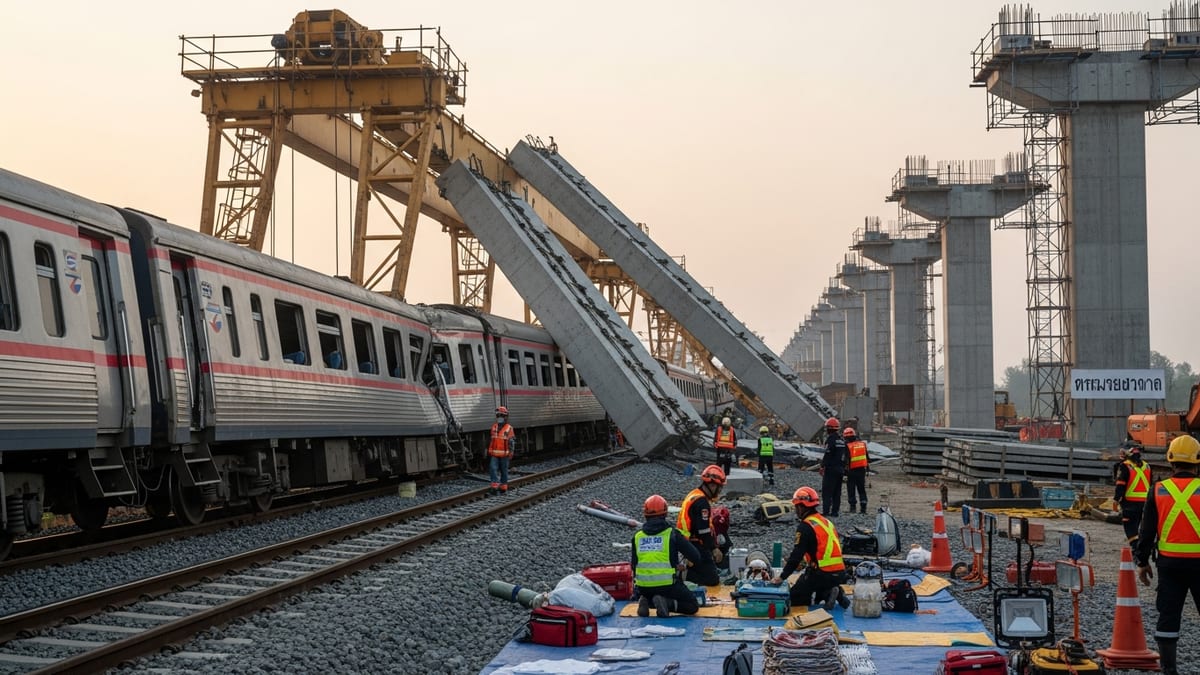
Collision at busy Duval County crossing
Initial information from transportation safety databases and local media coverage indicates that the derailment occurred when a freight train encountered a bulldozer positioned on or near the tracks at a grade crossing in Duval County, Florida. The heavy construction equipment appears to have been on the crossing as the train approached, leading to a violent impact and subsequent derailment of at least part of the train consist.
Published reports describe the site as a standard highway rail crossing where road traffic and trains intersect at grade, a configuration that remains common across North Florida. In this case, the presence of a slow moving or stationary bulldozer on the rails left little opportunity for the train crew to stop in time, given the long braking distances required for heavy freight trains.
Early descriptions do not indicate a large scale hazardous materials release, but images and accounts circulating through regional outlets show derailed railcars and damaged track infrastructure. Rail operators and contractors typically respond to such events by securing the site, assessing any fuel or cargo leaks, and preparing to rerail cars and rebuild damaged sections of track.
The incident follows a pattern seen in other recent crashes across the United States, where trains have struck heavy vehicles or equipment that became stuck or stalled on crossings, including tractor trailers hauling oversized loads and construction machinery being moved between job sites.
Injuries, damage and service disruptions
Publicly available information so far focuses on property damage and operational disruption, with limited detail on potential injuries. In comparable highway rail incidents, train crews and equipment operators often escape with minor injuries, but the forces involved can be severe, particularly for anyone in or near the struck vehicle. Emergency responders in Duval County typically assess the stability of derailed cars and search for fuel spills or fire risks before allowing rail and road traffic to resume.
The derailment has likely led to temporary suspension or rerouting of freight traffic along the affected line while cleanup and repairs proceed. Similar incidents documented in federal rail safety records show that grade crossing collisions can close a route for many hours or even days, depending on the extent of track damage, the number of derailed cars, and the availability of rerouting options.
For nearby communities, these events can bring immediate travel disruption as roads are closed around the crossing and detours are put in place. Travelers may face longer journeys, particularly where rail lines intersect key commuter or freight corridors. In a county that already manages heavy truck and port related movements, any blockage at a mainline crossing can quickly ripple through the local transportation network.
Railroads and insurers typically carry out detailed damage assessments after such derailments, tallying costs related to equipment, track, signaling systems and any environmental remediation that may be required. Freight customers can also be affected if shipments are delayed or rerouted while the line is restored.
Safety focus on construction equipment at crossings
Available federal data and prior case histories show that construction and industrial equipment present particular challenges at highway rail crossings. Bulldozers, excavators and similar machinery often move slowly, carry low ground clearance and can become high centered on raised crossings, especially where road profiles have been altered over time. When this occurs, operators may have little time to clear the tracks before a train arrives.
Regulatory guidance and industry best practices emphasize that companies moving heavy equipment across tracks should coordinate in advance with the railroad, verify route clearances and, where necessary, arrange protection for the movement. Reports on previous derailments involving stuck tractors and trailers suggest that gaps in planning and communication can leave operators unexpectedly exposed at active crossings.
In Duval County, where port activity, highway projects and industrial development all generate substantial construction traffic, crossings can see frequent movements of heavy machinery. Transportation safety specialists frequently recommend that contractors identify alternative routes that avoid rail crossings when possible, or schedule moves during periods of lower rail traffic and under strict traffic control.
National rail safety statistics indicate that a notable share of serious highway rail incidents involve large trucks and heavy equipment rather than passenger cars. These collisions are more likely to result in derailments and significant infrastructure damage, due to the mass and geometry of the vehicles involved.
Ongoing investigation and data review
The Duval County derailment is expected to be documented in federal rail safety reporting systems that track highway rail grade crossing incidents across the United States. These databases typically capture details such as the type of vehicle on the crossing, the nature of the train, the warning devices in place and any contributing environmental conditions.
Investigators and safety analysts often review event recorder data from the train, signal system logs and physical evidence at the site to reconstruct the sequence of events. In collisions that involve construction machinery, particular attention is usually paid to vehicle movements in the minutes before impact, the condition of the crossing surface and any indications that operators attempted to move or abandon the equipment upon realizing a train was approaching.
Findings from such reviews can lead to recommendations on engineering changes, signage, operator training and coordination between railroads and contractors. In some past cases, local agencies have added new pavement markings, upgraded warning devices or altered approach grades after a serious collision at a crossing.
Publicly accessible summaries of grade crossing incidents also allow communities to identify locations that experience repeated problems, such as frequent vehicle hang ups or near misses. This information can support funding requests for safety improvements, including grade separation projects that eliminate road rail conflicts altogether.
Implications for travelers and local traffic
For residents and visitors in Duval County, the derailment underscores the ongoing risks present at highway rail crossings, particularly in areas with active freight corridors. Even without hazardous materials releases or mass casualties, a single collision involving a train and heavy equipment can halt rail service, close roads and complicate daily travel for commuters and freight carriers.
Transportation agencies and safety campaigns often use high profile incidents to reinforce familiar advice around crossings, urging drivers and equipment operators to avoid stopping on the tracks, to heed all warning devices and to treat rail intersections with the same caution as major signalized junctions. In the case of slow moving or low clearance vehicles, guidance commonly stresses the need to ensure there is ample space to clear the crossing before entering it.
Travelers in the area may experience short term delays on both rail and road networks while repairs continue. Longer term, the event may contribute to broader policy discussions about how to manage grade crossings in fast growing metropolitan regions, where increasing train volumes intersect with expanding road and construction traffic.
As Duval County evaluates the circumstances around the derailment, the incident is likely to become part of a wider conversation about rail safety, infrastructure investment and the practical steps needed to keep trains, motorists and heavy equipment operators separated at the region’s most sensitive crossing points.