


More news on this day
A freight train derailment in Bucyrus, Ohio forced residents from their homes on Sunday night after several cars left the tracks near a neighborhood rail crossing, raising concern over a tanker suspected of carrying hydrochloric acid.
Get the latest news straight to your inbox!
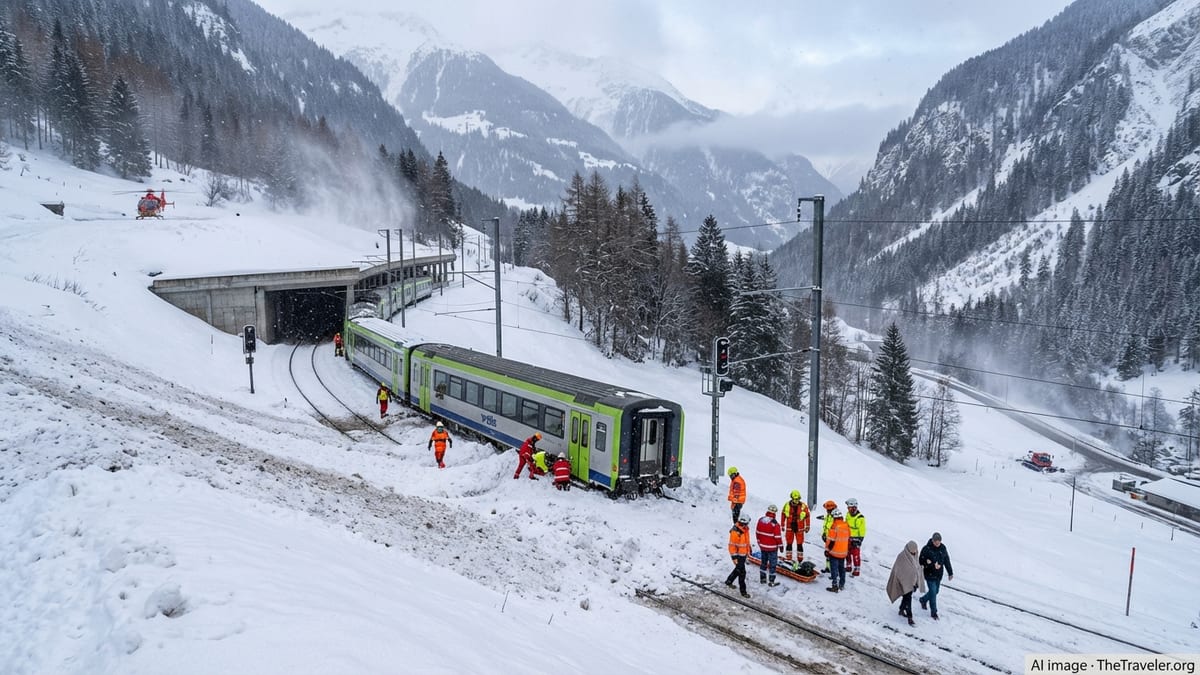
Evacuation orders follow derailment near Bucyrus neighborhood
Publicly available information indicates that the train derailed just before 9 p.m. on July 5 near the intersection of Whetstone Street and Auto Avenue, on the west side of Bucyrus in Crawford County. Regional news outlets describe at least six train cars off the tracks, including tankers believed to be transporting hazardous materials.
Initial alerts and local coverage report that emergency managers called for an evacuation around the derailment site after early assessments suggested a risk that at least one tanker could leak hydrochloric acid. The chemical can cause respiratory and eye irritation at high concentrations, prompting a conservative safety perimeter around nearby homes.
Reports indicate that the first evacuation guidance covered up to a one mile radius from the derailment, affecting multiple blocks of housing around the rail corridor. As further assessments were carried out overnight, that area was narrowed, with later updates describing a reduced evacuation zone of roughly a quarter to one third of a mile from the crash site.
Residents within the revised zone were urged to leave their homes until further notice, while those on the outer edge of the initial radius were informed that testing had not detected a broader offsite release beyond the immediate area of the tracks.
Hydrochloric acid risk under scrutiny as crews stabilize tankers
Images and details from regional television coverage and local online reports show derailed tank cars resting at angles along the right of way, with one tanker drawing particular attention from hazardous materials teams. Early statements from local agencies referenced the potential for a leak of hydrochloric acid and the need to verify the integrity of the tank shell and valves.
Hydrochloric acid is widely used in industry and is typically transported by rail in dedicated tank cars under strict federal standards. In liquid form, the substance can form corrosive vapors if released in sufficient quantity, which is why public alerts in Bucyrus highlighted the possibility of respiratory irritation in the event of an uncontrolled leak.
According to published coverage, air monitoring and visual inspections were carried out around the site as crews worked through the night to secure the cars and prevent product loss. By late evening, regional outlets were reporting that no immediate large-scale offsite impact had been detected, even as a precautionary evacuation remained in place closest to the tracks.
Specialized contractors and rail response teams are expected to play a central role in the next phase of the operation, which may include transferring product out of any compromised tank, rerailing cars that can be moved, and cutting up equipment that cannot be safely returned to service.
Residents displaced as shelter opens at Bucyrus High School
With homes within the closest zone to the tracks under an evacuation request, several Bucyrus residents spent the night away from their neighborhood. Local media report that Bucyrus High School was opened as an emergency shelter to provide a temporary refuge for those unable to stay with family or friends elsewhere in the city.
Regional coverage notes that the shelter offered a gathering point for displaced households, including families who left quickly with pets, medications, and essential documents when they first learned of the derailment. City facilities, including the high school, have been used in the past for weather-related disruptions, and this incident extended that role to a transportation emergency.
For residents just outside the revised evacuation line, the guidance has been to remain indoors where possible, avoid the immediate area of the crossing, and monitor local alerts for any change in conditions. Travelers passing through Bucyrus by road have also encountered detours and closures around Whetstone Street and nearby intersections as crews keep the perimeter clear.
Publicly available information as of July 6 indicates no widespread reports of serious injuries linked to the derailment, with the primary impacts centered on displacement, short-term sheltering needs, and uncertainty over when evacuees will be able to safely return to their homes.
Travel disruption along a key regional corridor
The Bucyrus derailment has also disrupted movement along a rail corridor that carries both freight and, indirectly, traffic for nearby highways used by travelers across northern Ohio. While the incident occurred within city limits, rail lines in this part of the state are closely interwoven with residential streets, local businesses, and regional road routes.
Rail traffic along the affected stretch was halted as investigators and response teams took control of the site, creating potential ripple effects for freight movements through the region. Rail-focused travel and freight publications routinely note that rerouting around an incident of this kind can lead to delays across a wider network, as trains wait for clearance or are redirected over less direct lines.
For motorists, local reports describe temporary road closures in the vicinity of the crossing where the train left the tracks. Drivers have been urged to use alternate routes and avoid trying to bypass barricades, both to reduce congestion and to keep the incident perimeter free for heavy equipment and emergency vehicles.
Visitors staying in or passing through Bucyrus may encounter increased traffic on secondary roads and should allow extra time for detours while cleanup and investigation work continues. Overnight rail operations and round-the-clock recovery efforts can also generate noise and lighting in neighborhoods near the tracks.
Ongoing investigation and safety questions
As of the morning of July 6, available reporting indicates that the cause of the Bucyrus derailment has not yet been publicly detailed. Standard practice in similar incidents involves a combination of railroad company inspections, federal safety reviews, and local emergency management documentation, often extending over weeks or months.
Past derailments involving hazardous materials in Ohio and elsewhere have intensified public attention on the condition of rail infrastructure, the maintenance of rolling stock, and the safeguards in place for communities situated close to busy freight lines. The Bucyrus incident adds a new example to that ongoing national conversation, particularly because the affected train was reported to be hauling a tanker suspected of carrying corrosive acid through a residential area.
For residents, the immediate focus remains on when it will be safe to return home, how long rail and road disruptions will last, and what long-term monitoring may follow if any release is ultimately confirmed. Local newsrooms have indicated that updates will continue as additional test results, inspection findings, and recovery milestones are released to the public.
Travelers planning to pass through Bucyrus in the coming days are being encouraged, through regional advisories and media reports, to check for the latest information on road closures, detours, and rail schedule changes. As response crews stabilize the site and the evacuation zone contracts, officials are expected to gradually reopen streets and lift remaining restrictions around the derailment area.