


More news on this day
Heavy monsoon rains and strong winds over Mumbai have disrupted operations at Chhatrapati Shivaji Maharaj International Airport, prompting IndiGo, Akasa Air and other carriers to cancel flights, divert aircraft and warn travelers of continuing delays.
Get the latest news straight to your inbox!
Monsoon turbulence hits India’s busiest aviation hub
According to published coverage from Indian media, flight operations at Mumbai’s Chhatrapati Shivaji Maharaj International Airport have been repeatedly disrupted since the weekend as intense monsoon showers and low visibility reduced runway capacity. Reports indicate that runway movements were temporarily suspended for about an hour on Sunday, creating a backlog that spilled over into Monday’s schedule.
Data cited in local news reports suggests that on Monday alone at least 17 flights were cancelled and more than 200 were delayed by late morning, with further disruption expected as heavy rain bands continued to pass over the city. Earlier counts from Sunday pointed to more than 20 cancellations and several hundred delays as airlines struggled to recover normal rotations.
The India Meteorological Department has issued a red alert for Mumbai and adjoining districts, signalling the likelihood of extremely heavy rainfall in a short span of time. Publicly available information shows that this has translated directly into air traffic constraints, with pilots facing challenging conditions on approach and departure and air traffic controllers spacing aircraft more conservatively for safety.
Mumbai handles close to 1,000 aircraft movements a day in peak periods, making any weather-related slowdown immediately visible across India’s domestic network. Disruption at this single hub quickly affects cities such as Delhi, Bengaluru, Hyderabad and Kolkata, as aircraft and crew are left out of position when flights cannot operate on schedule.
IndiGo cancels, diverts and warns of rolling delays
IndiGo, India’s largest carrier by market share, has seen a notable share of the weather-related impact. Reports from national broadcasters and newspapers state that on Sunday four IndiGo services were cancelled outright when runway operations were halted, including flights linking Mumbai with Delhi and Indore. In addition, more than a dozen arrivals operated by various airlines, including IndiGo, were diverted to nearby airports such as Surat and Ahmedabad while conditions at Mumbai deteriorated.
By Monday morning, publicly available flight status data compiled by news outlets showed a further round of cancellations and a large number of late departures and arrivals involving IndiGo services. While exact figures have varied across reports, several accounts point to IndiGo being among the most affected carriers simply because of the scale of its Mumbai operation and its role in connecting tier-two and tier-three cities through the hub.
In response, IndiGo has issued a travel advisory asking passengers booked to or from Mumbai to monitor their flight status closely before leaving for the airport. The airline has also encouraged travelers to allow additional time for check in and security, and to update their contact details in booking records so that any last-minute changes can be communicated via text or email.
Recent history has heightened scrutiny of IndiGo’s operational resilience after a separate scheduling crisis in late 2025 led to extensive cancellations nationwide. While the current disruption is primarily weather-driven, analysts quoted in earlier coverage have noted that irregular operations during the monsoon season can put extra pressure on crew rostering and fleet utilization across an already stretched system.
Akasa Air and other carriers adjust schedules
Newer entrant Akasa Air has also been forced to trim and adjust its schedules at Mumbai as rain intensity has fluctuated. According to published coverage aggregating airport departure boards and airline advisories, Akasa has cancelled selected departures on routes where alternative frequencies or interline options are available, while attempting to protect peak-time services with the highest demand.
Reports indicate that Akasa has joined IndiGo, Air India and SpiceJet in issuing public advisories that warn of delays and the possibility of short-notice cancellations or diversions. The messaging across carriers has been broadly similar, with a strong emphasis on checking real-time flight status and being prepared for gate changes or extended waits at the terminal.
Operationally, airlines have used a mix of tactics to cope with the weather disruption, including holding departures on the ground at origin airports until arrival slots at Mumbai open up, swapping aircraft between routes to keep longer sectors operating, and using nearby airports such as Surat and Goa as alternates for diversions. These measures have helped maintain an essential level of connectivity but have also introduced additional complexity for passengers connecting onward from Mumbai.
For Akasa, which has been expanding its presence at both Mumbai and the new Navi Mumbai airport, the episode underscores the challenges of scaling up during the peak monsoon period. Industry commentary suggests that newer carriers with smaller fleets have less flexibility to absorb extended weather-related disruptions, since each grounded or diverted aircraft represents a larger share of total capacity.
Red alert extends disruption timeline for travelers
The India Meteorological Department’s red alert implies that heavy to extremely heavy rainfall could persist over the Mumbai metropolitan region for at least 24 hours, with the possibility of localized flooding and further visibility reductions around the airport. News reports summarizing the forecast have cautioned that even brief windows of improved weather may not be sufficient to fully clear the backlog of delayed flights.
Publicly available information from flight tracking platforms shows that delays on Monday have ranged from minor schedule slips of 30 to 45 minutes to more serious disruptions of several hours. In some cases, aircraft departing from other Indian cities have been held on the ground for extended periods while awaiting updated landing slots at Mumbai, effectively shifting part of the delay to origin airports.
Airport authorities have advised, via statements carried in local media, that operations are being managed dynamically in line with weather conditions, with safety taking precedence over punctuality. This includes possible adjustments to runway use, temporary pauses in movements during the heaviest downpours, and coordination with airlines on the sequence in which waiting flights are cleared for landing or takeoff.
Travel trade observers note that such conditions often have a knock-on effect on hotel occupancy and ground transport as passengers miss connections or must wait for rebooked services. With Mumbai also experiencing waterlogging on key roads and rail lines during intense spells of rain, getting to and from the airport has become an additional concern for many travelers.
What affected passengers should expect at Mumbai airport
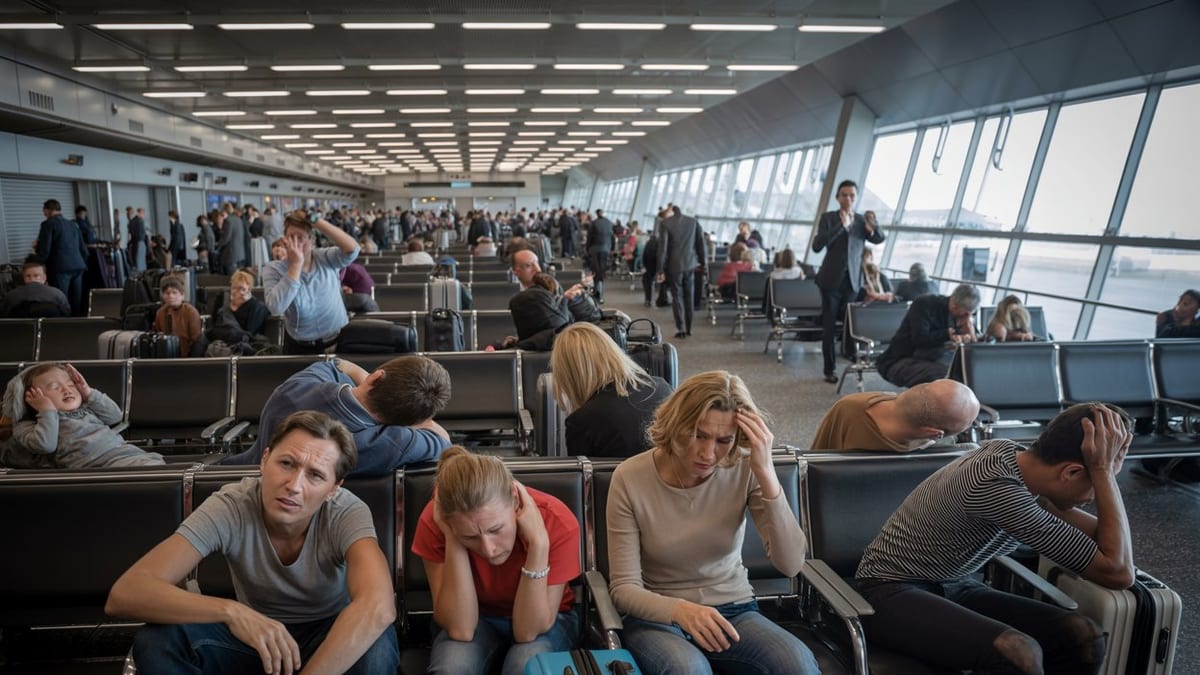
For passengers, the immediate impact of the disruptions has been longer queues at check in and customer service desks, as well as denser crowds in departure halls and waiting areas. Reports from consumer-focused outlets describe scenes of travelers queueing to rebook flights or seek clarification about revised departure times, particularly at IndiGo and Akasa counters.
Publicly accessible airline advisories explain that, in the event of significant delays or cancellations caused by adverse weather, travelers may be offered rebooking on the next available service on the same route, subject to seat availability. Some carriers are allowing voluntary changes without additional fees for passengers booked to and from Mumbai during the affected period, although specific conditions vary by fare class and route.
Given the evolving nature of the weather, aviation analysts cited in local coverage recommend that travelers build additional buffer time into their plans and remain flexible about nonessential commitments at their destination. Those with tight international connections or onward rail journeys are being encouraged to monitor updates closely and consider alternative routings if they become available.
For now, publicly available information indicates that Mumbai’s airport remains operational, but with a reduced and periodically interrupted flow of flights. As the monsoon system continues to pass over western India, the pattern of rolling delays and sporadic cancellations on IndiGo, Akasa Air and other carriers is expected to persist until conditions stabilize.