

More news on this day
Birmingham’s rail network is undergoing its most significant reshaping in decades, as five newly opened stations promise faster journeys, revived neighbourhood links and a fresh blueprint for sustainable urban travel across the West Midlands.
Get the latest news straight to your inbox!
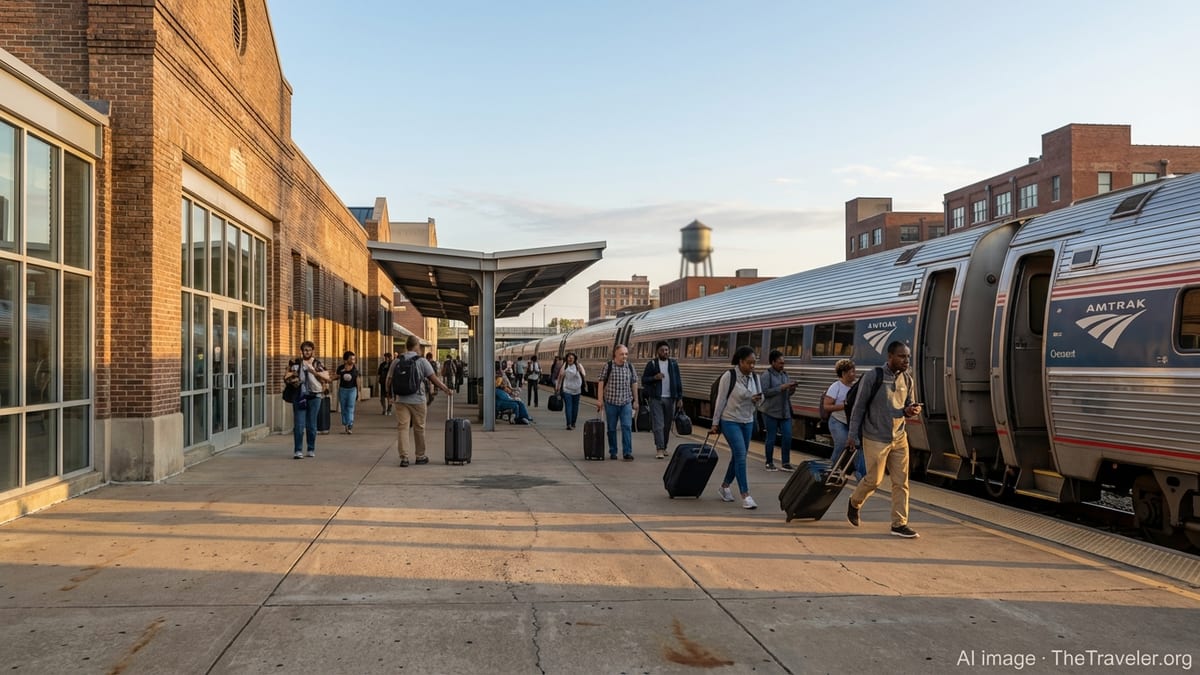
Camp Hill Line Reopens After Eight Decades
The heart of the rail overhaul is the long-awaited reopening of the Camp Hill line in south Birmingham, where three new stations at Moseley Village, Kings Heath and Pineapple Road are now welcoming passengers. Publicly available information shows that the line has seen its first regular local services since before the Second World War, restoring a direct rail link into the city’s core for communities that have relied heavily on congested roads and buses.
Reports indicate that trains on the Camp Hill line are running between Birmingham New Street and Kings Norton, typically every 30 minutes during daytime periods and with reduced frequencies in the evenings and on Sundays. Journey times from the new stations into central Birmingham are being advertised in the low teens of minutes, cutting typical peak travel times for many commuters compared with road-based alternatives.
Local transport briefings describe the three stations as fully accessible, with step-free access, lifts, ticket machines, passenger information systems and modern security features. The new facilities are intended to support both everyday commuting and off-peak leisure travel, providing a more attractive option for trips into the city centre, universities and major employment areas.
The reopening marks a symbolic shift for Birmingham’s rail network. Planners have long argued that the Camp Hill corridor could take pressure off key arterial roads, reduce bus overcrowding and offer more resilience across the wider rail system, particularly when disruption affects other routes into New Street.
Five-Station Investment Signals Wider Rail Strategy
The three Camp Hill line stations are part of a broader package of five new stations across the West Midlands rail network. Public information from regional transport bodies links them with additional stations serving other routes into Birmingham, reflecting a wider effort to create a denser suburban rail grid that better matches the city’s rapid population and jobs growth.
Regional planning documents cast the investments as an early phase of a longer-term rail modernisation programme that includes the Midlands Rail Hub concept and related capacity enhancements around Birmingham New Street and Moor Street. The five stations are seen locally as proof that incremental suburban projects can move ahead even as larger national schemes face delays and cost pressures.
Analysts note that the new infrastructure is relatively small in scale when compared with projects such as Birmingham Curzon Street, yet the impact on daily life could be more immediate. By placing stations directly within busy residential districts and town centres, the rail network becomes part of the everyday urban fabric rather than a distant facility used mainly for longer journeys.
In financial terms, official reports highlight a mix of central government funding, regional allocations and local contributions. This blended funding model is being watched by other UK city regions as an example of how smaller rail schemes can be assembled and delivered despite tight public finances.
New Links for South Birmingham Neighbourhoods
The three Camp Hill line stations are strategically positioned to reshape travel habits in south Birmingham. Moseley Village and Kings Heath, popular residential and leisure districts with active high streets, gain walkable access to fast rail services for the first time in generations. Pineapple Road provides a new rail option for communities around Stirchley, Hazelwell and parts of Kings Heath, areas that have seen significant housing growth and a rising hospitality scene.
Local travel guidance suggests that the new stations are expected to ease pressure on parallel bus corridors and radial roads into the city, where journey times can vary widely during the morning and evening peaks. Frequent short rail trips from these neighbourhoods into New Street create an alternative to driving and parking in the city centre, which has become more constrained as new clean air and urban realm measures have taken effect.
There are wider land use implications as well. Planning statements point to the potential for transit-oriented development in the immediate station catchments, with opportunities for new housing, small-scale commercial space and public realm upgrades. In contrast to earlier eras of car-focused planning, the new rail stops are being paired with walking and cycling improvements, bike parking and local bus connections.
Some residents and campaign groups have expressed concern about rising property values around the stations, noting the risk of pricing pressures and displacement. Public documentation shows that local authorities are being urged to align housing and transport strategies so that improved connectivity does not come at the expense of affordability.
Capacity, Timetables and Integration Challenges
Behind the headlines, the five-station rollout highlights the operational complexity of threading new services into an already busy rail network focused on Birmingham New Street. Technical papers and industry coverage point to tight capacity on key approach lines and limited platform space, which constrain how many additional local trains can be introduced, particularly in peak periods.
For the Camp Hill line, the initial service pattern of around two trains per hour reflects these limitations. Commentators note that running more frequent services would likely require further infrastructure works, including additional track capacity and new connections that could eventually divert some trains away from New Street towards an expanded Moor Street hub.
Integration with ticketing and fares is another area under scrutiny. While the new stations sit within existing rail zoning, transport advocates are pushing for simpler multimodal products that treat short rail hops more like rapid urban transit, making it easier to mix rail with buses, trams and cycling on a single journey. Publicly available information suggests that regional bodies are exploring more flexible ticketing technologies, although full rollout is expected to take several years.
There are also questions around late-evening and Sunday provision, when the service is thinner and waits between trains are longer. Travel groups argue that if rail is to be a true alternative to the car, service levels must support not only 9-to-5 commuters but also shift workers, night-time economies and weekend travel patterns.
Tourism, Business Travel and Future Prospects
Beyond daily commuting, the five new stations are expected to create new opportunities for tourism and business travel across Birmingham and the wider West Midlands. Travel industry coverage highlights the role of improved suburban rail links in making it easier for visitors to explore neighbourhoods beyond the traditional core of New Street, Moor Street and the Bullring area.
South Birmingham’s independent food, music and cultural venues stand to benefit from faster, more predictable journeys from the city centre and regional rail interchanges. Hotels and conference venues, which increasingly market Birmingham as a multi-centre destination, are likely to emphasise the ease of hopping by train between central attractions and characterful outlying districts.
Looking ahead, transport plans point to additional rail and tram schemes that could interact with the newly opened stations, including further metro extensions and projects intended to boost capacity into central Birmingham from multiple directions. While some of these remain at early stages, the successful delivery of the current five-station package is being portrayed in public documents as a foundation for more ambitious changes.
For now, the immediate story is one of reconnection. After decades in which local rail in Birmingham often took a back seat to roads and national intercity links, the opening of five new stations signals a renewed focus on everyday journeys and neighbourhood access, with the potential to reshape how residents, workers and visitors experience the city.