

More news on this day
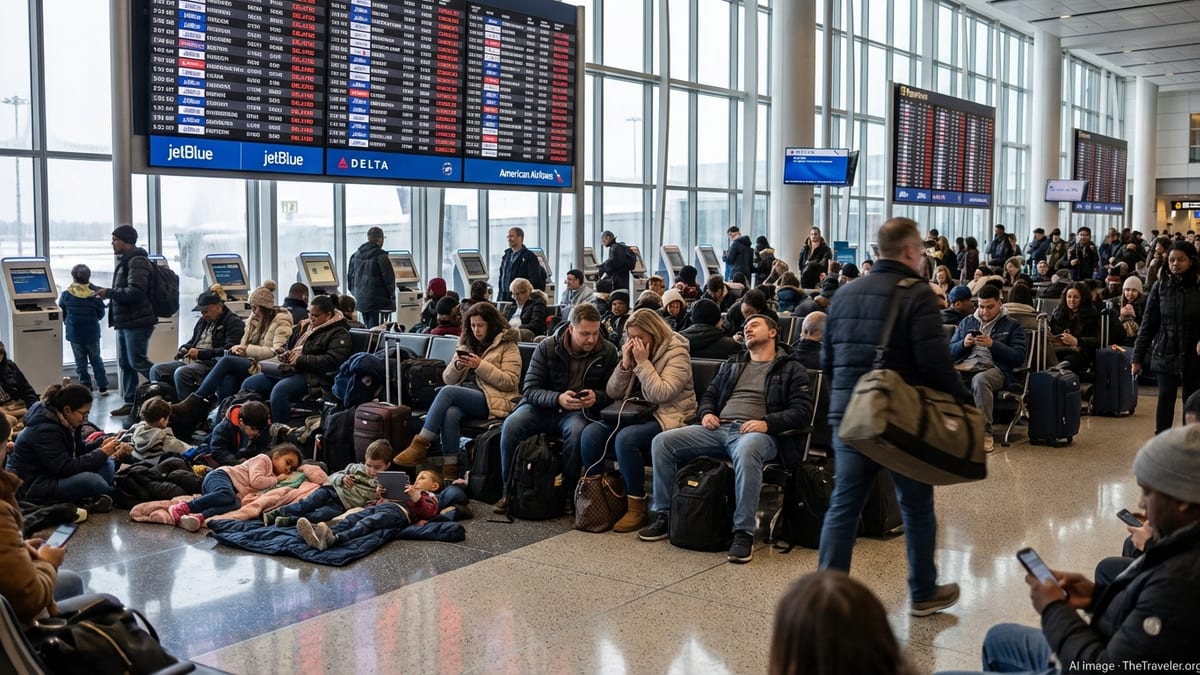
Thousands of passengers were left stranded or significantly delayed at New York’s John F. Kennedy International Airport on March 2 as JetBlue, Delta Air Lines and American Airlines racked up 124 delays and 20 cancellations on routes linking New York with London, Paris and major cities across the United States, intensifying a week of severe disruption across the Northeast air corridor.
Storm Disruption and Global Tensions Converge at JFK
The latest wave of disruption hit just days after a powerful winter storm swept through the northeastern United States, snarling operations at key hubs including JFK, Newark Liberty and Boston Logan. While runway conditions and visibility have slowly improved, residual operational knock-on effects, aircraft repositioning and crew scheduling problems are still rippling through airline networks.
At JFK, aviation data on March 2 pointed to a concentrated impact on JetBlue, Delta and American, three of the airport’s largest tenants. Many of the 124 delayed services were domestic links to cities such as Boston, Washington and Chicago, as well as transatlantic departures to London and Paris that were forced into holding patterns by earlier congestion and ongoing flow-control measures.
The disruption has been compounded by geopolitical tensions, particularly in the Middle East, which have forced major carriers to review routings and, in some cases, suspend services. Delta has already paused its New York to Tel Aviv flights through early March, reducing flexibility in an already stretched long-haul operation and narrowing the margin for recovery when winter weather hits.
For travelers at JFK on Monday, the combination of storm aftershocks and international uncertainty translated into crowded terminals, snaking customer-service queues and rolling gate changes, as airlines tried to consolidate lightly loaded flights and free up aircraft for the most time-sensitive routes.
Passengers Stranded as Cancellations Hit Key U.S. and European Routes
The 20 cancellations recorded at JFK across JetBlue, Delta and American were heavily concentrated on a mix of short-haul U.S. services and select transatlantic departures. Passengers bound for London Heathrow, London Gatwick and Paris Charles de Gaulle were among those most affected, with some flights scrubbed outright and others retimed significantly as carriers sought to rebuild their long-haul rotations.
Domestic travelers fared little better. Cancellations on shuttle-style routes linking New York to Boston, Washington, Florida and Midwest hubs such as Chicago disrupted business itineraries and onward connections to the South and West Coast. At least several flights that did operate departed with multi-hour delays, compressing turnaround times at arrival airports and setting up a fresh round of late operations later in the day.
Families returning from winter-break trips reported spending the night on terminal benches after missing last departures to smaller U.S. cities. With hotel space around JFK tight following the earlier storm, many stranded passengers opted to remain in the terminal rather than risk long journeys to off-airport accommodations and the possibility of further schedule changes overnight.
Airline staff on the ground faced the difficult task of rebooking travelers across already full services. With planes and crews out of position after days of weather and security-related disruption, options to move passengers on the same day were limited, forcing some to accept travel dates later in the week or reroutes through secondary hubs.
JetBlue, Delta and American Grapple With Operational Strain
For JetBlue, which maintains a major transatlantic and domestic operation out of JFK, the delays underscored the vulnerability of a tightly timed schedule to large-scale weather events. Even as conditions improved over New York, downline airports such as Boston and other New England gateways continued to work through backlogs, limiting the carrier’s ability to swap aircraft or crews into affected JFK flights.
Delta and American, both of which operate extensive hub-and-spoke networks through JFK and neighboring airports, also struggled to recover. With aircraft rotations stretching from the U.S. East Coast to Europe and beyond, a single heavily delayed departure can cascade into missed crew duty windows and last-minute cancellations, particularly at the tail end of the day when operating curfews start to come into play at European airports.
Industry analysts note that the current wave of disruption comes at a time when airlines are running near-peak utilization of aircraft to capitalize on strong demand. That leaves little spare capacity to absorb shocks from storms or geopolitical events. While carriers have added more slack to schedules since the worst of the pandemic-era meltdowns, the sheer scale of the Northeast corridor and the importance of connecting flows through JFK mean that any sustained disruption can quickly snowball.
Operational teams at all three airlines spent Monday juggling crew legality rules, maintenance requirements and slot restrictions at overseas airports, in some cases opting to cancel a smaller number of flights outright in order to protect the broader schedule from further rolling delays.
Transatlantic and Domestic Networks Feel the Ripple Effect
The impact of JFK’s delays and cancellations was felt well beyond New York. Passengers in London and Paris reported late-evening departures on flights bound for the United States, as aircraft scheduled to operate those services left JFK behind schedule or were substituted at the last minute. Some inbound flights were held on the ground in Europe to align with revised arrival slots into congested New York airspace.
Within the United States, knock-on delays appeared across a chain of connected flights. Aircraft arriving late into cities such as Orlando, Dallas and Los Angeles departed late again, in turn affecting subsequent legs and evening operations. Travelers connecting through other East Coast hubs, including Boston Logan and Washington-area airports, encountered long queues at customer-service desks as staff rerouted passengers whose itineraries had been built around on-time arrivals from JFK.
Travel data over the past year has highlighted the concentration of delay-prone operations at major coastal hubs, with airports such as Newark Liberty and New York’s LaGuardia often ranking among the most disruption-prone. JFK’s role as a primary international gateway means that any spike in delays or cancellations there can quickly reverberate across multiple continents, touching everything from European city breaks to business trips in the Midwest and West Coast leisure traffic.
For international travelers already navigating tighter security checks and evolving travel advisories, the additional risk of weather-induced disruption has reinforced calls for more resilient scheduling, greater spare capacity and clearer communication from airlines when cascading delays become inevitable.
Airlines Urge Passengers to Monitor Flights and Expect Ongoing Disruption
JetBlue, Delta and American advised customers with travel planned to or through JFK to monitor their flight status closely and to make use of mobile apps and automated alerts, particularly for departures over the next several days while operations remain fragile. All three carriers have been offering varying degrees of fee-free rebooking for affected passengers, with some also allowing changes to alternate regional airports where capacity allows.
Customer advocates say the events of the past week illustrate how quickly conditions can change, even outside traditional peak storm season, and are urging travelers to build additional time into itineraries, especially when connecting to international flights. Purchasing flexible tickets or adding travel insurance that covers missed connections and overnight stays is also being recommended more widely.
At JFK on Monday afternoon, departure boards were still dotted with amber and red indicators as airlines worked to clear the backlog. While the number of new cancellations slowed compared with earlier in the week, lengthy delays remained common on some domestic and transatlantic routes, suggesting that full normalization may take several more days.
For many of the stranded passengers stretched out along terminal concourses, the priority was more immediate: securing a confirmed seat out of New York, regardless of carrier or destination, and hoping that the next bout of winter weather holds off long enough for the system to finally catch its breath.