

More news on this day
Thousands of travelers were stranded at Chicago O’Hare International Airport on March 6 as a wave of 994 delays and 227 cancellations involving American Airlines, United Airlines, SkyWest and Envoy Air rippled outward to New York, Los Angeles, Dallas and other major U.S. cities, turning one of the world’s busiest hubs into the epicenter of a nationwide disruption.
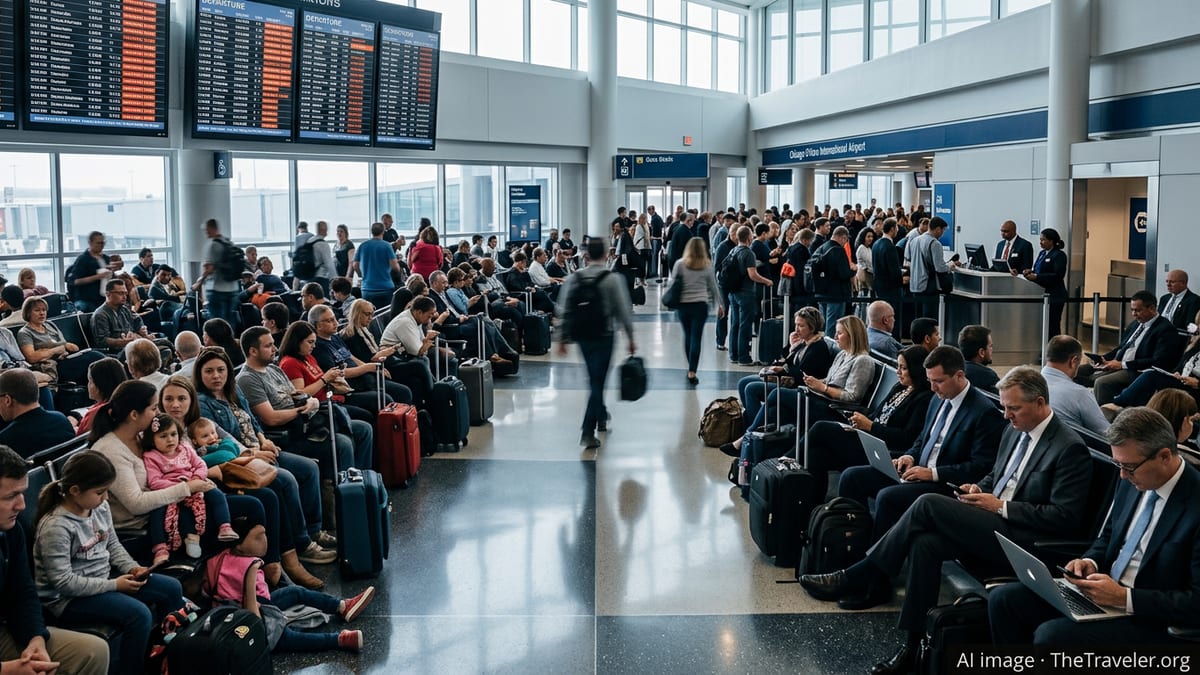
O’Hare Gridlock Sends Shockwaves Across the Network
By early afternoon on Friday, departure boards at O’Hare were dominated by delay notices, with long lines forming at rebooking counters and gate podiums as operations slowed to a crawl. Flight-tracking data showed a sharp spike in late departures and missed arrival slots, with regional carriers SkyWest and Envoy Air particularly hard hit as they struggled to reposition aircraft and crew.
Operational snarls at O’Hare quickly translated into network-wide pain. American Airlines and United Airlines, both heavily dependent on the Chicago hub, were forced to push back departure times, consolidate services and cancel rotations altogether when crews and aircraft could not arrive on schedule. Each cancellation removed yet another connection from the system, magnifying the impact for passengers far from Illinois.
The Federal Aviation Administration’s existing concerns about congestion at O’Hare have come into sharper focus in recent days, with regulators warning that airline schedules are already pressing against the airport’s physical and airspace capacity. Friday’s meltdown offered a stark, real-time illustration of those warnings, as high demand collided with limited slack in the system.
Major Hubs in New York, Los Angeles and Dallas Feel the Strain
As Chicago faltered, knock-on disruptions spread across the country’s biggest aviation markets. In the New York region, services into and out of John F. Kennedy and Newark Liberty saw mounting delays and a growing list of cancellations tied directly to missed connections and late inbound aircraft from O’Hare. Evening transcontinental and transatlantic departures were among the most vulnerable, with aircraft arriving hours behind schedule.
On the West Coast, Los Angeles International Airport reported a tightening squeeze on gate availability and turnaround times as delayed Chicago flights arrived in bunches instead of evenly throughout the day. That bunching effect forced airlines to delay onward departures to cities such as Phoenix, Denver and Seattle while ground crews raced to unload baggage, refuel and clean cabins under intense time pressure.
Dallas Fort Worth, another linchpin in American Airlines’ network, faced rolling schedule adjustments as flights from O’Hare landed late or not at all. For travelers heading through Dallas to Latin America or the Mountain West, the result was a cascade of missed connections, overnight stays and last-minute rerouting through alternative hubs such as Charlotte and Houston.
Passengers Confront Long Queues, Limited Options and Patchy Information
Inside terminals, the human cost of the disruption was immediately visible. Families returning from spring trips, business travelers on tight itineraries and international visitors transiting through Chicago all crowded around departure boards that refreshed with little but new delay estimates. Seating near gates and food outlets quickly filled, leaving many to sit on the floor with carry-on bags and children in tow.
Rebooking proved especially challenging for travelers booked on regional flights operated by SkyWest and Envoy Air on behalf of American and United. With aircraft and crews scattered and many subsequent flights already full, agents often had few same-day alternatives to offer. Some passengers accepted reroutes that added multiple connections and many hours of travel time, while others opted to push their trips by a day or more.
Communication was a persistent sore point. While airlines issued app notifications and text alerts, many passengers complained of last-minute gate changes, rolling departure times and limited access to live agents. At several O’Hare concourses, queues for customer service stretched well beyond roped-off areas, and wait times for phone support ran to hours as call centers were overwhelmed by the volume of inquiries.
Airlines Caught Between Capacity Ambitions and Operational Limits
The day’s turmoil unfolded against a backdrop of rising tensions over how aggressively carriers are scheduling O’Hare in the run-up to what is expected to be a record-breaking 2026 summer travel season. American Airlines has recently accused United of loading the airport with what it calls reckless schedules, warning employees that the strategy risks long taxi times, missed connections and systemic disruptions when anything goes wrong.
Regulators at the Federal Aviation Administration have already moved to impose tighter caps on daily operations at O’Hare in an effort to relieve mounting pressure on runways, terminals and air traffic control staffing. Airlines, however, continue to push for growth, arguing that demand justifies more frequent service to key business and leisure markets across the country.
Friday’s breakdown highlighted how quickly those competing pressures can collide. With schedules trimmed close to the margin and little spare capacity available, even relatively contained issues can balloon into hundreds of delays and cancellations in a matter of hours. For carriers such as SkyWest and Envoy, which provide the regional backbone feeding Chicago’s mainline flights, the lack of resilience can be particularly punishing.
What Travelers Can Expect in the Coming Days
Although airlines worked into the evening to restore some semblance of normalcy, the sheer volume of delayed and canceled flights at O’Hare is expected to cast a shadow over weekend travel. Aircraft and crews remain out of position, and many major hubs are still processing the backlog of passengers who were unable to complete journeys as planned.
Travelers with flights scheduled through Chicago and other affected hubs in the next 24 to 48 hours are being urged to monitor their itineraries closely and to allow extra time for connections. Same-day standby lists on popular routes are likely to be longer than usual, and seats on alternative routings may be scarce during peak periods.
Consumer advocates note that passengers whose flights are canceled are generally entitled to refunds if they choose not to travel, while lengthy delays may qualify some travelers for meal vouchers or hotel accommodations depending on airline policy and the cause of disruption. With O’Hare’s challenges likely to persist as the busy season approaches, many frequent flyers say they are already building longer layovers and backup plans into their travel strategies.