


Like many frequent travelers, I long assumed that claiming compensation for delayed or canceled flights was more trouble than it was worth. I had heard of services that would fight airlines on your behalf, but I lumped them all together as slow, opaque and expensive. Then I tried DelayFix, a Poland-based claims company that specializes in enforcing EU air passenger rights under Regulation 261/2004. What surprised me most was not only how the service worked behind the scenes, but how it changed the way I think about disrupted flights altogether.
Get the latest updates straight to your inbox!
Discovering DelayFix in the Real World
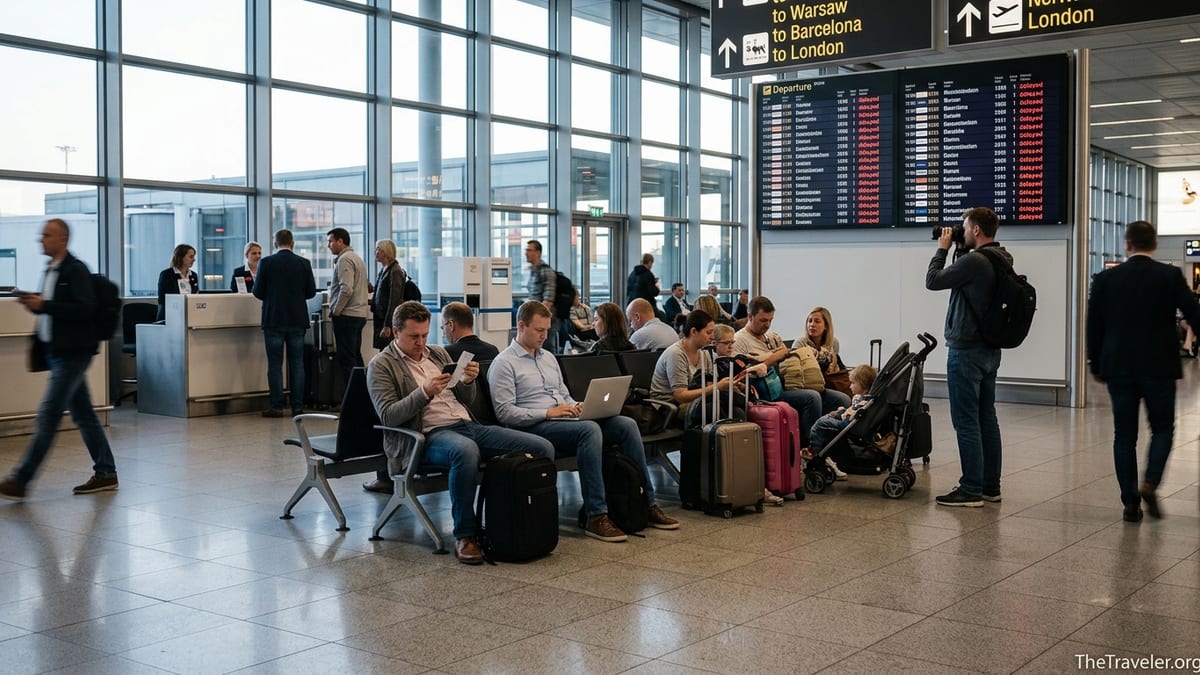
My introduction to DelayFix did not come through a slick airport ad. It started with a four-hour delay on a Warsaw to Barcelona flight that ruined a weekend connection and left an entire cabin of passengers staring at departure boards in frustration. Like most people, my first reaction was to complain to the airline’s chatbot and then give up when the replies became circular. A fellow passenger, a Polish business traveler who clearly knew his way around EU261, mentioned that many locals use a company called DelayFix whenever airlines stonewall them. I had read about big global brands like AirHelp and Skycop, but DelayFix was new to me.
Back in my hotel, curiosity beat my skepticism. I looked up DelayFix and discovered a company that is unusually rooted in one market. The firm is based in Poland, offers its site and contracts in several languages, and openly advertises that more than half of all court cases involving Polish passengers worldwide involve its team. That local focus contrasted sharply with the broad, global messaging I was used to from other claim services, and it was my first clue that this was not just another generic compensation app.
What also stood out were the public signals of trust. Independent review aggregators list thousands of customer opinions and an average rating around 4.8 out of 5, with reviews still appearing in 2026. In an industry where frustrated passengers are not shy about venting online, consistent positive sentiment is a noteworthy data point, especially when it accumulates over several years rather than a short burst.
By the time I finished browsing, the idea of simply handing the mess to a specialist started to feel less like laziness and more like hiring an expert accountant for a complicated tax return. That mental shift would become a recurring theme the deeper I went into the process.
The Claim Process Was Faster and More Hands-Off Than Expected
The first big surprise was how little information DelayFix actually needed from me to get started. I expected to spend an hour digging through old emails and boarding passes. Instead, the initial online form took about five minutes. I entered the airline, flight number, travel date and basic details about the disruption. The system estimated the potential compensation under EU261 rules, which for my intra-EU flight of more than 1,500 kilometers came out to a possible 400 euros per person, assuming the delay was within the airline’s control.
Once I submitted the form, the process shifted almost entirely to DelayFix’s legal and flight-tracking teams. The company makes it clear that it works on a contingency basis: no win, no fee. There were no upfront charges, and if the claim failed I would not be billed for court costs or document translations. For someone used to legal services that meter time in six-minute units, seeing a pure success-fee model backed by a dedicated legal staff was quietly reassuring.
Behind the scenes, DelayFix’s operation is more involved than the friendly interface suggests. The company maintains a flight monitoring center that collects data on delays and cancellations, including weather reports and air traffic issues, which it uses to challenge airlines’ claims of “extraordinary circumstances.” In practice, that can be the difference between an airline blaming vague bad weather and a court later agreeing that the real issue was a technical fault or crew rostering problem that falls squarely on the carrier.
In my case, I received only occasional email updates: first that the airline had rejected the claim, then that DelayFix had escalated the matter, and finally that the airline had agreed to pay. The entire process from filing to payout took several months. That is not unusual in EU261 cases, but what surprised me was how little I had to do beyond reading updates and confirming my bank details. Compared with stories from travelers who spent hours arguing with airline call centers, the time trade-off was stark.
The Legal Firepower Behind a Simple Interface
Most claim companies present themselves as tech platforms. DelayFix talks a lot more about its lawyers. The company openly highlights its involvement in complex cases before the Court of Justice of the European Union, including a dispute with a low-cost carrier where European judges sided with passengers represented by DelayFix’s team. For a niche Polish operator, having its name appear in EU-level jurisprudence is unusual and gives a glimpse of the depth behind the consumer-facing brand.
This emphasis on legal expertise shows up in small but telling details. For example, DelayFix calculates delay not from pushback at departure but from the moment the aircraft door opens at arrival, which is exactly how European courts define “arrival time” in compensation cases. It also sets a relatively short one-year lookback period for claims in some jurisdictions, reflecting local limitation rules, even though some pan-European sites casually mention longer periods without clarifying the legal nuance country by country.
The contracts are another point where the legal thinking matters. DelayFix typically works by having customers assign their claim to the company. In everyday terms, you sell your right to the compensation in exchange for DelayFix pursuing it in its own name and paying you once it recovers the money. This structure is common in European claims management, but it is not always made explicit. DelayFix’s English-language terms spell out that the airline may be instructed to pay compensation directly to DelayFix’s bank account, after which the company forwards the agreed share to the passenger.
For travelers, this arrangement has practical pros and cons. On the plus side, it allows the company to take a tough stance in court without requiring you to attend hearings or sign repeated authorizations. Airlines cannot buy you off with a partial voucher and then argue that the matter is closed. On the downside, you have to be comfortable with a specialist firm standing in your shoes against a large airline and controlling the litigation strategy. For me, the professionalism of DelayFix’s legal team and its long history in the Polish market tipped that balance in its favor.
Fee Structure, Payouts and the Value Question
Any traveler considering DelayFix naturally asks the same question: how much will this cost compared with claiming directly from the airline? Exact fee percentages can change over time and may differ depending on jurisdiction and case type, but DelayFix positions itself in the same general range as other European claims firms that often charge a success fee around a third of the recovered amount, sometimes plus VAT. In my scenario, that meant surrendering a significant slice of the potential 400 euro compensation in exchange for never having to draft a legal letter or argue about meteorological reports.
Judging value here depends on what you compare it with. A confident traveler with time, patience and language skills can absolutely pursue a claim directly under EU261 or UK261 rules, using free templates widely shared by consumer organizations. There are plenty of stories of passengers who emailed an airline like Delta, British Airways or Lufthansa and received full payouts within weeks for clear-cut delays. In those cases, paying a success fee to any third party would be overkill.
But the reality is that many disruptions are not clear-cut. Airlines routinely argue that technical faults are extraordinary, that knock-on delays from previous rotations absolve them of responsibility, or that mixed itineraries with codeshares break the chain of liability. For multi-leg journeys involving low-cost carriers, regional airports and complex weather patterns, the legal and factual analysis quickly becomes dense. This is the terrain in which a company such as DelayFix makes its living.
In my own case, the airline had initially rejected the claim on the grounds of air traffic control restrictions. When DelayFix finally secured a settlement, the amount that hit my account after fees was still several hundred euros. For a flight that cost less than that in the first place, I judged the outcome more than acceptable, especially given that I would likely have abandoned the effort entirely without outside help.
Customer Experience: Local Roots, European Reach
DelayFix’s strongest impression is how distinctly local it feels while operating in a pan-European legal landscape. The company’s core staff, including its CEO and chief legal officer, are based in Poland, and its marketing emphasizes helping Polish passengers in particular. At the same time, it offers services and documentation in multiple languages, including English and Czech, and pursues cases across European jurisdictions when flights touch EU territory.
One practical example of this dual identity is how DelayFix handles communication. My own interactions took place entirely in English over email, but Polish friends who have used the service describe picking up the phone and speaking with consultants in Warsaw during business hours, something that gives non-English-speaking travelers in Central and Eastern Europe a much lower barrier to entry than dealing directly with multinational airline support lines.
Reviews from 2026 on rating platforms describe similar experiences: claims that took months but ended with payments, polite staff who explained each escalation, and a sense that the company is more persistent than the average passenger might be on their own. A small minority of reviewers, as with any service, report disappointment when legal obstacles proved insurmountable or when the process felt longer than expected. Those accounts are a reminder that even an efficient specialist cannot bend the underlying law or court calendars to its will.
For North American travelers connecting through Europe, this local strength can be especially valuable. Consider a traveler from Chicago flying to Athens with a connection in Warsaw. If the first leg is operated by a European carrier and arrives late enough to miss the onward flight, EU261 may entitle the passenger to compensation even though the journey started outside the EU. A company like DelayFix that understands the nuances of such mixed itineraries can make the difference between a polite apology from the airline and a multi-hundred-euro payment.
Where DelayFix Fits Among Global Compensation Services
Stepping back from my personal case, DelayFix occupies an interesting niche in the wider ecosystem of flight compensation tools. At one end of the spectrum are pure self-help resources: government websites that explain passenger rights, consumer association templates for complaint letters and online forums where savvy travelers trade strategies. At the other end sit large, heavily marketed platforms like AirHelp or Skycop, which pitch themselves as one-click solutions for passengers worldwide.
DelayFix lands somewhere in the middle. It is more specialized and legally intense than the average app-based tool, with a clear focus on litigating difficult cases out of Central and Eastern Europe. It is also smaller and more geographically concentrated than the global players, which means it is not necessarily the first choice for a Canadian domestic delay or a disruption entirely outside EU and UK law. For those situations, services designed around Canadian or US regulations may be better positioned.
For travelers, this diversity of options is a good thing. You might use an AI-powered assistant to draft an initial complaint to a US carrier, a Canada-focused tool to navigate the Air Passenger Protection Regulations, and a company like DelayFix if your multi-country itinerary falls under EU261 and the airline digs in its heels. The common thread is specialization: each service is tuned to different legal frameworks, procedural habits and airline cultures.
What really surprised me about DelayFix was how comfortable I felt handing it a complex, border-crossing dispute. The company’s public record in European courts, its long operating history and the steady stream of recent customer reviews all contributed to that trust. In a travel world where new apps appear and vanish in a single season, that kind of longevity matters.
The Takeaway
My experience with DelayFix changed how I interpret those dreaded “we regret to inform you” messages that flash on departure screens. Instead of treating disruptions as random misfortune to be swallowed with a free sandwich voucher, I now see them as events governed by a clear framework of passenger rights that can be enforced if you are persistent or if you enlist the right help.
DelayFix is not a magic wand. It cannot override weather, reopen closed runways or guarantee that a judge will agree with its interpretation of the law. It does, however, bring serious legal firepower, data analysis and procedural stamina to the table, especially for passengers whose claims involve European law and who would otherwise abandon the effort after the first rejection email.
What surprised me most was not that a specialist company could extract money from a reluctant airline. It was the realization that, handled correctly, a delayed or canceled flight can lead to more than just frustration and an anecdote. It can result in meaningful financial redress that changes how you value both your time and your rights as a traveler. For many passengers, especially those flying to, from or within Europe, DelayFix is a credible and increasingly well-tested way to close that gap.
FAQ
Q1. What exactly does DelayFix do for delayed or canceled flights?
DelayFix pursues financial compensation and related claims against airlines when flights are significantly delayed, canceled or overbooked under EU261 and similar rules, handling the legal and administrative process on your behalf.
Q2. In which situations is it worth using DelayFix instead of claiming directly with the airline?
DelayFix is most useful when the airline rejects your initial claim, when the cause of delay is disputed, when your itinerary spans multiple countries or when you simply do not have the time or confidence to argue a complex EU261 or UK261 case yourself.
Q3. How much compensation can I potentially receive through DelayFix?
Under EU261, eligible passengers can often claim fixed compensation up to 600 euros per person depending on flight distance, route and length of delay, plus in some situations reimbursement of certain out-of-pocket expenses.
Q4. How does DelayFix make money if it advertises “no win, no fee”?
DelayFix typically charges a success-based fee that is deducted from the compensation it recovers for you, so you only pay if the company actually secures a payout from the airline.
Q5. How long does the average DelayFix case take?
The timeline varies widely. Straightforward cases that airlines quickly settle can resolve in a few months, while disputes that go to court or involve complex evidence can take significantly longer.
Q6. Is DelayFix only for Polish passengers or can international travelers use it too?
Although DelayFix has strong roots in Poland and Central Europe, international travelers whose flights fall under EU or related regulations can also use the service, especially when trips involve EU airports or European carriers.
Q7. Will I need to attend court or deal with lawyers directly?
In most cases, no. Because DelayFix often takes assignment of your claim, its in-house legal team can represent the case in its own name, keeping you updated while sparing you from attending hearings or drafting legal documents.
Q8. What documents should I keep if I might use DelayFix after a disruption?
Retain your booking confirmation, boarding passes if available, any written communication from the airline about the disruption and receipts for meals, hotels or transport you paid for as a result of the delay or cancellation.
Q9. Is there a time limit for submitting a claim to DelayFix?
Yes. Limitation periods depend on the country and applicable law, but in some cases can be as short as about one year, so it is wise to contact DelayFix or another specialist as soon as possible after the disruption.
Q10. Does using DelayFix affect my relationship with the airline or future bookings?
In practice, no. Airlines treat compensation cases as legal and commercial matters. Using a specialist such as DelayFix may be more assertive than a simple complaint, but it does not typically impact your ability to book or fly with the carrier in the future.