


More news on this day
As Jewish communities worldwide prepare for Yom Tov travel in late September and October, reports from North America, Europe and Israel point to tighter immigration screening, longer border waits and closer examination of visitors’ histories, prompting renewed warnings for those planning to fly during the busy holiday season.
Get the latest news straight to your inbox!
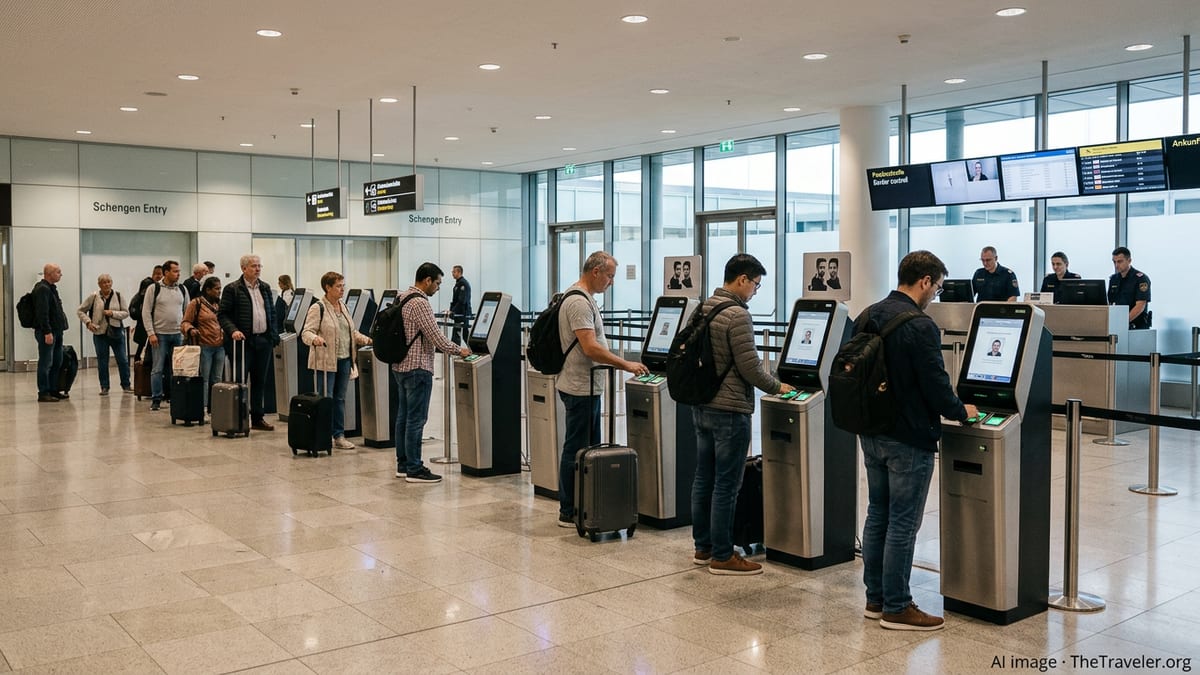
Holiday Crowds Meet a Global Turn Toward Stricter Borders
Travel over the Tishrei holidays, from Rosh Hashanah through Sukkot, regularly strains airports serving major Jewish communities. This year, the peak coincides with a broader trend of governments tightening border controls in response to security concerns and overstay data, creating a more demanding environment for religious travelers heading abroad for Yom Tov.
Publicly available immigration figures from the United States show that authorities are paying close attention to visitors who exceed their authorized stay. A recent overstay report from the Department of Homeland Security calculated a 1.15 percent total overstay rate among air and sea nonimmigrant visitors in the 2024 fiscal year, a small percentage that still translates into hundreds of thousands of people who did not depart on time. Such data is often used to justify more questioning at the border for short-term visitors perceived as higher risk.
At the same time, several Western governments have updated their own border procedures, affecting anyone flying in for the holidays. In the United Kingdom, long-running carrier guidance on document checks has been updated repeatedly through late 2024 and March 2025, underlining an expectation that airlines and border staff will vet passengers’ travel documents more rigorously before and at arrival. In practice, this can mean more frequent referrals to secondary inspection for those whose travel patterns or papers prompt additional questions.
Against this backdrop, community travel bulletins ahead of Sukkot 2024 already urged observant passengers to build in extra time at departure and arrival airports. With similar or higher volumes expected around the upcoming Yom Tov period, those warnings are resurfacing as a practical guide rather than a theoretical concern.
Israel Tightens Screening as Ben Gurion Faces Heavy Traffic
Israel remains a focal point of Yom Tov travel, and scrutiny at Ben Gurion Airport has been under particular examination. The UK’s official Israel travel advice continues to note that travelers should expect additional security measures and longer processing at airports, especially around Israeli holidays and during peak seasons. The guidance also underlines that immigration rules and enforcement can change at short notice, reinforcing the need to monitor updates before departure.
Policy debates in Israel have highlighted the authorities’ effort to curb illegal work and misuse of tourist visas. A 2024 briefing released via the Knesset reported that thousands of foreign nationals were refused entry at Ben Gurion in 2023 and 2024, while a smaller but notable number were intercepted after attempting to enter the country to work without authorization. The figures point to a sustained effort to detect visitors who may not be traveling purely for tourism or family visits.
Media coverage has also drawn attention to security gaps and enforcement responses at the country’s main gateway. One widely reported case involved an individual who used forged documents to enter Israel, stay for an extended period and attempt to regularize status through a fraudulent marriage process, before eventually being detained. Such incidents have fed calls for even tighter questioning and document checks of arriving passengers, including those who present as tourists.
Operational pressures add another layer of uncertainty for holiday travelers. Recent reporting from inside Ben Gurion described long queues, flight delays and cancellations during a stretch of heavy traffic, as passengers struggled with hours of waiting at the terminal. While the disruption was primarily linked to staffing and scheduling tensions, it illustrated how quickly the system can become congested when intensive security procedures meet peak-season volumes.
U.S. and U.K. Focus on Overstays and Advance Data
For travelers heading to or transiting through the United States for Yom Tov, closer immigration scrutiny is tied not just to security but also to compliance with visa rules. Customs and Border Protection guidance emphasizes that those entering on visitor visas must carefully track their authorized stay and avoid cutting it too close when planning side trips to Canada, Mexico or other countries. Official advisories note that re-entry after regional travel can lead to a fresh and more detailed inspection, especially when an initial six‑month period is nearing its end.
In recent months, U.S. authorities have also promoted “traveler compliance checks,” an initiative that uses electronic records to send reminders as a visitor’s authorized stay approaches expiration. The same program alerts those who may have overstayed, underscoring that departures are monitored and that past violations can complicate future entries, including for holiday visits. This digital monitoring supports an enforcement posture in which a relatively small number of problem cases can trigger more probing interviews at the primary and secondary inspection lines.
The United Kingdom is likewise moving toward more pre-screening of visitors, particularly those arriving on private or unscheduled flights. Regulations that came into force in April 2024 expanded Border Force and police powers to obtain advance passenger details in the general aviation sector, enabling more intensive security and immigration checks before travelers even reach a staffed desk. Alongside separate plans for an electronic travel authorization requirement for non-visa nationals entering the U.K., the direction of travel is toward greater data collection and risk assessment before and during border inspection.
For Yom Tov travelers, these policies translate into practical steps: ensuring that passports, visas and supporting documents are in order; allowing additional time if routing through hubs with known congestion; and recognizing that even those with a history of trouble‑free entry can be selected for extra questions.
Electronic Devices, Profiling Concerns and Community Guidance
Another element shaping the holiday travel landscape is the increasing attention to travelers’ digital footprints. U.S. Customs and Border Protection publicly notes that officers have authority to search electronic devices at ports of entry, looking for evidence of prohibited material or information relevant to admissibility. While CBP states that such device searches affect only a fraction of total arrivals, the possibility of phone or laptop inspection remains part of the modern border experience.
In parallel, anecdotal accounts from passengers transiting Israel in 2024 and 2025 describe detailed questioning tied to language skills, previous travel in the Middle East and religious background. Some travelers report brief and routine interviews, while others recount being held for extended checks after border staff noticed Arabic-language study materials or stamps from neighboring states. These stories highlight a system that is both highly selective and, at times, unpredictable from a passenger’s perspective.
Jewish organizations that track travel issues have responded with seasonal guidance tailored to observant communities. Ahead of Sukkot 2024, one widely circulated advisory compiled input from security agencies and airlines, stressing that traditional dress, head coverings and ritual items such as lulav and etrog are permitted but may attract additional screening. The material urged travelers to pack carefully, cooperate with inspectors and carry documentation in languages commonly understood at their points of transit.
Community bulletins for the coming Yom Tov period are echoing similar themes. The message is not to avoid travel altogether, but to recognize that border agencies have broad discretion, that scrutiny may increase in times of heightened tension, and that preparation can reduce the stress of a longer interview or a bag search at the end of a long flight.
Practical Steps for Yom Tov Travelers Under Closer Scrutiny
With immigration enforcement and security checks tightening in multiple jurisdictions, travelers planning to be abroad for Yom Tov are being advised to treat border preparation as carefully as any other part of their itinerary. That starts with checking the latest entry rules for each country on official government travel advisory pages, since conditions in Israel, the region and European hubs have shifted repeatedly since late 2023.
Those visiting Israel over the holidays are encouraged to keep return tickets, proof of accommodation and evidence of employment or study at home readily accessible, as these are common points of inquiry when border officers assess whether a trip is genuinely temporary. Visitors who have previously been questioned about work intentions or who have been refused entry in the past may wish to seek professional advice well in advance, because prior incidents can appear in border databases and lead to renewed scrutiny.
Passengers bound for the United States on visitor visas or under the Visa Waiver Program are similarly urged to keep a printed or digital record of their authorized stay, mindful that overstays recorded in recent DHS statistics have prompted more emphasis on compliance. Documentation showing ties to home communities, such as school enrollment letters for children or employer correspondence confirming leave dates, can help address questions about long or repeated visits timed around the Jewish holiday calendar.
Across all routes, the expectation from border agencies is that travelers will answer questions directly, understand basic visa conditions and be prepared for delays, particularly during Yom Tov peaks when airports are already stretched. For many in the global Jewish community, that means building border planning and extra buffer time into their holiday preparations alongside the more familiar logistics of flights, kosher food and festival schedules.