


The Travelex Money Card promises a simple way to lock in exchange rates and spend abroad like a local, but the fine print on fees can make or break whether it is a smart choice for your next trip. If you are weighing this prepaid travel card against simply using your regular debit or credit card overseas, understanding the full menu of charges, rate markups and usage traps is essential before you load a single dollar onto the card.
Get the latest updates straight to your inbox!
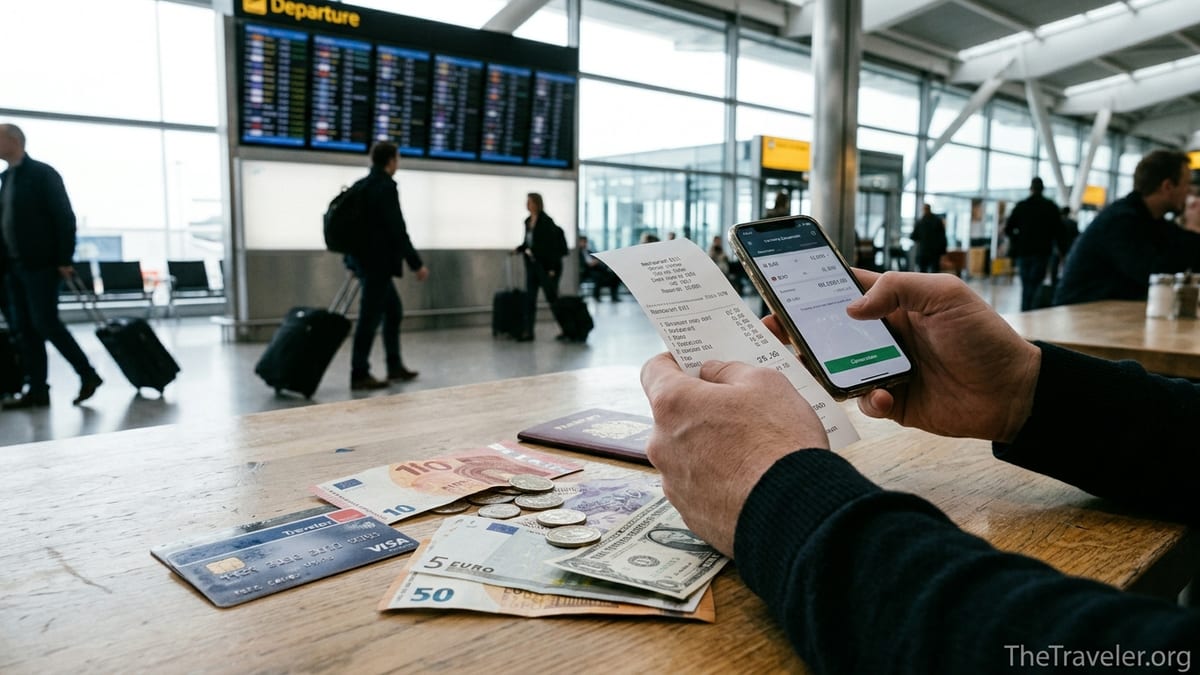
What the Travelex Money Card Actually Is
The Travelex Money Card is a prepaid, reloadable travel card issued on the Mastercard network and marketed heavily at airports, shopping malls and online foreign exchange sites. Instead of drawing on your checking account or a line of credit, you load money onto the card in one or more supported currencies before you travel and then spend from that balance. It works like a standard chip and PIN or contactless card wherever Mastercard prepaid is accepted, including in shops, restaurants, hotels and ATMs.
In practical terms, this means you might arrive in Paris with a card preloaded in euros, tap it to pay for a 4.50 EUR espresso, and see the amount deducted from your euro wallet. If you also loaded British pounds for a later leg of your trip, the card will automatically move to that wallet when you land at Heathrow. Travelex currently promotes this product in markets such as the United Kingdom, Australia and New Zealand for use across major currencies like USD, EUR, GBP and others.
Because it is a prepaid product, you cannot spend more than the amount you have loaded, and there is no credit check. That can appeal to travelers who want to ring-fence a strict vacation budget or parents sending a student overseas for a semester abroad. But like many prepaid cards, its value depends heavily on how competitive the exchange rates are and how the fees line up with your actual travel habits.
Seen alongside alternatives, the Travelex Money Card sits somewhere between a classic bureau de change transaction and a specialist multi-currency account from providers like Wise or Revolut. It offers more safety than carrying a thick wad of cash and more control than a standard bank card that adds foreign transaction fees, but it rarely delivers the rock-bottom total cost of the most competitive travel debit cards.
The Key Fees You Need to Understand
Travelex Money Card pricing varies slightly by country, but the core fee structure is similar across markets. The most important costs for travelers are the card load and reload fees, ATM cash withdrawal charges, inactivity fees and the hidden cost built into Travelex exchange rates. Some fees are explicit on the product disclosure statements, while others are effectively baked into the rate you get when converting from your home currency to a foreign currency wallet.
For example, in recent card disclosure documents for New Zealand, Travelex lists an initial load and reload fee of the greater of 1 percent of the amount loaded or a fixed minimum when you load in local currency at a distribution outlet. That means adding the equivalent of about 800 New Zealand dollars at a retail counter could trigger around 8 NZD in fees, even before considering any exchange rate markup to convert into euros or US dollars. Online or app-based reloads in some markets may be cheaper or free, but you still need to check the rate you are offered against the mid-market rate on the day.
ATM withdrawals are another crucial piece of the picture. In several markets, including Australia, Travelex advertises that it does not charge its own fee for international ATM withdrawals when you take out cash abroad. That can sound like free money, but local ATM operators are still allowed to levy their own usage fees, and Travelex may charge a percentage fee if you use the card in your home country rather than overseas. Travelers who plan to withdraw cash frequently need to factor in both the network’s promised zero-fee policy and the reality that many tourist-area ATMs charge several dollars per withdrawal on their own.
A final fee category that catches many cardholders by surprise is the monthly inactivity fee. Recent product statements for Travelex Money Card in markets such as Australia and New Zealand refer to a small charge, roughly the cost of a modest coffee, that kicks in once the card has gone unused for 12 months. This fee is taken each month until the remaining balance is too low or the card is closed, which can slowly erode leftover travel funds if you forget about the card in a drawer after your trip.
How Exchange Rate Markups Affect Real Costs
Even if you dodge most of the visible fees, the exchange rate you receive when you load or reload your Travelex Money Card is often the biggest factor in your total cost. Travelex sets its own retail rates rather than using the mid-market interbank rate you see on financial news tickers. Independent comparisons suggest that these retail rates can include a built-in margin that is typically a few percentage points above the mid-market rate, and the exact spread moves around day to day.
Imagine that the true mid-market rate between US dollars and euros is 1 USD to 0.92 EUR on the day you load your card. If Travelex applies a 3 percent margin, its offered rate might be closer to 1 USD to 0.89 EUR. That difference seems small at a glance, but on a 2,000 dollar load you would end up with about 1,780 euros on the card instead of roughly 1,840 euros. In practical terms, that is the equivalent of paying about 60 dollars in hidden fees on top of any explicit load charges.
Over a two-week vacation to Italy or Spain, that 60 dollar gap could represent two or three casual restaurant meals for one person or entry tickets for an entire family to a major museum. Because travelers tend to focus on conspicuous fees like ATM charges, it is easy to overlook how much of your budget can disappear in the conversion before you even swipe the card. This is particularly important for large upfront costs such as prepaid hotels or rental cars, where hundreds or thousands of dollars may be loaded and converted in a single step.
Exchange rate markups also matter when you switch between currency wallets on the same card. If you finish a trip to the United Kingdom with 150 pounds left on the card and convert that to euros for a later trip to continental Europe, you may face a separate conversion spread as Travelex moves value between wallets. While these internal conversions can be convenient, they rarely happen at the same sharp rate you would get from a specialist low-fee travel account, so it pays to plan loads with your main destination in mind and minimize unnecessary currency hopping.
Concrete Examples: When the Card Helps and When It Hurts
Consider an American traveler flying from New York to London for a ten-day vacation. They see a Travelex Money Card promotion in their departure terminal and decide to load the equivalent of 1,500 US dollars in British pounds. At the desk, they are offered a GBP exchange rate that is around 3 percent worse than the mid-market rate that day, and they pay an in-person load fee similar to 1 percent of the amount being loaded. By the time those two costs are combined, they may effectively lose 4 to 5 percent of their budget before spending a single pound in the United Kingdom.
Now compare that with using a no-foreign-transaction-fee credit card that charges no annual fee and uses the card network’s standard rate. On a 1,500 dollar trip, the total effective cost of foreign spending might be under 1 percent, especially if they pay the balance in full and avoid interest. Even a basic debit card that charges a 3 percent foreign transaction fee may end up roughly comparable to a Travelex Money Card once you factor in both Travelex’s explicit fees and its exchange rate margin.
There are scenarios, however, where a Travelex Money Card can be useful. A New Zealand student heading to Europe for a semester abroad may not qualify for a premium credit card and might be wary of exposing their main bank account to card theft or fraud. Loading the equivalent of 4,000 New Zealand dollars onto a dedicated travel card in euros allows family members to top up the balance from home if needed, while the card’s prepaid nature limits losses if it is compromised. The student still pays the rate markup when the card is loaded, but they gain peace of mind and budgeting discipline that can be hard to replicate with a standard debit card.
Similarly, an Australian couple who plan to pay for a cruise departing from Miami might like the ability to lock in a US dollar rate months in advance using a Travelex Money Card. By loading gradually in USD whenever they see a favorable rate, they can spread currency risk over time. While they must still accept Travelex’s margin, they avoid the uncertainty of what their home currency might be worth against the dollar by the time they board the ship. For travelers with tight budgets sensitive to currency swings, that rate certainty can be worth a modest premium.
Comparing Travelex Money Card to Other Travel Money Options
To judge whether the Travelex Money Card is worth it, it helps to stack it up against other common travel money tools: traditional bank debit cards, rewards credit cards, multi-currency accounts from fintech providers, and simple cash exchange before departure. Each comes with a different balance of fees, convenience and risk, and their competitiveness changes depending on your home country and the specific banks available to you.
In the United States, many mainstream bank debit cards still charge foreign transaction fees of around 3 percent plus separate out-of-network ATM fees, and they often do not refund foreign ATM surcharges. Using such a card heavily abroad can easily cost more than a Travelex Money Card over the course of a trip, especially if you rely on frequent ATM withdrawals. On the other hand, several US online banks and credit unions now offer debit cards with no foreign transaction fee and global ATM rebates, which can undercut Travelex on both visible fees and effective exchange rates.
Rewards credit cards from major issuers, including no-foreign-transaction-fee products backed by Visa or Mastercard, are often one of the cheapest ways to pay for hotels, rental cars and restaurant bills abroad, assuming you pay the statement balance in full and avoid interest. These cards use the network’s standard exchange rate, which is usually very close to the mid-market rate, and they do not add the same sort of retail margin that a currency exchange kiosk or prepaid card provider often does. However, they are less suitable for cash withdrawals, which are treated as cash advances and attract extra fees and high interest from the transaction date.
Specialist multi-currency accounts have grown popular in markets such as the United Kingdom, Europe and Australia. Providers that compete directly with Travelex on travel spending typically promote mid-market exchange rates with transparent, low conversion fees and linked debit cards for ATM withdrawals. For a traveler who is comfortable installing and managing a mobile app, these accounts often deliver lower overall costs than a Travelex Money Card, particularly when moving larger sums between currencies or withdrawing cash abroad several times a week.
Practical Tips to Minimize Fees if You Choose Travelex
If you decide that the Travelex Money Card fits your needs, there are several practical steps that can keep your total costs in check. The first is to favor online or app-based loads in your home currency instead of loading at a physical counter in an airport or shopping center whenever possible. In many markets, Travelex reserves its highest fees for in-person loads at distribution outlets, while online loads can be cheaper or free. Checking both the exchange rate and load fee on your phone before you travel can quickly reveal which option is less costly.
Second, try to load the card directly in the main currency of your destination rather than relying on conversions between currency wallets once you are abroad. If you know you will spend almost all of your money in euros on a trip that includes both France and Germany, prioritize a single euro load rather than splitting funds across other currencies you are unlikely to use. This reduces the number of times you are exposed to Travelex’s exchange rate margins and keeps budgeting simple on the ground.
You should also be strategic about ATM withdrawals. Even though Travelex advertises that it does not charge its own fee for international ATM withdrawals in some regions, foreign ATM operators are free to set their own charges, which are often substantial in tourist centers. When possible, use reputable bank-branded ATMs rather than stand-alone machines in hotels or convenience stores, and withdraw slightly larger amounts less frequently to dilute any fixed per-withdrawal fees. Always decline the machine’s offer to convert the transaction into your home currency on the spot, known as dynamic currency conversion, which almost always results in worse rates than letting Mastercard process the transaction in local currency.
Finally, set a reminder shortly after you return home to decide what to do with any leftover balance on your Travelex Money Card. If you plan another overseas trip within the next year, you might choose to leave a modest amount on the card. However, if you have no firm plans or only have a small balance remaining, consider spending it down on online purchases in the card’s currency or arranging a cash-out through Travelex, even if a redemption fee applies. This helps you avoid slow but persistent inactivity fees that can take a surprising bite out of forgotten balances over a couple of years.
Is the Travelex Money Card Worth It for Most Travelers?
Whether the Travelex Money Card is worth it depends heavily on your home bank’s card fees, your comfort with online financial tools and how you like to manage money abroad. For travelers whose only alternative is a high-fee debit card with steep foreign transaction charges and no ATM rebates, a Travelex Money Card loaded carefully online can be a relative improvement, especially when used mainly for card payments rather than frequent cash withdrawals. In these cases, the combination of a fixed preloaded balance, basic app controls and separation from your main account can justify a moderate exchange rate premium.
For many US and European travelers with access to no-foreign-transaction-fee credit cards and competitive debit cards, the Travelex Money Card is often less attractive on pure cost grounds. The exchange rate markup alone can exceed the 2 to 3 percent foreign transaction fee that some banks still charge, and when it is layered on top of load fees and occasional inactivity charges, the total price of convenience rises quickly. In these markets, a combination of a fee-free credit card for most purchases and a low-fee debit card for occasional ATM withdrawals tends to deliver better value.
There are also softer factors beyond headline fees. Some travelers like the psychological benefit of loading a set amount on a dedicated travel card and knowing they cannot accidentally overspend or drain their main checking account. Parents may appreciate the ability to monitor and top up a child’s card from thousands of miles away. Elderly or less tech-savvy travelers may simply feel more comfortable with a recognizable brand sold in-person at the airport than opening a new online-only account. For these users, a modestly higher cost can be acceptable if it translates into less stress on the road.
Ultimately, the Travelex Money Card is best viewed as a niche tool rather than a default choice. It tends to deliver the most value in specific circumstances, such as for people without access to competitive bank cards, students studying abroad or travelers for whom budgeting discipline is a priority. Anyone else should carefully compare the all-in costs against their existing cards and newer multi-currency options before assuming a prepaid travel card is the smartest way to pay overseas.
The Takeaway
The Travelex Money Card offers a familiar, straightforward way to take foreign currency abroad on a plastic card instead of in a money belt, but it comes with meaningful trade-offs. Visible fees for loading and inactivity sit alongside less obvious costs embedded in the exchange rate, and those markups often consume more of your travel budget than you might expect at first glance. When you add in potential ATM operator surcharges and conversion spreads between currency wallets, the gap between Travelex and sharper travel money solutions can widen further.
For some travelers, particularly those with limited access to low-fee bank products, the card can still be a useful compromise that combines reasonable convenience with basic safety protections and spending controls. Used carefully, loaded online in the right currency and monitored to avoid inactivity fees, it can beat the worst of the high-fee debit cards and old-fashioned cash exchanges. But in a world where more banks and fintech providers now offer near mid-market exchange rates and minimal foreign usage fees, it is rarely the cheapest solution for those willing to shop around.
Before you sign up at the airport desk or click to order a card online, run the numbers for your specific situation. Compare the rate Travelex offers against the mid-market rate you can see on a currency converter, add in any load and redemption fees, and weigh that total against the foreign transaction and ATM fees on your existing cards. If the difference is small and you value the psychological comfort of a ring-fenced travel budget, the Travelex Money Card can make sense. If the gap is wide, your money may travel further with a fee-free bank card or a modern multi-currency account instead.
FAQ
Q1. What are the main fees on a Travelex Money Card?
The key costs are any load or reload fees, the exchange rate markup when you convert your home currency to a foreign balance, possible domestic ATM or purchase fees in your home country, and a monthly inactivity fee that can start after a year of no usage. International ATM withdrawals in many markets do not carry a Travelex fee, but ATM operators may still charge their own surcharge.
Q2. Does Travelex charge for international ATM withdrawals?
In several countries, including Australia, recent disclosures indicate that Travelex does not add its own fee for international ATM withdrawals made abroad. However, if you withdraw cash in your home country or in certain currencies where the card is treated as domestic, a percentage fee can apply, and in all cases the local ATM owner may add a separate charge that Travelex does not control.
Q3. How bad are the Travelex exchange rates compared with my bank?
Travelex typically uses retail exchange rates that include a margin above the mid-market rate. In practice, that margin can be in the low single digits as a percentage of the transaction and will vary by currency and day. Some traditional banks charge similar or higher margins for over-the-counter currency exchange, while specialist travel debit accounts and no-foreign-transaction-fee cards often come closer to the mid-market rate.
Q4. Is it cheaper to use a Travelex Money Card or my regular credit card abroad?
If your regular credit card charges no foreign transaction fees and uses the card network’s standard exchange rate, it is often cheaper for purchases than loading and using a Travelex Money Card. If your card adds a 3 percent foreign transaction fee and has no travel benefits, a carefully used Travelex card may be competitive, but you still need to factor in the prepaid card’s rate markup and any load or inactivity charges.
Q5. What happens if I do not use my Travelex Money Card for a long time?
After a period of inactivity, typically 12 months with no transactions, Travelex can begin charging a monthly inactivity fee that slowly reduces your remaining balance. This fee is usually modest in absolute terms but can eat a large percentage of small leftover amounts. To avoid it, you can spend down the balance, cash out the card where permitted, or close the account once your trip is over.
Q6. Can I lock in exchange rates in advance with a Travelex Money Card?
Yes. When you load money into a foreign currency wallet on the card, you lock in the exchange rate offered at that moment, so future swings in the market will not change the amount of foreign currency you hold. This can be useful if you are worried about your home currency weakening before a big trip, though you pay for that certainty through Travelex’s built-in rate margin.
Q7. Is the Travelex Money Card safe to use compared with my bank card?
The card is generally secure to use and benefits from Mastercard’s payment protections, and because it is prepaid it limits your exposure to the amount you have loaded rather than your entire bank account or credit line. If the card is lost or stolen, Travelex can usually block it and arrange a replacement, but you still need to safeguard your PIN and avoid using the card at suspicious ATMs or terminals.
Q8. Can I use the Travelex Money Card for contactless payments and online purchases?
Yes. In supported markets the card works for chip and PIN, contactless tap-to-pay transactions and many online purchases where Mastercard prepaid cards are accepted. That makes it usable for everyday spending like metro fares, supermarket shops and attraction tickets, as well as for booking hotels or flights, although some car rental agencies and hotels prefer or require a traditional credit card for security deposits.
Q9. What is the best way to avoid surprise fees with a Travelex Money Card?
The most effective steps are loading the card online rather than at high-fee airport counters where possible, checking the offered exchange rate against an independent source before confirming a load, withdrawing cash abroad only when necessary, and declining dynamic currency conversion at ATMs and payment terminals. It also helps to monitor your balance in the app and decide quickly what to do with leftover funds once you return home.
Q10. Who is the Travelex Money Card most suitable for?
The card is often most useful for travelers who do not have access to low-fee credit or debit cards, parents funding a child’s overseas trip, or anyone who strongly prefers a separate, prepaid budget for travel. For frequent travelers comfortable with online banking and multi-currency apps, no-foreign-transaction-fee bank cards and modern travel debit accounts are usually more cost-effective.