


For years, the Travelex Money Card has been a familiar sight at airport kiosks and foreign exchange counters, promising a simple way to lock in exchange rates before you fly. Yet frequent travelers have increasingly shifted toward a new generation of multi-currency accounts, low-fee debit cards, and travel-focused credit cards that can be cheaper, more flexible, and easier to manage from a smartphone. If you are wondering whether to load another Travelex Money Card before your next trip or explore alternatives instead, it is worth understanding how today’s best options compare in the real world.
Get the latest updates straight to your inbox!
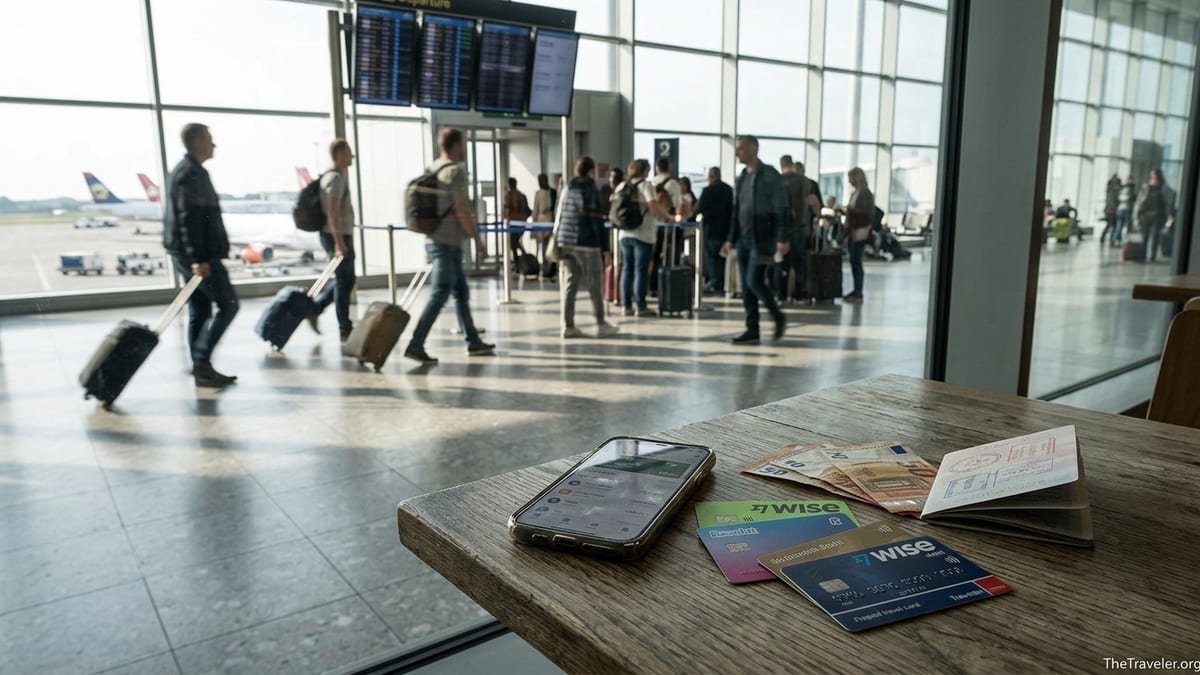
Why Look Beyond the Travelex Money Card
The Travelex Money Card is a prepaid Mastercard that lets you load multiple currencies in advance, spend in those currencies abroad, and track everything through the Travelex app. It has been updated in recent years with more supported currencies and a refreshed app experience, underscoring that demand for prepaid travel cards remains strong among holidaymakers who value predictable budgeting. But the broader payments landscape has shifted quickly, and many travelers now find they can get better exchange rates and lower overall fees from modern fintech platforms or from their everyday banks.
Consider a typical itinerary: a two-week trip from New York to Italy where you plan to withdraw the equivalent of 400 euros in cash from ATMs and spend another 1,200 euros on restaurants, train tickets, and museum entries. With a traditional prepaid travel card, you may pay a margin on the exchange rate when loading euros, plus possible reload, inactivity, or ATM withdrawal fees, depending on the product and territory. In contrast, an international debit card tied to a multi-currency account can often convert funds at a rate closer to the mid-market rate and may not charge foreign transaction fees on card purchases, which can save you a noticeable amount over the course of the trip.
Another limitation of prepaid cards is flexibility. Once you have loaded a currency, moving back to your home currency can involve another conversion and potentially more fees. If your plans change and you reroute from Rome to Tokyo, a prepaid euro balance is suddenly less useful. Multi-currency accounts, travel-friendly debit cards, and modern credit cards are designed to adapt more fluidly to these changes, letting you hold, convert, and spend across many currencies from the same app instead of being locked into a static travel card.
Security and support are also core considerations. Losing a prepaid card bought over the counter at an airport kiosk can be more stressful than misplacing a bank debit card that sits within a broader relationship and mobile app ecosystem. Increasingly, travelers want real-time notifications, instant card freezing, in-app customer support, and strong dispute processes, features that are often more advanced with leading neobanks and mainstream issuers than with stand-alone prepaid cards.
Wise: Multi-Currency Account for Fee-Conscious Travelers
Wise has become a default recommendation among digital nomads and long-term travelers who are sensitive to foreign transaction fees and poor exchange rates. Through its multi-currency account, you can hold balances in dozens of currencies and spend globally with a Wise debit card that draws directly from those balances or converts on the fly. Wise typically uses rates close to the mid-market rate and charges a transparent percentage fee on conversions, which many travelers find more competitive than the bundled margins built into many prepaid travel cards and bank cards.
In practical terms, an American traveler might get paid in euros for freelance work, keep that money in the Wise account, and then spend directly in euros during several weeks in Spain. There is no double conversion back into dollars and out again, so the traveler avoids unnecessary exchange costs. If that same traveler stops in Morocco for a side trip, they can convert a small amount of euros to Moroccan dirhams inside the app at a competitive rate before landing, then use the card at local ATMs and shops where the network is accepted.
Wise also suits travelers who combine ATM withdrawals with card payments. The card usually includes a defined amount of fee-free ATM withdrawals per month, after which additional withdrawals incur modest Wise fees on top of any local ATM charges. While the exact allowances and fees vary by country and have been adjusted over time, this structure encourages planning: use the Wise card for most purchases where cards are widely accepted and save withdrawals for situations where cash is truly necessary, such as small guesthouses or cash-only taxi rides in certain countries.
For US-based travelers, Wise sits alongside rather than replacing a home bank account. You can connect Wise to your existing checking account, move funds across before a trip, and then use Wise abroad while keeping your domestic banking relationships unchanged. For many people weighing a Travelex Money Card against alternatives, Wise is attractive because it works as an ongoing piece of financial infrastructure for repeated international trips, remote work, or overseas family obligations instead of as a one-off trip product.
Revolut: App-First Banking for Multi-Destination Trips
Revolut has positioned itself as a fully featured financial super app, combining multi-currency balances, budgeting tools, and card controls with investing and lifestyle perks. For travel in particular, Revolut offers a multi-currency debit card that can hold several currencies simultaneously, similar on the surface to a prepaid travel card but with deeper in-app functionality and often more generous exchange terms within monthly limits.
Imagine a traveler from London planning a month in Southeast Asia with stops in Thailand, Vietnam, and Singapore. Before departure, they can exchange some pounds into Thai baht and Singapore dollars inside the Revolut app at competitive weekday rates. Once in Bangkok, they can tap to pay for metro fares, convenience store purchases, and restaurant meals. When moving on to Hanoi, they may find fewer card terminals in small shops and homestays, so they use their card to withdraw Vietnamese dong from ATMs, keeping an eye on Revolut’s monthly fee-free withdrawal allowance and any weekend exchange markups.
Revolut’s tiered plans cater to different levels of travel intensity. A casual holidaymaker might opt for the free plan and treat the allowances as a backup to their usual bank card, while a frequent traveler or expat may pay a monthly subscription for a premium plan that increases fee-free ATM limits and offers additional protections such as higher card protection thresholds or bundled insurance. Compared with a simple prepaid product, this subscription-based approach can be cost effective for those who constantly move between countries and want one app that helps manage multiple financial tasks.
Revolut is especially compelling for travelers who like granular control. Real-time notifications, the ability to spin up virtual cards for online bookings, and quick card freezing if something looks suspicious can provide peace of mind when you are booking last-minute ferries from a cafe Wi-Fi network or entering card details on small guesthouse websites. For those who have long relied on Travelex-style prepaid cards mainly for security and budgeting, Revolut offers similar guardrails but in a more dynamic package.
Bank Debit Cards: Schwab, Capital One, and Others
One of the most powerful yet underused alternatives to a travel money card is an ordinary bank debit card designed from the ground up with international travel in mind. In the United States, two names frequently praised by seasoned travelers are Charles Schwab and Capital One, both of which pair their checking accounts with debit cards that work well abroad. The appeal is straightforward: instead of preloading a separate travel card, you simply spend directly from your regular checking account while benefiting from reduced or rebated fees.
The Charles Schwab Investor Checking account, linked to a Schwab brokerage account, has earned a loyal following among travelers because of its approach to ATM fees. Travelers who withdraw local currency from ATMs abroad can receive reimbursement for the ATM operator fees that many local banks charge, and the card generally does not add its own foreign transaction fee on top. Over a three-week trip through Japan and South Korea, for example, a traveler who makes six or seven cash withdrawals for trains, street food, and small ryokan stays might see several dollars refunded each time on their statement, gradually offsetting the hassle of cash-only situations.
Capital One’s 360 Checking account is another strong option for US travelers who want simplicity. Its associated debit card typically does not charge foreign transaction fees on purchases or ATM withdrawals abroad, which can immediately put it ahead of many legacy bank cards that add a percentage surcharge on every overseas transaction. A family renting an apartment in Paris for a week could use the Capital One card to pay for groceries, metro passes, and museum tickets without worrying that every tap or online purchase will quietly incur an extra fee the way it might with a standard domestic-focused debit card.
Other players, including some online-only banks and fintech platforms that partner with established banks, now market international-friendly debit cards with low or no foreign transaction fees and competitive exchange handling. While not every country has an equivalent to Schwab or Capital One, the general principle holds for many travelers: before turning to a prepaid card like the Travelex Money Card, it is worth checking whether your existing bank or a readily available alternative offers a debit card optimized for international use.
Travel Credit Cards: Rewards and Purchase Protection
While the Travelex Money Card and many of its direct alternatives are prepaid or debit solutions, travel-focused credit cards remain a cornerstone of most seasoned travelers’ payment strategies. For larger expenses like hotel stays, long-distance train tickets, car rentals, and restaurant bills, using a credit card that does not charge foreign transaction fees and offers robust rewards can be significantly more cost-effective than paying with a prepaid card funded in advance.
Take a US traveler who holds a major travel rewards credit card that waives foreign transaction fees. Over a 10-day trip to Portugal, they charge approximately 1,800 dollars’ worth of hotels, car hire, and dining to their card. Not only do they avoid the typical 2 to 3 percent foreign fee that many domestic cards still add, but they also earn points or miles that can later be redeemed for flights or future hotel nights. In contrast, paying for those same expenses on a prepaid card might not earn any rewards at all and could involve additional fees each time they need to reload funds mid-trip.
Credit cards also offer stronger purchase protections in many jurisdictions. If your card details are compromised while booking a guesthouse online, or if a merchant charges you twice, the dispute and chargeback processes associated with major credit card networks can be more established than those tied to niche prepaid cards. For items like electronics purchased abroad, some travel credit cards even extend warranty coverage or offer purchase protection against theft or damage in the weeks following the transaction, benefits that are rarely found on prepaid travel cards.
Of course, responsible use is critical. Travelers who carry a balance on a high-interest credit card will quickly negate any savings they achieve on foreign transaction fees. A balanced strategy often involves using a travel credit card for large, planned expenses while relying on a low-fee debit card or multi-currency account for ATM withdrawals and smaller everyday purchases. In that mix, a dedicated money card like Travelex can serve as a backup rather than the primary instrument.
Other Prepaid and Travel Money Cards Around the World
While Wise, Revolut, and travel-friendly bank cards dominate many discussions, there are also numerous regional prepaid travel cards that can compete directly with the Travelex Money Card. Currency exchange houses, regional banks, and even postal services in some countries issue branded travel cards that allow cardholders to lock in exchange rates and spend abroad with fixed fees. These products can be especially popular among travelers who prefer to manage their entire trip budget in advance or who are wary of linking their primary bank accounts to overseas spending.
In parts of the Middle East, for example, exchange houses issue multi-currency travel cards that support a wide range of currencies for frequent travel between Gulf states, Europe, and Asia. A resident of Dubai might load such a card with US dollars and euros before a summer trip that combines business meetings in Frankfurt with leisure time in Istanbul. In this scenario, the appeal is similar to the Travelex Money Card: funds are ring-fenced from the traveler’s main accounts, spending is capped by the preloaded balance, and top-ups can often be made at physical exchange branches with cash or a local debit card.
Travelers considering these regional alternatives should look closely at key cost factors before deciding. These include the buy and sell exchange rates offered at the counter or in the app, fixed fees per ATM withdrawal, any monthly account maintenance charges, and rules for cashing out leftover balances after the trip. In some cases, the added convenience of buying the card at a familiar local outlet can offset a slightly weaker exchange rate. In other cases, especially for longer or more complex itineraries, pairing a regional prepaid card with an international debit or credit card may provide the best combination of cost control and flexibility.
For parents sending teenagers on school trips abroad or for travelers who prefer to avoid carrying a primary debit card tied directly to a large checking balance, prepaid travel cards still have an important role. The ability to cap potential losses to the preloaded amount, coupled with simple app controls or phone support to block a lost card, can outweigh the incremental savings that more sophisticated alternatives might offer. The key question is not whether prepaid cards are obsolete but whether they are the right primary tool for a given traveler’s style and risk tolerance.
How to Choose the Right Alternative for Your Trip
Selecting the best alternative to a Travelex Money Card starts with mapping your actual travel patterns rather than chasing a generic “best card” label. A solo traveler on a three-month backpacking trip through cash-heavy regions of Southeast Asia has different needs from a couple spending a long weekend in Paris or a remote worker rotating between European capitals. The heavier your reliance on ATMs and the more countries you visit on one trip, the more valuable competitive exchange rates, low ATM fees, and flexible multi-currency management become.
Begin by listing the countries on your itinerary, how long you will be in each, and the rough split between card payments and cash. In Western Europe, North America, and parts of East Asia, contactless card acceptance is broad enough that a no-foreign-transaction-fee credit card plus a low-fee debit card for cash can cover most needs. In contrast, for rural segments of Central America or certain parts of Africa and South Asia, ATM withdrawals may be essential for guesthouses, local buses, and markets. In such regions, a card that reimburses ATM fees or offers generous fee-free withdrawal allowances can deliver outsized value compared with a prepaid card that charges each time you take out cash.
Next, consider your comfort with app-based banking and your existing financial relationships. If you prefer to keep your finances consolidated, opening an international-friendly checking account at a bank you already trust may be easier than learning a new fintech interface. If you already use multiple digital banking apps and value features like instant notifications, detailed analytics, and easy in-app card controls, platforms like Wise and Revolut may feel natural. In either case, avoid rushing to buy a prepaid card at the airport purely out of habit or convenience; a small amount of advance planning can yield substantial savings over the duration of a trip.
Finally, keep an eye on evolving fee structures. Providers have adjusted their pricing over time, changing ATM allowances, tweaking foreign transaction policies, or introducing new subscription tiers. Before a major trip, it is wise to check current fee tables and terms on the issuer’s official materials and, if necessary, run a simple estimate: plug in your expected spending and withdrawal patterns and compare the total projected cost across a few realistic card combinations. That comparison will give you a far clearer answer than any generic ranking of “best” cards.
The Takeaway
The Travelex Money Card remains a recognizable tool in the travel money toolkit, offering predictable, prepaid control and multi-currency support. Yet for many travelers today, especially those comfortable managing money from a smartphone, it is no longer the most cost-effective or flexible option. Multi-currency accounts like Wise, app-first platforms such as Revolut, and travel-friendly debit cards from banks like Charles Schwab and Capital One give travelers more ways to minimize foreign transaction costs and react quickly when plans change.
Rather than assuming one product will cover all situations, think in terms of a small stack of complementary tools. A no-foreign-transaction-fee credit card can handle larger purchases and deliver rewards, while an international debit or multi-currency card takes care of ATM withdrawals and everyday expenses. A prepaid travel card can then serve as a backup or as a controlled budget tool for specific scenarios, such as student trips or short holidays where overspending is a concern.
Above all, the right choice depends on your route, spending habits, and appetite for managing multiple accounts. By comparing real fee structures, planning how you will actually pay in each destination, and setting up your cards a few weeks before departure, you can arrive at the airport with confidence that your money is working as hard for you as you worked to earn it. In an era of competitive travel-focused financial products, relying solely on a single prepaid card like the Travelex Money Card is no longer the only or necessarily the best way to pay abroad.
FAQ
Q1. Is the Travelex Money Card still worth using for international travel?
It can still be useful as a controlled, prepaid option, especially for shorter trips or for travelers who prefer not to link their main bank accounts to overseas spending. However, many frequent travelers now find that multi-currency accounts, travel-friendly debit cards, and no-foreign-transaction-fee credit cards often provide better exchange rates and lower overall fees.
Q2. How does a Wise card compare with the Travelex Money Card?
The Wise card is tied to a multi-currency account that lets you hold and convert dozens of currencies at competitive rates, usually close to the mid-market rate. While Wise charges transparent fees on conversions and ATM withdrawals beyond defined allowances, many travelers consider the total cost and flexibility superior to loading and reloading a dedicated prepaid travel card.
Q3. When would Revolut be a better choice than a traditional prepaid travel card?
Revolut can be a better fit for multi-destination trips and for travelers who like to manage everything from a single app. Its tiered plans combine multi-currency balances, card controls, and budgeting tools, with higher-fee-free ATM limits and extra features available on paid tiers, which can work well for frequent flyers and digital nomads.
Q4. Are bank debit cards like Charles Schwab or Capital One really fee free abroad?
Travel-friendly bank debit cards can significantly reduce or remove common international fees, such as foreign transaction surcharges and ATM operator charges. The exact policies vary by bank and can change over time, so it is important to confirm current terms with the issuer before traveling, but many travelers report meaningful savings compared with standard domestic debit cards or prepaid products.
Q5. Should I use a credit card or a debit card for most of my spending abroad?
Many experienced travelers use a no-foreign-transaction-fee credit card for larger purchases like hotels, flights, and car rentals, where extra purchase protections and rewards are valuable. They then rely on a debit or multi-currency card for ATM withdrawals and small everyday expenses, striking a balance between security, rewards, and fee minimization.
Q6. Are prepaid travel cards safer than using my regular bank card overseas?
Prepaid travel cards can reduce the risk of exposing your primary bank account because you only load a limited balance. That said, modern bank and fintech cards also offer strong security features, such as instant card freezing and real-time transaction alerts, so safety often depends more on how you manage your cards than on the product type alone.
Q7. What is the main disadvantage of sticking only to a prepaid money card?
The main drawbacks are limited flexibility and potentially higher total costs. If your route changes or you end up spending differently than planned, you may need extra currency conversions or reloads that carry fees. You might also miss out on rewards, wider ATM fee rebates, or better exchange rates available from alternative products.
Q8. How many different cards should I carry on an overseas trip?
A practical setup for many travelers is three cards: a primary no-foreign-transaction-fee credit card, a low-fee debit or multi-currency card for ATM withdrawals and everyday spending, and a backup card stored separately in case of loss or theft. A prepaid card can play either the backup role or serve as the everyday spending card for specific trips.
Q9. Do all these alternative cards work everywhere that the Travelex Money Card does?
Most alternatives discussed, such as Wise, Revolut, and major bank debit and credit cards, operate on global networks like Visa or Mastercard, so their acceptance is broadly similar to that of the Travelex Money Card. However, some regions and specific merchants remain cash heavy, so it is always wise to carry some local currency regardless of the card you choose.
Q10. How far in advance should I set up a new travel card before I leave?
Ideally, apply for and activate any new cards at least three to four weeks before departure. This window allows time for identity checks, mailing of physical cards, initial test transactions, and resolving any issues so that you are not troubleshooting apps or declined payments in the middle of a busy trip.