

More news on this day
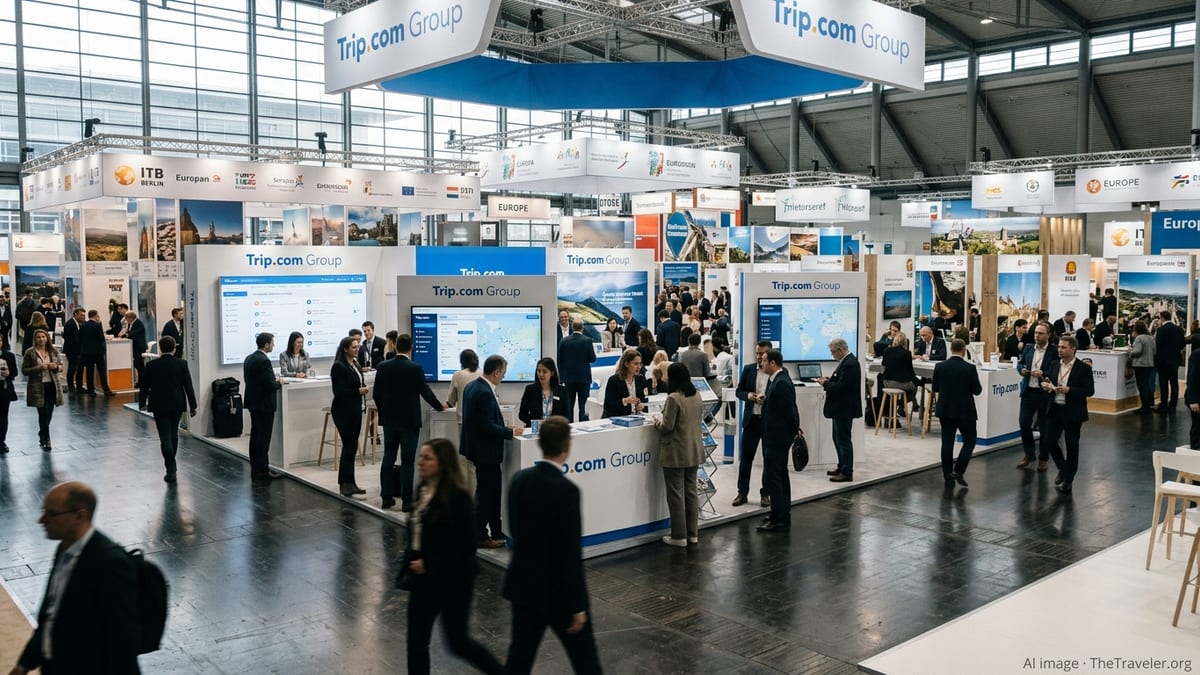
Trip.com Group used this year’s ITB Berlin in March 2026 to showcase how artificial intelligence and closer collaboration with European partners are reshaping its global travel strategy.
Get the latest news straight to your inbox!
AI Assistant Usage Surges as Travelers Seek Confident Decisions
Publicly available information from ITB Berlin 2026 coverage shows that Trip.com Group placed its AI assistant, TripGenie, at the center of its technology narrative. The company reported that a substantial share of interactions now focuses on concrete booking choices, reflecting how digital tools have shifted from inspiration to decision support within the travel journey.
Reports indicate that around 60 percent of TripGenie engagements are now tied to booking decisions, highlighting the assistant’s growing influence on conversion. At the same time, AI-assisted bookings have seen sharp year over year growth, underlining how travelers increasingly trust automated systems to help them navigate complex options for flights, stays and experiences.
Trip.com Group’s data also points to strong uptake of real-time features such as live translation and contextual support for tasks like reading menus or navigating local services. These capabilities are being framed as practical tools that help reduce uncertainty on the ground, especially for international travelers who may be unfamiliar with local languages or customs.
By emphasizing usage metrics rather than abstract technology claims, the company positioned its AI systems as embedded utilities within day-to-day travel behavior, rather than experimental add-ons. That message resonated with ITB Berlin’s wider focus on technology as a driver of more seamless, end to end travel experiences.
Trip.Planner and Trip Community Highlight New AI Travel Ecosystem
Alongside TripGenie, Trip.com Group spotlighted Trip.Planner as a core element of its evolving AI travel ecosystem. According to event materials, Trip.Planner is designed as a single hub that consolidates what has traditionally been a fragmented planning process spread across multiple sites and applications.
The tool uses preference data, real time pricing and partner information to generate itineraries that are both personalized and logistically realistic. Behind the interface, large volumes of route and availability data are processed to ensure that suggested journeys are feasible, addressing a frequent criticism of generic itinerary generators that overlook on the ground constraints.
Trip.Planner sits within a broader connected environment the company describes as Trip Community, which links inspiration, planning, booking and in trip support. AI models surface content and options aligned with user interests, while partners gain access to data led distribution and personalization tools tailored to different markets. Human review remains part of the system, adding an additional trust layer to AI generated plans.
Recognition at ITB Berlin’s innovation programs, including designation as an ITB Innovator for 2026, signaled how organizers view Trip.com Group’s ecosystem approach as representative of a broader shift towards integrated, data driven travel platforms that can serve both consumers and industry stakeholders.
European Collaboration Moves Up the Strategic Agenda
Trip.com Group used its presence at ITB Berlin 2026 to underline a long term ambition to grow its role within the European tourism landscape. The company returned as Official Ticket Sponsor of the trade show, reinforcing its visibility among regional destinations, suppliers and intermediaries.
Recent announcements and event briefings highlight a pattern of partnerships between Trip.com Group and European tourism boards, distribution platforms and local operators. These collaborations aim to connect European inventory and experiences with global demand, particularly from Asia Pacific markets, while also giving European travelers more tailored access to long haul destinations.
Market research previewed during the fair focused on Europe to Asia travel flows across major outbound markets such as Germany, the United Kingdom, Italy, Spain and France. The findings are intended to help destinations and partners better understand shifting preferences around seasonality, booking windows and preferred experiences, and to shape joint marketing and product strategies.
By positioning itself as both a technology provider and a data insights partner, Trip.com Group is seeking to deepen ties with European stakeholders beyond traditional booking relationships. ITB Berlin’s role as a neutral meeting ground for tourism boards, airlines, hospitality groups and technology firms provided a high profile setting for this message.
Regional Travel Behaviors Shape AI and Product Design
Trip.com Group’s presentations in Berlin repeatedly stressed that AI driven travel tools must account for regional behavior patterns. Company executives referenced contrasts between traveler expectations in parts of Asia and key European markets, using these differences to illustrate why localized design matters.
In Asian markets, publicly available remarks at ITB indicate that travelers are more likely to make use of last minute and in destination guidance, drawing on features such as real time navigation, language assistance and spontaneous activity recommendations. In Europe, especially in markets such as Germany and the United Kingdom, planning behavior tends to favor earlier decision making and a stronger emphasis on risk reduction prior to departure.
These patterns are reflected in how TripGenie and Trip.Planner surface information and recommendations. For European users, tools may focus more heavily on scenario planning, cancellation policies and certainty around inclusions, while still enabling flexibility. For Asian users, the emphasis may tilt toward real time updates, localized suggestions and dynamic reconfiguration of itineraries as circumstances change.
By highlighting these nuances at ITB Berlin, Trip.com Group presented its AI systems as adaptive frameworks that can adjust to local norms rather than one size fits all products. That positioning aligns with broader industry discussions about the need for culturally aware technology in global travel.
ITB Berlin as a Platform for Travel Technology Leadership
The 2026 edition of ITB Berlin marked the sixtieth anniversary of the trade show, and technology once again took a central role in the program. Organizers have steadily expanded dedicated innovation formats, including the ITB Innovators initiative and AI focused guided tours through the exhibition halls.
Trip.com Group’s selection for these programs, combined with its sponsorship role and participation in multiple conference sessions, underscored how the company is being positioned within the wider conversation about the digital transformation of tourism. The focus extended beyond consumer applications to touch on how AI and data can improve distribution efficiency and yield management for partners.
European travel stakeholders attending ITB Berlin encountered Trip.com Group as a platform company connecting airlines, hotels, attractions, ground transport and national tourism organizations within a single ecosystem. The narrative across public materials framed AI not just as a customer facing interface, but as a structural layer capable of optimizing the interaction between supply and demand in real time.
As travel volumes continue to recover and evolve, industry attention is likely to remain on how such platforms balance personalization, data privacy, sustainability considerations and the commercial interests of diverse partners. For now, Trip.com Group’s activities at ITB Berlin 2026 signal that AI innovation and European collaboration will remain core pillars of its strategy in the years ahead.