

More news on this day
Spring break travelers flying Southwest Airlines through Houston’s William P. Hobby Airport have faced hours-long waits at security checkpoints this week, as Transportation Security Administration staffing shortages combined with a federal government shutdown triggered major delays and disrupted flight operations.
Get the latest news straight to your inbox!
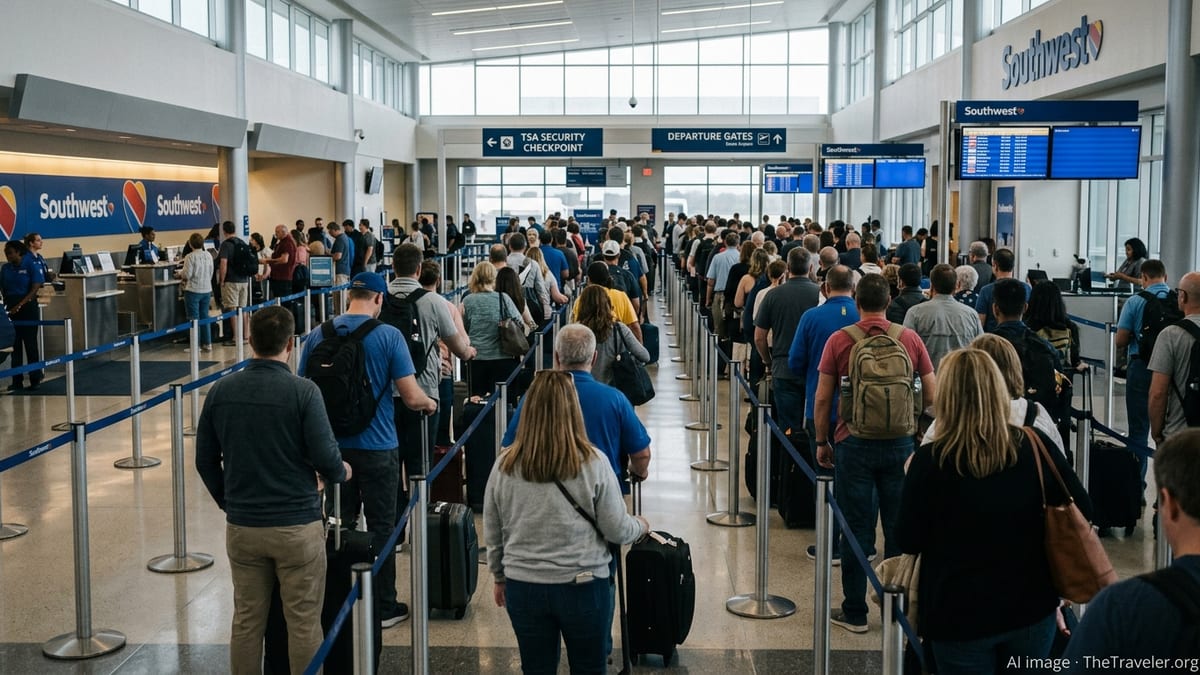
Hours-Long Security Lines Hit Southwest’s Houston Stronghold
Publicly available wait-time data and local coverage show that standard TSA screening lines at Houston’s Hobby Airport climbed to about three hours on Sunday, March 8, 2026, and remained at multiple hours for parts of Monday, March 9. Images and eyewitness accounts described queues stretching from the security checkpoint through baggage claim and toward parking areas as early-morning departures started to bank.
The disruptions are especially significant for Southwest Airlines, which is the dominant carrier at Hobby and operates the majority of the airport’s daily departures. With most passengers funneled through the same security checkpoints, extended waits for screening have reverberated across Southwest’s schedule, particularly during the morning rush when flights depart in quick succession.
Published coverage indicates that some Southwest departures were briefly held at the gate to accommodate passengers still stuck in security lines, while others left with empty seats when travelers could not clear screening in time. Social media posts and local reports from March 8 and 9 describe missed flights, rebookings and crowded standby lists on popular leisure routes.
Reports also suggest that the long lines affected travelers regardless of destination, with Southwest customers bound for both domestic leisure markets and business centers encountering similar delays. For many, the experience at Hobby contrasted sharply with shorter waits reported at Houston’s larger George Bush Intercontinental Airport during the same period.
Shutdown-Linked Staffing Gaps Strain TSA Operations
According to published reporting, the bottlenecks at Hobby coincide with a partial shutdown of the U.S. Department of Homeland Security, which oversees the TSA. As the shutdown has stretched on, many screening officers are working without full pay, a situation that has prompted higher absenteeism and left security checkpoints with fewer available staff during peak hours.
Houston airport statements cited in news coverage note that TSA staffing levels can fluctuate from day to day and even shift to shift under current conditions. That volatility has made it harder for the agency and the airport to match available screeners with surging spring break demand, particularly in the early morning window favored by Southwest’s schedule.
National aviation and travel industry analyses have warned for several years that chronic understaffing at airport security and air traffic control facilities can magnify the impact of any additional shock, such as a federal funding dispute or a seasonal surge in travelers. The recent scenes at Hobby provide a clear local example of how reduced staffing at a single chokepoint can ripple across an airline’s operation.
Local broadcasts and regional newspapers report that Houston officials requested additional TSA personnel from national deployment teams to help stabilize checkpoint operations. When those reinforcements arrived early this week, wait times reportedly dropped from hours to minutes, underscoring the role of basic staffing levels in determining how quickly passengers can move through security.
Impact on Southwest Schedules and Passenger Experience
Southwest’s point-to-point network design and dense schedule at Hobby mean that early disruptions can quickly cascade. When passengers miss early flights because they cannot clear security in time, gate agents must process rebookings, standbys and same-day changes, creating added congestion at the airport’s Southwest counters.
Travel forums and social media posts from March 8 through March 10 describe customers arriving the recommended two hours before departure and still missing flights, while others reported success only after arriving three to five hours early. Some Southwest travelers noted that the carrier temporarily relaxed its usual four-hour limit on checked baggage cutoffs at Hobby to offer more flexibility while lines were at their longest.
Operationally, the extended screening times can lead to out-of-sequence boarding, last-minute seat availability changes and increased stress on both airport and airline staff. Even when aircraft depart close to on time, the perception of disruption among passengers who endured lengthy waits at security can color overall satisfaction with the travel experience.
At the same time, publicly available information makes clear that the primary constraint lies outside Southwest’s direct control. The airline does not manage TSA staffing or federal screening operations, yet its punctuality metrics and customer sentiment are directly affected when travelers cannot reach the gate.
Relief Arrives, but Travelers Urged to Adjust Plans
By Tuesday, March 10, local coverage reported that additional TSA officers had been deployed to Hobby, and security wait times dropped sharply, in some cases to around 10 to 20 minutes for standard screening during the morning period. The swift improvement highlighted how targeted staffing boosts can quickly restore more typical flows at a constrained checkpoint.
Houston airport communications cited in recent reports nevertheless urge travelers to continue building extra time into their plans while the partial government shutdown remains unresolved. With staffing levels still subject to short-notice changes, even a small shift in absenteeism or a spike in passenger volume could once again push wait times higher.
For Southwest customers using Hobby in the coming days, industry observers recommend checking real-time security wait estimates, arriving earlier than usual for morning departures and remaining flexible about rebooking options if security lines surge unexpectedly. Families traveling for spring break and infrequent flyers may need additional time to navigate both security and the busy Southwest concourses once past the checkpoint.
Travel analysts note that Hobby’s recent experience will likely intensify broader conversations about airport staffing resiliency and contingency planning. For carriers such as Southwest that rely heavily on specific airports, sustained cooperation with airport operators and federal agencies will be essential to reducing the operational risks posed by future staffing disruptions.