

More news on this day
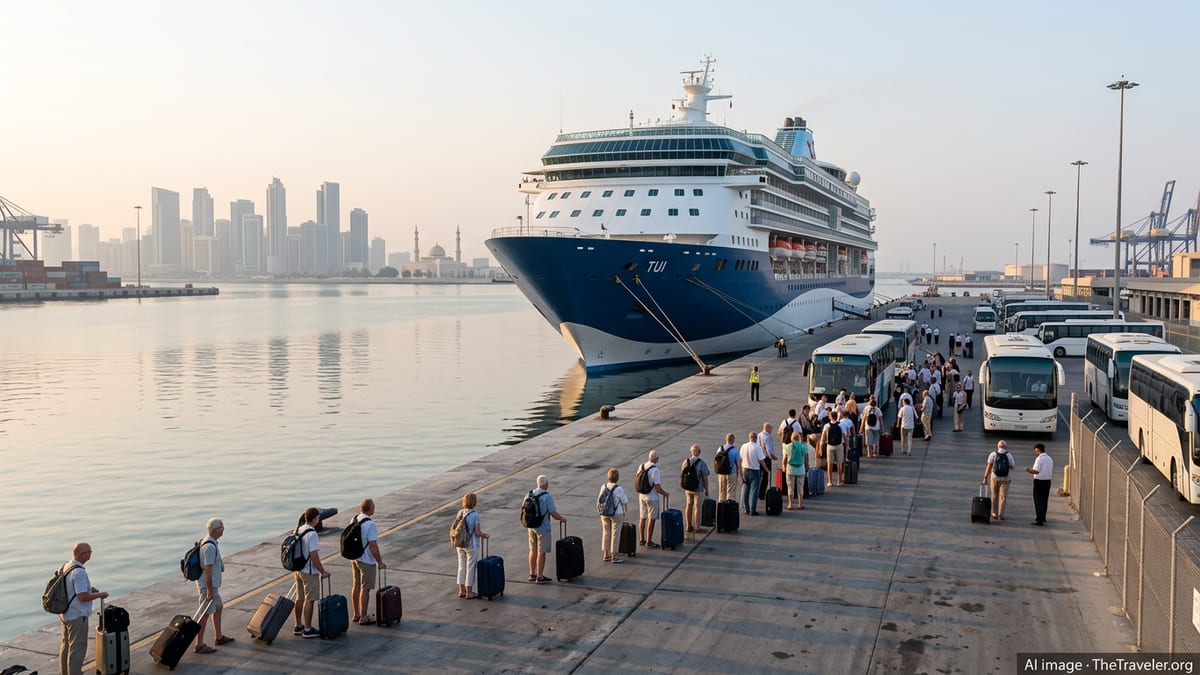
TUI Cruises has carried out a large-scale evacuation of around 2,500 passengers from the Arabian Gulf, rapidly dismantling its winter cruise program in the Middle East as escalating conflict and airspace restrictions upend travel across the region.
Get the latest news straight to your inbox!
A Sudden End to the Gulf Cruise Season
The evacuation operation follows days of disruption triggered by the widening conflict around the Strait of Hormuz and nearby waters, which has led cruise lines to suspend sailings and keep ships alongside in ports such as Dubai, Abu Dhabi and Doha. Publicly available information shows that two TUI vessels, Mein Schiff 4 and Mein Schiff 5, had been operating winter itineraries in the Arabian Gulf when regional security conditions deteriorated.
According to recent coverage in European and trade media, TUI Cruises halted upcoming departures and began disembarking guests in Gulf ports before arranging onward air travel. Reports indicate that the company is responsible for about 10,000 customers in the Middle East, roughly half of them cruise passengers, and that several thousand have already been routed home on special flights and rebooked commercial services.
Travel industry reporting describes the episode as one of the most abrupt shakeups yet for the young Gulf cruise market, which had been promoted heavily as a winter-sun alternative to the Caribbean and Mediterranean. Instead of island calls and desert excursions, many guests found themselves navigating schedule changes, extended time in port and ultimately an early end to their voyages.
While warships and commercial tankers have drawn much of the international attention, cruise vessels have been quietly caught in the same web of navigational warnings, air defense activity and shifting no-go zones. That backdrop set the stage for TUI’s decision to prioritize withdrawal over waiting for a rapid de-escalation.
Inside a Complex Air Evacuation
Reports from German and Gulf-based outlets indicate that TUI’s response centered on an intensive airlift from key regional hubs to major European gateways, particularly Germany. Hundreds of passengers from Mein Schiff 4 and Mein Schiff 5 have already landed in cities such as Frankfurt and Munich after a series of charter and rebooked flights were assembled on short notice.
Coverage from aviation and cruise news sources notes that limited flight capacity, rerouted air corridors and evolving security protocols made planning difficult. Airspace over parts of Iran, Iraq and neighboring countries has been heavily constrained, forcing airlines and tour operators to work around corridor closures and last-minute scheduling changes. For passengers, that translated into staggered departures, long airport waits and, in some cases, unplanned overnight stays.
Cruise-focused publications report that TUI began by securing seats on commercial services still operating into and out of the Gulf, then layered in additional charter capacity as demand and conditions became clearer. Public information suggests that more than 1,500 guests were moved out of Dubai in an initial wave, with additional flights following from Abu Dhabi and Doha to handle remaining passengers.
In parallel, crew movements have started to follow. Industry reports from Abu Dhabi describe the early stages of repatriation for crew members on Mein Schiff 4, once the bulk of guests had left the vessel. That second phase is expected to take longer, reflecting the greater number of nationalities involved and the more complex routing required to return staff to their home countries.
Impact on Cruise Itineraries and the Gulf Tourism Push
The evacuation marks a sharp reversal for the Arabian Gulf’s ambitions as a winter cruise hotspot. Over recent seasons, regional tourism authorities and cruise brands including TUI, MSC, Celestyal and Saudi-backed AROYA had invested heavily in promoting seven-night itineraries linking Dubai, Abu Dhabi, Doha and new terminals in Saudi ports.
According to coverage in European travel media, at least six ships with a combined 15,000 passengers and thousands of crew have been affected by the current crisis. Mein Schiff 4 and Mein Schiff 5 are among those vessels now effectively sidelined while operators reassess the feasibility of sailing in the region. Some lines have already confirmed the early end of their Gulf seasons, cancelling all remaining departures.
Tourism analysts cited in recent reports highlight the ripple effect on local economies. Cruise guests are a key part of winter visitor numbers, feeding demand for shore excursions, shopping, dining and transport services across the Gulf cities. The sudden loss of multiple sailings represents a significant short-term setback for businesses that built up capacity around the cruise calendar.
For TUI specifically, the pullback underscores the operational challenge of balancing growth in emerging markets with exposure to geopolitical risk. The Gulf had been a strategic addition to the company’s more established deployment in the Mediterranean, Northern Europe and the Caribbean. With ships now stuck in port and passengers flown home, attention is turning to when and where the vessels will next operate.
Safety, Liability and Changing Traveler Perceptions
The evacuation of roughly 2,500 TUI guests is also feeding into a wider discussion about risk in cruise travel. Recent consumer-focused coverage on cruise safety in 2026 notes that major lines have historically tended to reroute or cancel itineraries when security alerts rise, accepting financial losses in favor of keeping ships and guests away from potential conflict zones.
Travel insurance specialists and industry commentators point out that this incident underlines the value of policies that include emergency evacuation and trip interruption coverage. With sea lanes closed and air routes disrupted, getting home from a conflict-affected region can require complex and costly logistics that most travelers would struggle to arrange on their own.
The current situation may also influence how travelers view itineraries that rely on narrow waterways or politically sensitive chokepoints. The broader Red Sea and Hormuz crises have already led some lines to shift ships to alternative regions, lengthen repositioning voyages, or offer revised routes that avoid contested areas altogether.
At the same time, previous disruptions, from piracy incidents to pandemic-era port closures, suggest that demand tends to rebound once tensions ease and ports reopen. Travel analysts quoted in recent coverage expect that, over time, cruise lines and destination ports in the Gulf will work to restore confidence, though some guests may remain wary of returning in the near term.
What Comes Next for TUI Cruises and Its Fleet
With passengers now largely offloaded and repatriation flights ongoing, the focus for TUI Cruises shifts to the future of its ships currently in the Gulf. Industry reports indicate that Mein Schiff 4 and Mein Schiff 5 are expected to remain alongside in regional ports until a safe repositioning route can be identified, likely involving a longer detour to avoid the most sensitive waters.
Cruise-trade publications suggest that the line will look to redeploy capacity to more stable markets once maritime advisories allow, potentially accelerating moves to Northern Europe or the Mediterranean ahead of the main summer season. That process will depend on coordination with port authorities, pilots and insurers, as well as the availability of berths in alternative destinations.
For affected guests, publicly available statements and reporting show that TUI is offering refunds or future cruise credits, along with compensation for unused portions of their disrupted voyages. Travel agents in key source markets are working through rebookings as customers decide whether to shift to different regions or postpone cruising altogether.
The Gulf evacuation may ultimately be remembered as a stress test of cruise lines’ ability to react quickly when a fast-moving geopolitical crisis intersects with leisure travel. For now, around 2,500 TUI passengers are back on land, ships sit idle under heightened security, and one of the cruise industry’s most promising new regions faces an uncertain pause in its growth story.