

More news on this day
A TUI fly Netherlands holiday flight from Amsterdam to Montego Bay was forced to make an unscheduled emergency landing in Bermuda, after the crew reported an onboard issue while crossing the North Atlantic, disrupting travel plans for hundreds of passengers en route to Jamaica.
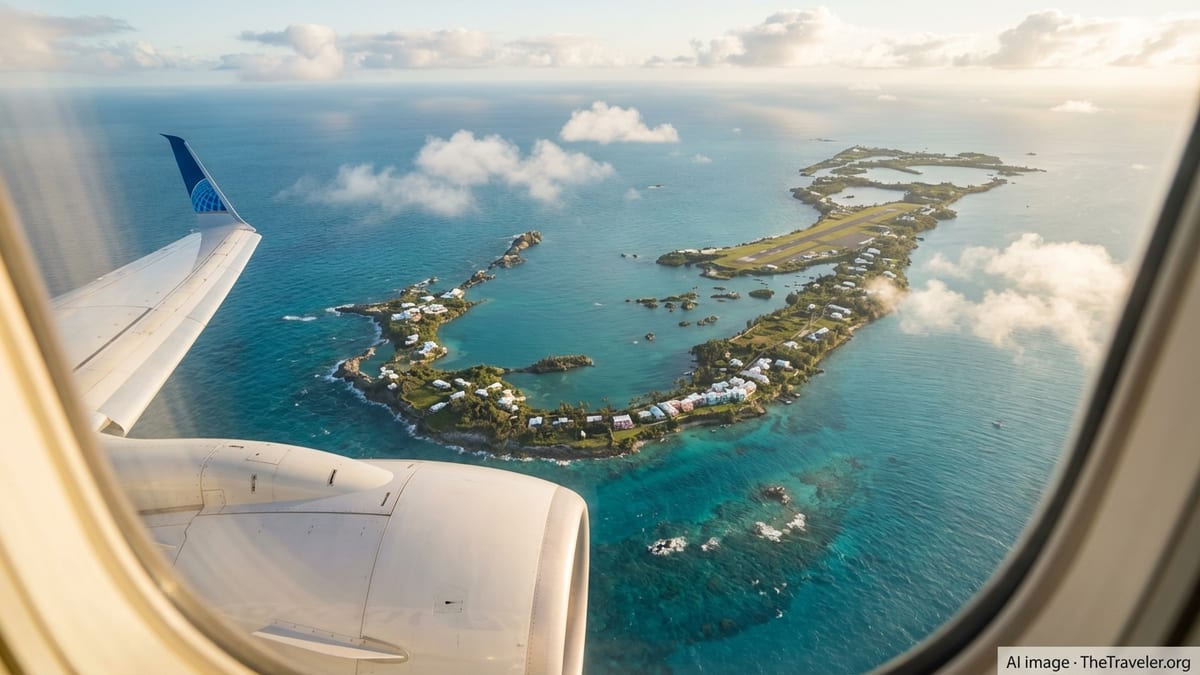
North Atlantic Holiday Flight Forced to Divert
TUI fly Netherlands flight OR511 departed Amsterdam Schiphol bound for Montego Bay with a full load of winter-sun holidaymakers when the crew requested an immediate diversion and emergency landing in Bermuda. The Boeing 787 was operating a long-haul charter service to Jamaica when the situation developed over the North Atlantic, prompting a change of course to L.F. Wade International Airport, Bermuda’s primary gateway.
According to live flight-tracking data, the aircraft had already covered a substantial portion of the route when it left its planned track and headed southeast toward Bermuda, where emergency services were placed on standby. The jet landed safely, and it was met on the runway by airport fire and medical crews in line with standard safety procedures for declared emergencies.
There were no immediate reports of serious injuries among passengers or crew. However, the precautionary landing left travelers unexpectedly stranded on the mid-Atlantic British territory, one of the few diversion airports along the busy leisure corridors connecting Europe with the Caribbean.
Airline Cites Safety Precaution as Investigations Begin
TUI fly Netherlands has not yet issued a detailed technical explanation of the incident, but early indications suggest the diversion was carried out as a precaution after the crew detected a potential issue on board. Modern long-haul aircraft are equipped with extensive monitoring systems, and flight crews are trained to divert to the nearest suitable airport if there is any concern that continuing the journey could compromise safety.
In such cases, operators follow strict international protocols, including coordination with air traffic control and local emergency services, before committing to an emergency landing. While the exact nature of the reported problem remains under review, the safe arrival of the aircraft in Bermuda underlines the effectiveness of those procedures and the priority placed on passenger safety.
Technical and safety specialists are expected to examine the Boeing 787 on the ground in Bermuda, reviewing onboard systems and maintenance records before the aircraft is cleared to resume service. Regulators and the airline’s own safety department are likely to open a routine investigation to determine the root cause and to assess whether any follow-up actions are required within the fleet.
Stranded Passengers Face Delays and Overnight Disruption
The diversion left the several hundred passengers on OR511 facing unexpected delays far from their intended Jamaican beach resorts. With Bermuda’s relatively small hotel inventory and limited long-haul handling capacity compared with larger hubs, arranging overnight accommodation and onward connections presented a logistical challenge for the carrier and its local partners.
Travelers described scenes of calm but visible frustration inside the terminal as they waited for information about rebooking and hotel assignments. Families with children and package holiday groups were particularly affected, with many concerned about missed transfers, shortened vacations and knock-on impacts to prebooked excursions in Montego Bay and beyond.
TUI’s ground teams and handling agents in Bermuda worked to provide refreshments, accommodation vouchers and revised itineraries. Under European passenger rights rules, customers on flights departing from the European Union are generally entitled to care and assistance in the event of major disruption, including meals and hotel stays where necessary, even when the cause is a safety-related diversion.
Impact on Wider Flight Program and Jamaica Tourism
The disruption to OR511 reverberated through TUI fly Netherlands’ broader long-haul program, with the airline needing to adjust aircraft rotations and crew schedules at short notice. Long-range jets like the Boeing 787 operate tight timetables between European bases and Caribbean destinations, meaning a single unscheduled stop can affect subsequent departures and arrivals across the network.
For Jamaica’s tourism sector, where winter charter traffic from Europe plays an important role, any significant delay to an inbound flight can have ripple effects on hotel check-ins, cruise connections and local tour operations. Ground handlers and resort representatives at Montego Bay’s Sangster International Airport were forced to update arrival boards and rearrange transfers as the revised schedule took shape.
Industry observers note that while such diversions are rare, they are an inherent part of long-haul operations across vast oceanic stretches. Airlines serving Caribbean holiday hotspots from Europe build contingency plans into their programs, including agreements with diversion airports like Bermuda, the Azores and various North American gateways, to manage exactly this kind of scenario.
Reassurance for Future Travelers on Atlantic Routes
Aviation safety experts emphasize that emergency diversions such as that undertaken by OR511 are often a sign of caution rather than catastrophe. Modern flight crews are trained to take a conservative approach to any potential technical or medical issue, especially when operating hours from the nearest land. Choosing to land in Bermuda rather than press on to Jamaica reflects that risk-averse philosophy.
For travelers planning long-haul holidays across the Atlantic, the incident serves as a reminder of the robust safety culture underpinning commercial aviation. Diversion-capable airports, redundant systems on aircraft and strict international oversight together help ensure that when something does not look right, crews have both the authority and the infrastructure to act decisively.
While passengers on OR511 endured an unwelcome interruption to their journey, the safe outcome in Bermuda highlights the resilience of the global air travel system and the priority placed on bringing every flight, and every traveler, safely back to the ground.