


For U.S. travelers loyal to Star Alliance carriers, two niche airline credit cards often surface in the search for more miles and extra perks: the Turkish Airlines Miles&Smiles Premier Visa Signature Credit Card and the Lufthansa Miles & More World Elite Mastercard. Both promise faster mileage earning and a few travel benefits, but they are far from interchangeable. Which one is better depends heavily on how and where you actually fly, and what kind of value you want to squeeze from every dollar you spend.
Get the latest updates straight to your inbox!
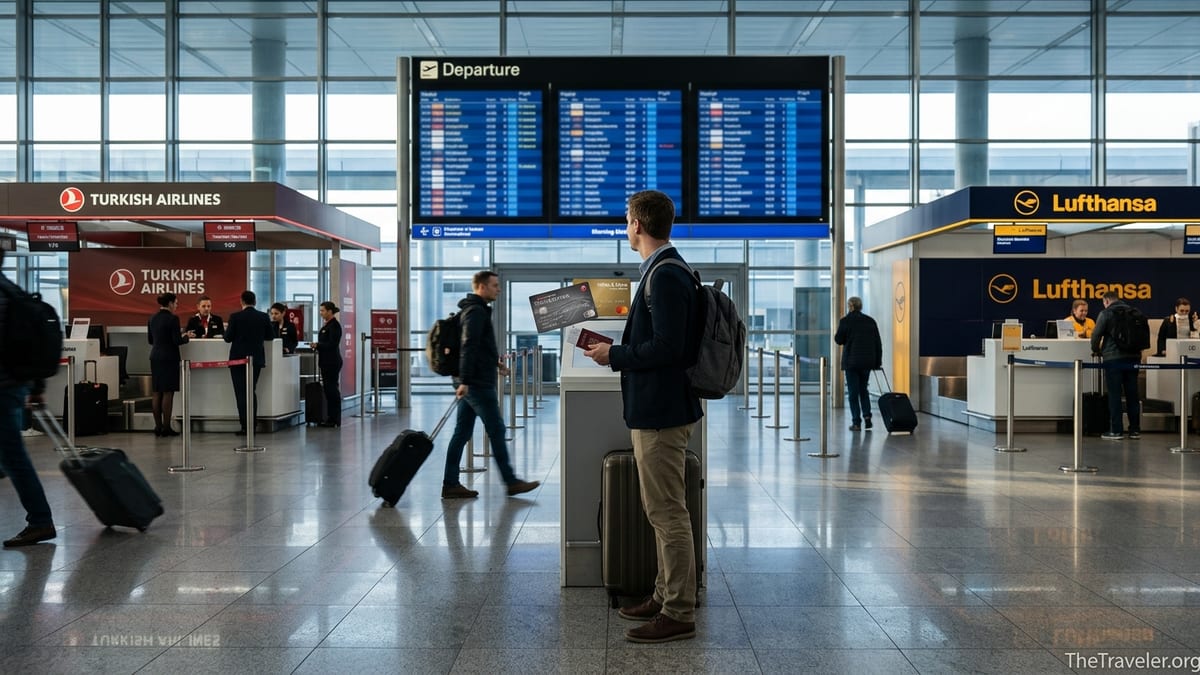
Meet the Contenders: Two Niche Star Alliance Airline Cards
The Turkish Airlines Miles&Smiles Premier Visa Signature Credit Card is a relatively new entrant for U.S. consumers. Issued by First Electronic Bank in partnership with Imprint, it is currently the only Turkish Airlines co-branded card available in the American market. It earns Turkish Miles&Smiles miles, which can be redeemed not just on Turkish Airlines but also on Star Alliance partners such as United Airlines, Air Canada and Singapore Airlines. Turkish’s award chart is known for offering attractive pricing on some long-haul routes when space is available, particularly in business class between North America and Europe.
The Lufthansa Miles & More World Elite Mastercard, issued by Barclays, is more established. It earns Miles & More miles, a currency tightly linked to Lufthansa Group carriers such as Lufthansa, SWISS, Austrian Airlines and Brussels Airlines, along with several additional partner airlines. For U.S. residents, this card is effectively the primary way to earn Miles & More miles via a domestic credit product, since the program does not partner with the big transferable currencies from major U.S. banks.
Both cards serve travelers who go beyond domestic hops and routinely cross the Atlantic. A New York based traveler who visits family in Istanbul twice a year is a natural candidate for the Turkish Airlines card, while a Chicago or Los Angeles flyer who prefers connecting through Frankfurt or Munich to reach cities across Europe might lean toward the Lufthansa option. The key is aligning your primary airline habits with the earning and redemption strengths of each program.
Neither card is a universal, one size fits all travel solution. They work best as secondary cards in a wallet that already includes a more flexible points product, such as a general travel rewards Visa or Mastercard that transfers to multiple partners. For most readers, the right question is not which card is objectively better in every category, but which one better fits your personal travel pattern.
Welcome Bonuses and Earning Rates: Where Miles Add Up Faster
Sign-up bonuses and ongoing earning rates are often the biggest drivers of value in the first year of card membership. The Turkish Airlines Miles&Smiles Premier Visa typically offers a tiered welcome bonus of up to around 40,000 miles when you meet specific spending thresholds in the first months and within the first year. Public details can shift, but recent offers have centered on a lower initial spend to unlock a portion of the bonus, followed by a larger cumulative spend goal to reach the full amount.
The Lufthansa Miles & More World Elite Mastercard has recently advertised a welcome offer in the region of 60,000 miles after you meet a minimum spend requirement of roughly 3,000 dollars and pay the annual fee within the first 90 days of opening the account. That higher single bonus can be compelling if you have a specific Lufthansa or partner award in mind, such as a one way business class ticket from Newark to Frankfurt, which can sometimes be booked for a mileage price in the ballpark of 56,000 to 70,000 Miles & More miles plus taxes and surcharges, depending on availability and route.
On everyday spending, the Turkish Airlines Premier Visa is more aggressive. It has advertised 3 miles per dollar on Turkish Airlines purchases and on a broad category of other purchases, along with 2 miles per dollar on everyday categories such as dining, groceries, entertainment and lodging, then 1 mile per dollar on everything else. That structure can make it reasonable as a general spending card for travelers heavily invested in the Miles&Smiles ecosystem, especially those booking Turkish-operated flights from U.S. cities like New York, Chicago, Los Angeles or Miami.
By contrast, the Lufthansa Miles & More World Elite Mastercard earns 2 miles per dollar on ticket purchases directly from Lufthansa and Miles & More integrated airline partners and 1 mile per dollar on all other purchases. For a Houston based traveler who spends 4,000 dollars a year on Lufthansa tickets and another 12,000 dollars on everyday card spend, that equates to about 20,000 Miles & More miles per year. A similar spending pattern on the Turkish card, with more purchases falling into the higher earning categories, could yield a noticeably larger pile of Turkish miles over the same period.
Annual Fees, Foreign Transaction Policies and Core Cardholder Perks
Both the Turkish Airlines Miles&Smiles Premier Visa and the Lufthansa Miles & More World Elite Mastercard carry moderate annual fees for airline co-branded products. The Turkish card charges an annual fee around 99 dollars, while the Lufthansa card comes in a bit lower, typically at 89 dollars. Neither card generally offers a statement credit that directly offsets that annual fee, so your value calculation needs to come from miles earned and travel perks used each year.
For international travelers, foreign transaction fees are a critical line item. Both cards are designed with global flyers in mind and therefore do not charge foreign transaction fees on overseas purchases. A traveler spending 2,000 euros on hotels, dining and local transportation in Istanbul or Frankfurt using a card that charges a 3 percent foreign transaction fee would effectively pay around 60 dollars in added costs, which these airline cards avoid. Frequent overseas trips can therefore help justify keeping either card open even in years when you are earning fewer miles from bonuses.
The Lufthansa Miles & More World Elite Mastercard comes with several airline-specific perks that can be meaningful if you regularly fly Lufthansa Group carriers. One standout is the annual companion ticket benefit. After each account anniversary, cardholders receive a companion ticket that can be applied to a paid economy class fare originating in the United States on Lufthansa operated flights. You pay taxes, fees and any surcharges for the companion’s ticket, but the base fare is discounted according to the offer’s terms. For a Newark to Munich round trip in high season that might cost around 1,400 dollars for one ticket, the companion benefit can save several hundred dollars if the underlying eligible fare is competitively priced at the time of booking.
The Turkish Airlines Premier Visa’s benefits focus more on earning and access within the Miles&Smiles program rather than headline perks like free checked bags or automatic elite status. Cardholders receive standard Visa Signature travel protections and access to certain Imprint administered offers. Some benefits, such as potential access to priority check in or lounge entry at selected airports, may require careful reading of the latest program terms and conditions and can be subject to changes or specific eligibility rules, which makes them less predictable as long term value drivers than the Lufthansa companion ticket.
Redemption Value: How Far Your Miles Actually Take You
When comparing airline credit cards, the real test is not how dazzling the earning rates appear on paper but how far those miles carry you in the real world. Turkish Airlines Miles&Smiles remains well regarded among experienced points enthusiasts for certain sweet spot awards, especially business class between North America and Europe. While exact award pricing can change, it has historically been possible to find one way business class awards on Turkish operated flights between U.S. gateways such as New York or Washington and Istanbul for competitive mileage levels that often undercut some rival programs.
Consider a traveler in Chicago who plans to visit Istanbul next spring. If they open the Turkish Airlines Premier Visa and earn close to 40,000 bonus miles plus perhaps another 10,000 miles from normal spending, they could end their first year with around 50,000 miles. Combined with miles from actually flying Turkish on one paid economy trip, they could approach the threshold for an upgrade to business class or a deeply discounted award ticket on a shoulder season flight when availability is better. For many readers, that upgraded overnight flight to Istanbul, complete with lie flat seat and full service dining, is where the real psychological value of the Turkish card lies.
Miles & More miles, on the other hand, shine brightest for travelers focused on Lufthansa Group. A Boston based traveler who regularly flies to smaller European cities via Frankfurt or Munich can often find solid value in Miles & More awards on Lufthansa, SWISS or Austrian, especially if they are flexible with dates. The fact that Miles & More miles are harder to earn in the United States, given the lack of transfer partnerships with major U.S. bank programs, can make the 60,000 mile welcome bonus feel particularly valuable as a jump start toward a transatlantic award.
Taxes and surcharges are an important practical distinction. Lufthansa Group flights often carry higher fuel surcharges on award tickets booked with Miles & More miles, meaning a round trip business class award from New York to Frankfurt could easily incur several hundred dollars in additional cash costs. Turkish Airlines also adds surcharges on certain routes, but depending on the itinerary and region, the total out-of-pocket cost on a Miles&Smiles award can sometimes be lower than comparable Lufthansa Group itineraries booked with Miles & More miles. Travelers who are sensitive to cash surcharges may therefore find Turkish awards more attractive on some long haul routes.
Another layer is partner redemption flexibility. Turkish Miles&Smiles partners with several popular transferable points programs in the United States, allowing travelers to top up their account using bank points from select cards. That makes Turkish miles less dependent on the co-branded credit card and opens the door to larger redemptions, such as multiple family members flying business class to Europe or the Middle East. In contrast, Miles & More’s limited U.S. transfer options place more pressure on the co-branded card as a primary earning tool, which can be restrictive if you do not want to put substantial everyday spending on a single airline card.
Elite Status, Program Ecosystems and Long Term Loyalty
Beyond individual flights, the way each card interacts with its loyalty program matters for travelers chasing elite status. The Lufthansa Miles & More World Elite Mastercard allows cardholders to convert a portion of miles earned from purchases into points and qualifying points toward Miles & More elite status once per calendar year. For example, a cardholder might convert 5,000 to 25,000 miles into an allotment of status qualifying points that move them closer to Frequent Traveller or Senator status tiers. For a consultant based in San Francisco who flies Lufthansa and SWISS frequently for work, this can shave a few flights off the annual threshold needed to secure lounge access and priority services.
The Turkish Airlines Miles&Smiles Premier Visa is less tightly integrated into the elite qualification framework. While cardholders earn redeemable miles that can be used for flights, upgrades and program partner redemptions, the card does not substantially accelerate elite qualification in the same structured way as the Lufthansa product. A Los Angeles based tech worker who wants Turkish Miles&Smiles Elite status will still need to fly a significant number of paid segments or miles on Turkish and partner airlines to cross the qualification thresholds.
On the flip side, the broader ecosystem surrounding Turkish miles can be a long term advantage. Turkish Miles&Smiles partnerships with hotel groups, rental car companies and other travel brands allow miles earned from the credit card to mesh seamlessly with miles from other sources. For example, a traveler might convert points from a participating U.S. bank card to Miles&Smiles, add in miles from a stay at a partner hotel brand in Europe, then top off with credit card earnings to book an award from Chicago to Athens via Istanbul during peak summer.
Lufthansa Miles & More also supports a large network of nonflight redemption options, from merchandise to hotel stays and rental cars within Europe. However, many of these redemptions deliver lower value per mile than long haul premium cabin flights. U.S.-based cardholders are therefore more likely to see the card as a tool for funding transatlantic trips and less as an all purpose rewards currency for day to day redemptions.
Which Card Fits Which Traveler Profile?
When you look past marketing language and into real world scenarios, the decision between these two cards becomes more straightforward. Suppose you are a New Jersey based traveler who flies United domestically and Turkish Airlines for annual trips to visit friends in Istanbul and Beirut. You value business class on overnight flights but are flexible with dates and routings. In that case, the Turkish Airlines Miles&Smiles Premier Visa has a natural edge. Its stronger earning rates on Turkish flights and common spending categories, combined with the ability to supplement your Miles&Smiles balance via compatible bank transfers, give you multiple levers to pull when aiming for that coveted lie flat seat.
Now consider a frequent flyer in Chicago whose employer often books them on Lufthansa or SWISS for trips to Frankfurt, Zurich and Vienna, with occasional side trips to smaller European cities served by Austrian or Brussels Airlines. They tend to book economy or premium economy but aim to use miles to upgrade or book business class when traveling on personal trips. For this traveler, the Lufthansa Miles & More World Elite Mastercard is more compelling. The large welcome bonus, 2 miles per dollar on Lufthansa Group tickets and the ability to convert earned miles into status qualifying points make it easier to maintain a higher Miles & More status tier.
Budget conscious travelers who value a transparent, easy to use companion ticket might also lean toward Lufthansa. A family in Boston planning a summer trip to Europe could use the companion ticket to reduce the cost of a second paid economy fare on a Boston to Munich round trip, particularly in shoulder season when eligible fares are competitive. The savings on that one trip can offset the annual fee for a year or two, even if they do not use the card heavily for everyday purchases.
In contrast, travelers who rarely set foot on Lufthansa Group carriers but frequently transit Istanbul, or who value Star Alliance premium cabin awards priced below some rivals, are unlikely to see much benefit in holding the Lufthansa card. For them, combining the Turkish Airlines Premier Visa with a flexible points product that transfers to Miles&Smiles gives a more powerful and adaptable toolkit for planning complex trips, whether that means flying from Los Angeles to Budapest via Istanbul or piecing together an award to destinations in Central Asia or East Africa.
The Takeaway
There is no single winner in the matchup between the Turkish Airlines Miles&Smiles Premier Visa Signature Credit Card and the Lufthansa Miles & More World Elite Mastercard. Each is a specialized tool designed for a specific type of traveler. The Turkish card leans into higher earning rates and the ability to tap into some attractive award sweet spots for Turkish and Star Alliance flights, especially in business class between North America and Europe or onward to the Middle East and beyond. It works best for travelers who already see Istanbul as a natural hub and who value flexible ways to top up their Miles&Smiles balance.
The Lufthansa card, on the other hand, anchors itself in the Miles & More ecosystem with a robust welcome bonus, an annual companion ticket and the unusual ability to convert some earned miles into status qualifying points. For road warriors and loyalists of Lufthansa Group airlines who routinely cross the Atlantic via Frankfurt, Munich or Zurich, those elements can deliver outsized value that goes well beyond the modest annual fee.
For many readers, the most rational strategy will be to treat either card as a supporting player rather than the star of the show. A flexible points card that earns transferable bank rewards will generally remain the workhorse for daily spending, while one of these airline cards can be layered in to capture targeted bonuses, unlock specific award opportunities and access airline specific perks. By carefully mapping your actual routes, preferred airlines and travel frequency against the strengths of each card, you can choose the option that genuinely pushes you closer to your next big trip rather than simply adding another piece of plastic to your wallet.
FAQ
Q1. Is the Turkish Airlines Miles&Smiles Premier Visa or the Lufthansa Miles & More Mastercard better for first time transatlantic travelers?
The better choice depends on which airline you are more likely to fly. If you expect to route through Istanbul on Turkish Airlines, the Turkish card’s higher earning rates on Turkish tickets and common spending categories may help you build miles faster. If you anticipate flying Lufthansa, SWISS or Austrian via hubs like Frankfurt or Zurich, the Lufthansa card’s larger welcome bonus and companion ticket can offer more immediate value.
Q2. Which card offers more valuable perks beyond earning miles?
The Lufthansa Miles & More World Elite Mastercard generally has more tangible airline specific perks for many travelers, including an annual economy companion ticket on Lufthansa operated flights from the United States and the option to convert some earned miles into status qualifying points. The Turkish Airlines Premier Visa focuses more on earning and redemption within the Miles&Smiles program and less on headline perks like free bags or automatic status.
Q3. How do the annual fees compare between the two cards?
Both cards charge moderate annual fees for airline products. The Turkish Airlines Miles&Smiles Premier Visa typically has an annual fee of about 99 dollars, while the Lufthansa Miles & More World Elite Mastercard usually charges around 89 dollars. Neither card routinely offers a statement credit that cancels out this fee, so travelers should plan to recover it through miles earned and benefits actually used.
Q4. Are these cards good primary options for everyday spending?
They can be, but only for a narrow set of people. The Turkish Airlines card has stronger category bonuses, especially on Turkish purchases and common spending areas, which can make it more viable as an everyday card for someone deeply invested in Miles&Smiles. The Lufthansa card’s lower nonbonus earning rate makes it less attractive for general spending compared with flexible points cards that offer higher returns and transferable rewards.
Q5. Do either of these cards charge foreign transaction fees?
No. Both the Turkish Airlines Miles&Smiles Premier Visa and the Lufthansa Miles & More World Elite Mastercard waive foreign transaction fees. This makes them reasonable choices for purchases abroad, such as hotels, restaurants and local transportation in destinations like Istanbul, Frankfurt or Vienna.
Q6. Can I use these miles on other Star Alliance airlines, not just Turkish or Lufthansa?
Yes. Miles earned with either card can be redeemed for flights on Star Alliance partners. Turkish Miles&Smiles miles can be used on carriers such as United Airlines, Air Canada, Singapore Airlines and others, while Miles & More miles work across Lufthansa Group airlines and additional partners. However, availability, taxes and surcharges will vary by route and airline.
Q7. Which card is better if I want to earn airline elite status faster?
The Lufthansa Miles & More World Elite Mastercard has a clearer path to helping with elite status because it allows you to convert some miles earned from purchases into status qualifying points each year. This can reduce the number of flights you need to reach Miles & More status levels. The Turkish Airlines Premier Visa does not provide a similarly structured status boost, so you will still rely mostly on flown miles and segments for Turkish elite status.
Q8. How important are taxes and fuel surcharges when redeeming these miles?
Taxes and surcharges can significantly affect the real value of an award ticket. Lufthansa Group flights often carry higher surcharges when booked with Miles & More miles, which can mean paying several hundred dollars on top of the miles for a round trip business class award. Turkish awards also include fees, but depending on itinerary and region, the total out of pocket cost can sometimes be lower. Travelers sensitive to cash costs should always compare the mixture of miles and money before booking.
Q9. Is it possible to top up these airline miles with points from other credit cards?
Turkish Miles&Smiles has an advantage here. It partners with several transferable points programs from major U.S. banks, allowing you to move bank points into Miles&Smiles to combine with miles from the Turkish Premier Visa. Miles & More has more limited transfer options in the U.S. market, so the Lufthansa card plays a larger role in building that balance, which can be restrictive if you prefer flexibility.
Q10. If I mostly fly domestically within the United States, are either of these cards a good fit?
Probably not as primary cards. Both products are optimized for travelers who regularly fly across the Atlantic or connect via their respective hubs. A traveler who mostly flies domestic routes on U.S. carriers will generally be better served by a flexible travel rewards card that earns transferable points and offers strong domestic airline and hotel benefits, using one of these airline cards only if they have specific international trips planned that align with Turkish or Lufthansa networks.