

More news on this day
The United Arab Emirates and Turkey are emerging as pivotal anchors for regional tourism resilience, joining Oman, Egypt, and Jordan in keeping visitor confidence intact despite airspace disruptions, aviation strikes, and heightened geopolitical uncertainty across the Middle East.
Get the latest news straight to your inbox!
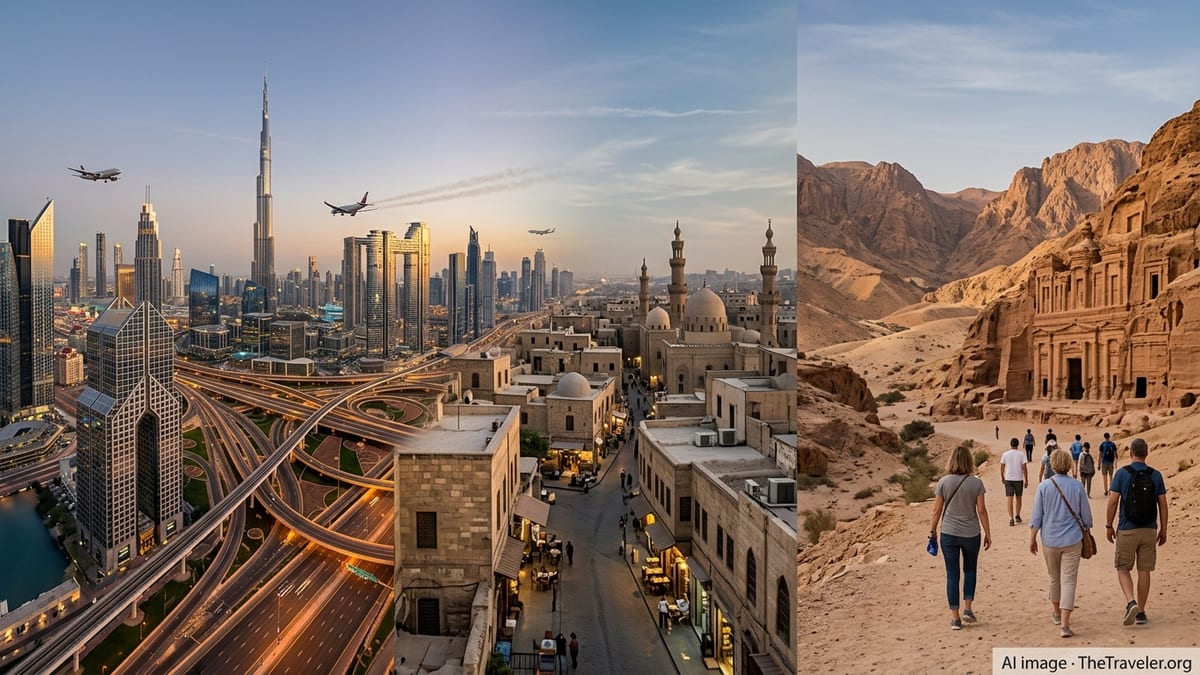
Tourism Growth Holds Firm Amid Regional Turbulence
Across the Middle East, published data indicates that tourism demand continues to expand even as travelers face rerouted flights, temporary airport closures, and evolving security advisories. Industry analyses show that the region has been among the fastest globally to return to and surpass pre‑pandemic visitor levels, supported by sustained investment in infrastructure, destination marketing, and safety protocols.
In the Gulf, the United Arab Emirates remains a primary gateway, with Dubai and Abu Dhabi handling some of the world’s largest volumes of connecting passengers. Recent media briefings and aviation updates highlight how robust airport operations, contingency plans, and close coordination with airlines have helped the UAE absorb shocks from airspace restrictions and keep core tourism flows moving.
Turkey, meanwhile, has reinforced its role as a Mediterranean powerhouse. Official statistics and industry coverage for 2024 and 2025 show foreign arrivals and tourism receipts near or at record highs, with more than 50 million international visitors in 2024 and revenue upwards of 60 billion dollars. Despite global inflation, regional conflicts, and operational challenges in aviation, the country continues to attract large source markets from Europe, the United Kingdom, Russia, and the Middle East.
This overall momentum is mirrored by Oman, Egypt, and Jordan, where governments have made tourism a central pillar of diversification and job creation strategies. Collectively, these destinations are signaling that the region remains open to visitors, even as they adjust to new patterns of flight routing and security risk management.
UAE: Managing Airspace Shocks While Protecting Its Hub Status
The most acute recent test of resilience has come in the United Arab Emirates, where Iranian strikes in late February 2026 temporarily disrupted operations at Dubai International Airport and raised questions about the impact on tourism. Public reporting indicates that some flights were suspended or diverted after drone attacks damaged airport infrastructure, with passengers facing delays and rebooking challenges.
Yet available information from government briefings and local media summaries suggests that the country’s aviation and tourism sectors moved quickly to contain the fallout. Temporary suspensions of flights were followed by phased resumptions on alternative routings, and hotel and tourism operators implemented contingency measures for stranded travelers. Publicly available updates describe structured plans to provide accommodation, visa support, and onward transport in coordination with airlines and ground handlers.
At the same time, long‑term indicators point to continued growth. World Travel and Tourism Council projections and regional economic reports show inbound visitor numbers to the UAE on an upward trajectory into 2025 and 2026, with expectations of tens of millions of international arrivals and hotel occupancy rates among the highest globally. Expanded aircraft orders by major Gulf carriers and ongoing investment in airport capacity underscore a strategy to maintain hub connectivity regardless of short‑term geopolitical shocks.
For travelers, the message from public-facing communications has been one of managed risk rather than systemic shutdown. Travel advisories in key source markets encourage vigilance and flexible planning, but air links into the UAE’s main gateways remain largely intact, helping sustain the tourism ecosystem of hotels, attractions, and events.
Turkey: Record Numbers and Crisis-Hardened Tourism Infrastructure
Turkey has spent the past decade building a reputation for what local industry leaders often describe as “crisis-resistant” tourism. Official data and international coverage show that by 2024 the country welcomed more than 50 million foreign tourists and achieved record tourism receipts above 60 billion dollars, placing it among the top global destinations by arrivals.
In 2025, reports point to a more challenging backdrop, with inflationary pressures, softer demand in some months, and concerns about profitability for hotels and tour operators. Nonetheless, coastal hubs such as Antalya have set ambitious targets in the range of 17 million visitors, while national-level strategies emphasize diversification into culture, gastronomy, wellness, and nature-based tourism to broaden appeal beyond traditional sun-and-sea packages.
Turkey’s aviation system has also had to navigate airspace restrictions and capacity strains affecting European and regional corridors. Industry analyses highlight rising air traffic and the need for continued investment in airport infrastructure to avoid bottlenecks. Despite these stresses, scheduled capacity to major Turkish gateways has largely held, allowing the country to keep attracting large volumes from Germany, the United Kingdom, Russia, and emerging markets.
This combination of high visitor numbers, diversified product offerings, and ongoing infrastructure upgrades positions Turkey alongside the UAE as a key stabilizer for tourism flows into and across the wider region, even as airlines adjust routings to avoid sensitive airspace.
Oman, Egypt, and Jordan Focus on Stability and Safety Assurance
While the UAE and Turkey provide large-scale connectivity, Oman, Egypt, and Jordan are concentrating on reinforcing traveler trust through targeted investments and clear safety messaging. In Oman, recent tourism statistics show hotel guest numbers rising, winter-season visitor counts in the millions, and tourism’s contribution to gross domestic product steadily increasing. Reports from economic think tanks and industry publications emphasize multi‑billion‑dollar plans for tourism development through 2040, including new resorts, heritage projects, and eco‑tourism initiatives.
Crucially, Oman’s experience during the current period of regional tension illustrates how a reputation for calm and measured diplomacy can translate into perceived travel safety. While airlines have made routing adjustments around sensitive airspace, commercial flights into Muscat and Salalah have continued, and domestic tourism has further bolstered occupancy rates. Local media coverage notes strong demand from neighboring Gulf markets, especially Saudi Arabia and the UAE, which helps cushion any slowdown from farther-flung source countries.
Egypt and Jordan, highly dependent on international tourism for employment and foreign currency, have confronted their own challenges, from Red Sea shipping disruptions to isolated security incidents and sectoral strikes affecting aviation and public services. Following a high-profile Red Sea boat accident in late 2024, Egyptian authorities introduced tighter safety checks and stricter enforcement for maritime excursion operators, aiming to reassure both tour companies and international visitors.
Jordan, home to globally recognized sites such as Petra and Wadi Rum, has focused on maintaining secure access corridors, improving visitor facilities, and working with airlines and regional partners to safeguard air connectivity. Publicly available reports suggest that while some travelers have postponed trips due to wider regional headlines, core markets in Europe and North America continue to send steady numbers, supported by flexible booking policies and strong promotion of outdoor and cultural experiences.
Strikes, Rerouting, and the New Normal for Middle East Travel
Complicating the security picture are intermittent strikes and operational disruptions across the broader aviation system that feeds into the Middle East. In recent months, travelers have faced industrial action among air traffic controllers, ground staff, and cabin crew in parts of Europe, leading to delays and cancellations on routes serving the UAE, Turkey, Egypt, and Jordan. Airlines have responded by consolidating schedules, offering rebooking options, and recalibrating capacity toward routes showing the strongest demand.
On top of labor-related disruptions, carriers have needed to navigate active conflict zones and missile risk in regional skies. Publicly available airspace advisories demonstrate a patchwork of restrictions, with certain corridors temporarily closed and others subject to altitude or timing limitations. These changes can add time and cost to flights, but have so far not halted tourism growth, as travelers adapt to longer routings and airlines optimize fuel and crew planning.
For destinations, the operational strain has underscored the importance of transparent communication, flexible cancellation policies, and strong coordination between tourism boards, airports, and airlines. Travel industry briefings emphasize that timely updates on schedule changes, clear guidance on safety measures, and visible on-the-ground support for delayed passengers are now essential components of maintaining trust.
Despite the complications, forward-looking data from global tourism bodies indicates that traveler appetite for Middle Eastern destinations remains high, driven by year‑round sunshine, competitive pricing, diverse cultural offerings, and improved digital visa and entry systems. The ability of UAE, Turkey, Oman, Egypt, and Jordan to absorb shocks and adjust operations is emerging as a critical differentiator in this environment.
Competing on Confidence: How the Region Is Reassuring Travelers
As headlines focus on missile strikes, shipping disruptions, and airport delays, regional tourism strategies are increasingly centered on confidence-building. The UAE highlights its extensive hotel inventory, crisis-management protocols, and rapid recovery of flight operations. Turkey promotes its track record of weathering geopolitical swings without prolonged damage to visitor numbers. Oman leans on its image as a peaceful, nature-rich destination with carefully managed growth.
Egypt and Jordan, meanwhile, spotlight enhanced safety standards for tours and excursions, improved emergency response capabilities, and partnerships with international travel brands that adhere to globally recognized risk-management frameworks. Marketing campaigns in key source markets emphasize authentic experiences, value for money, and the practical reality that most tourist itineraries remain far from active conflict zones or restricted areas.
Analysts note that travelers are becoming more nuanced in their risk assessments, distinguishing between general regional tensions and specific local conditions. Booking patterns suggest that many visitors are willing to proceed with trips as long as air links remain open, travel advisories do not prohibit travel, and operators provide flexible options. This behavior is enabling UAE, Turkey, Oman, Egypt, and Jordan to keep their tourism growth stories on track, even as they navigate one of the most complex operating environments the industry has faced in years.
Taken together, these developments illustrate how tourism in the Middle East is entering a new phase in which resilience, redundancy, and transparent communication are as important as beaches, heritage sites, and hospitality. The ability of these five countries to win and retain tourist trust amid ongoing uncertainty will likely define the region’s competitive position in global travel for the remainder of the decade.