

More news on this day
With Eid Al Fitr 2026 holiday crowds poised to surge through Dubai and Abu Dhabi airports from March 19 to 22, fresh regional security tensions and fast-changing aviation precautions are fuelling concern that new explosive-screening protocols and mandatory pre-flight alert systems could turn one of the busiest travel weekends of the year into a severe disruption for millions of passengers.
Get the latest news straight to your inbox!
Eid Travel Demand Collides With Volatile Security Climate
Forecasts for the United Arab Emirates show Eid Al Fitr 2026 falling around Friday 20 March, with the official public holiday window already announced for March 19 to 22 for most federal entities. Publicly available guidance from travel and property portals indicates that this four-day stretch is expected to be one of the peak outbound and inbound travel periods of the year, with families combining Eid leave and school breaks for regional and long-haul trips.
The travel rush is unfolding against an exceptionally tense backdrop. Recent months have seen the UAE briefly close its airspace amid wider regional conflict, after incoming projectiles triggered interceptions over Dubai and raised fresh questions about the vulnerability of critical infrastructure, including airports. Aviation analysts note that each such incident typically triggers layers of new security checks and contingency planning that can ripple through passenger operations for months afterward.
Dubai International and Abu Dhabi International remain central hubs connecting Asia, Europe and Africa, and any tightening of procedures at these airports can quickly cascade across global networks. As airlines ramp up Eid capacity with extra services to popular destinations, even minor disruptions from security reviews or short-notice airspace restrictions could create knock-on delays for travellers far beyond the Gulf.
Travel industry briefings suggest that carriers are already modelling scenarios that include temporary rerouting, last-minute schedule changes and, in extreme cases, grounded rotations if additional restrictions on overflight or arrivals were to be imposed during the Eid period.
Explosive-Screening Rules Under Scrutiny
Explosives and related materials have long been categorically banned from passenger baggage under international aviation rules, and Dubai Airports’ own published prohibited-items lists underline a zero-tolerance stance toward any devices or substances that could interfere with aircraft safety. However, the recent escalation in regional missile and drone activity has renewed attention on how, and how often, passengers, cargo and airport facilities are screened for potential explosive threats.
Security specialists point out that every time a serious incident occurs in the wider region, regulators and airport operators revisit risk models for explosive devices, fuel infrastructure and aircraft on the ground. This can lead to changes such as more extensive screening of checked baggage, expanded use of explosive-trace detection equipment at security lanes, or more frequent random inspections at boarding gates, all of which add time to the passenger journey.
For Eid Al Fitr 2026, industry observers expect a particularly cautious stance, given the combination of high passenger volumes and the political sensitivity of any incident occurring during a major religious holiday. Even without any specific new rule, closer scrutiny of electronics, batteries and dense carry-on bags can lengthen queues and push check-in and security processing beyond normal peak thresholds.
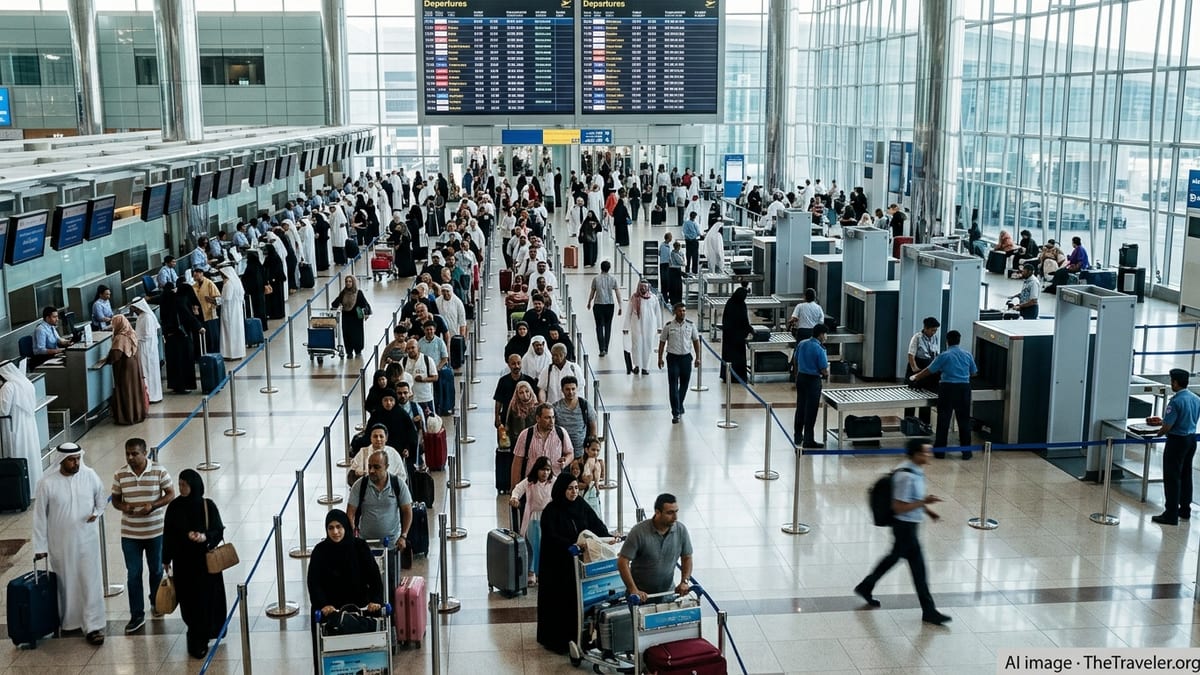
In practical terms, that means travellers passing through Dubai and Abu Dhabi in the Eid window may face longer-than-usual lines at security and immigration, more questions about baggage contents, and a greater likelihood of hand searches or secondary screening at the gate, especially on flights to certain destinations.
Mandatory Pre-Flight Alerts Emerging as a New Friction Point
A growing area of focus is the use of mandatory pre-flight alerts and travel advisories tied to security risk assessments. Airlines operating in and out of the UAE already issue schedule and safety notices through apps, email and text messages, and global regulators sometimes require carriers to brief passengers on specific operational constraints when flying over or near conflict zones.
According to recent coverage in aviation and business outlets, more carriers are now experimenting with automated alert systems that push real-time warnings about potential route changes, enhanced security checks or altered boarding times whenever threat levels rise. During a compressed travel period like Eid Al Fitr, such alerts can be triggered repeatedly as airlines and airports respond to evolving intelligence or operational directives.
Travel planners warn that, if executed unevenly, these notifications could themselves become a source of confusion and delay. Passengers who overlook or misunderstand alerts about earlier check-in cut-offs, revised baggage rules or additional documentation requirements may arrive at the airport unprepared, creating last-minute bottlenecks at counters and causing missed flights.
Concerns are also mounting that stricter compliance requirements linked to such alerts, including mandatory acknowledgement of updated safety information before boarding, could slow down boarding processes for fully booked Eid departures. In worst-case modelling scenarios, this friction could combine with airspace or ground-hold restrictions to force airlines to delay or cancel rotations, stranding large numbers of travellers at short notice.
Capacity Pressures at Dubai and Abu Dhabi Hubs
Dubai International has consistently ranked among the world’s busiest airports for international passengers, and Abu Dhabi International has been expanding as a fast-growing long-haul hub. Both airports are designed to handle heavy holiday peaks, yet a convergence of factors for Eid 2026 is testing that resilience. These include compressed departure waves around the first and last days of the holiday, simultaneous long-haul bank timings and increased reliance on connecting itineraries through the Gulf.
Industry commentary suggests that airport operators and airlines are likely to deploy additional staff, open overflow check-in areas and encourage digital self-service to ease congestion. Nevertheless, any additional security step, from extra explosive-trace checks to ad hoc terminal access controls during sensitive moments, can quickly erode operational buffers, especially if paired with weather disruptions or staffing shortfalls at immigration.
Baggage systems are another pressure point. High load factors combined with stricter screening can cause baggage-handling backlogs, with suitcases sometimes missing tight connections. For travellers embarking on short Eid breaks, delayed baggage can undermine the value of a three- or four-day getaway even if flights operate roughly on time.
Observers note that the broader regional backdrop, including recent airspace closures and intercept operations, has reduced tolerance for risk in control rooms and operations centres. That can lead to more conservative decisions to hold or divert flights in response to even limited alerts, adding another layer of unpredictability for passengers.
What Travellers Can Expect and How to Prepare
Against this uncertain backdrop, publicly accessible travel advisories consistently recommend that passengers build extra time and flexibility into their Eid 2026 plans. For those flying in the core Eid Al Fitr window from March 19 to 22, that often means aiming to reach the airport significantly earlier than usual, monitoring airline apps and SMS updates closely, and avoiding tight connections wherever possible.
Travel experts also highlight the importance of understanding current security rules before packing. With explosives and associated components tightly restricted, and with heightened attention on batteries, power banks and dense electronic items, careful preparation of cabin and checked baggage can reduce the risk of time-consuming inspections at screening points.
On the financial side, consumers are being urged to review their airline conditions and travel insurance coverage for disruption related to security incidents or airspace closures. Many policies treat such events differently from weather-related delays, which can affect options for rerouting or refunds if flights are significantly delayed or cancelled during the Eid period.
For now, commercial schedules through Dubai and Abu Dhabi for March 2026 remain in operation, and no blanket shutdowns have been announced. Yet, with demand high, security sensitivities elevated and new layers of digital and on-the-ground alerting being introduced, the prospect of a challenging Eid Al Fitr travel season is front of mind for airlines, airports and passengers alike.