


More news on this day
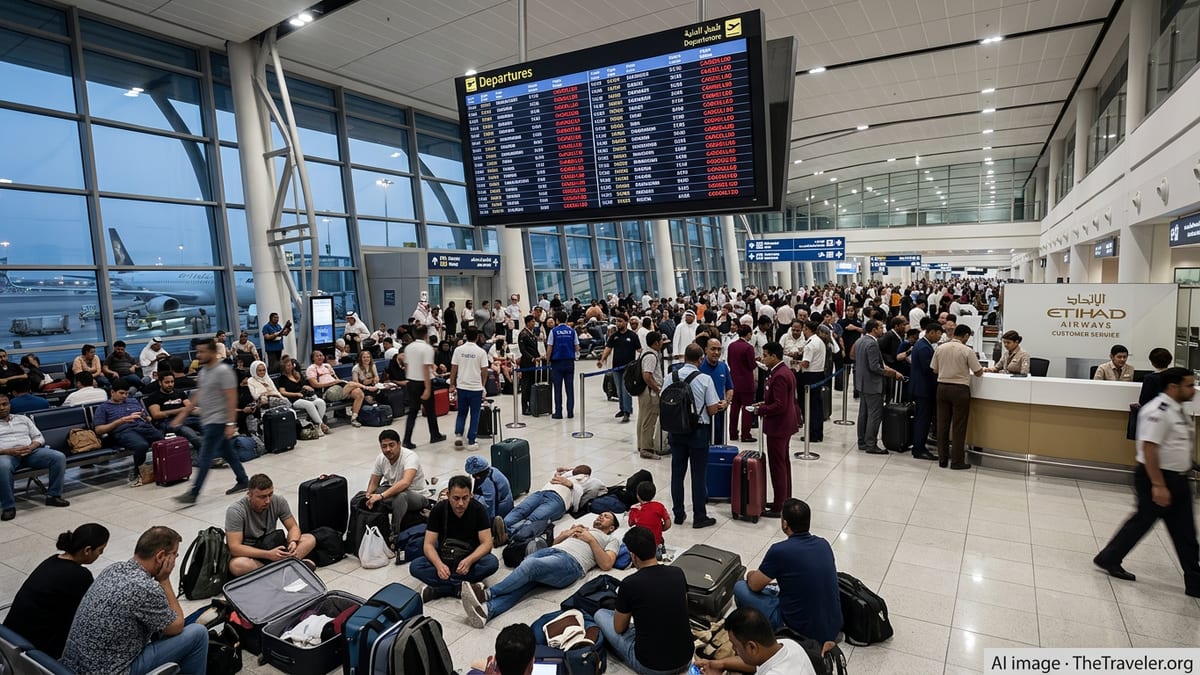
UAE travellers are being urged to monitor flight status closely as Emirates, Etihad Airways, Air Arabia and flydubai continue to adjust schedules, with rolling delays and cancellations affecting services across Dubai, Abu Dhabi and Sharjah.
Get the latest news straight to your inbox!
Mixed operations as regional tensions reshape flight plans
Publicly available information from airport and airline updates shows that UAE carriers are largely maintaining their core networks while trimming or retiming specific flights. Recent coverage indicates that Emirates, Etihad, flydubai and Air Arabia are still operating key regional routes, even as a number of services are delayed or cancelled at short notice.
Reports from Gulf-based outlets describe a “mixed picture” at Dubai International and Abu Dhabi’s Zayed International Airport, with many flights running on schedule alongside others that are listed as delayed or cancelled. The pattern has persisted through the first week of September, underscoring how quickly operations can change as security assessments and airspace constraints evolve.
Several international airlines have extended or expanded their own suspensions into the UAE and wider Gulf region, contributing to the patchwork of available services. This has placed additional focus on the operating status of UAE carriers, which remain among the primary options for travellers trying to move through the region.
Travel industry trackers note that, despite the disruption, the main UAE hubs remain open and functioning, with airport departure boards still showing extensive networks of flights to Europe, Asia and North America. However, the consistency of those schedules can vary from day to day, particularly on certain regional sectors.
Emirates trims select routes while keeping global network largely intact
Emirates is reported to be operating the bulk of its published schedule from Dubai, with more than 130 destinations currently served, including its full US network and major European and South Asian cities. Travel advisories indicate that some flights have been rerouted to avoid affected airspace, leading to slightly longer flight times on certain westbound sectors.
Recent route information shows that a small number of destinations remain off the Emirates network for now, including Baghdad, Basra and Tehran, with no confirmed restart dates. Coverage also points to ongoing adjustments on short-haul Gulf routes, including Kuwait and Bahrain, where frequencies and timings have shifted several times in recent weeks.
On the Bahrain route, Emirates has resumed a limited schedule, with a single daily flight operating while other frequencies remain suspended. Kuwait services, which were previously affected by wider regional concerns, are returning in stages but may not yet be back to pre-disruption levels.
Emirates has advised customers through public channels to verify their individual flight details shortly before departure, as retimings and aircraft changes can occur with limited notice. Standard fare conditions now generally apply, with wider disruption waivers scaled back compared with earlier phases of the disruption.
Etihad, Air Arabia and flydubai manage targeted cancellations
In Abu Dhabi, Etihad Airways is operating most of its core schedule, but selected services have been delayed or cancelled in recent days. Data compiled by regional media from airline and airport postings shows that nearly 20 flights involving Etihad, flydubai and Air Arabia were delayed or cancelled over a recent two-day period, affecting services to India and neighbouring Gulf states.
Sharjah-based Air Arabia has implemented targeted cancellations on some Kuwait and Bahrain flights, including several services identified in flight lists published for early September. At the same time, other routes within its network continue to run close to normal, reflecting a strategy of trimming capacity where demand or airspace conditions are most uncertain.
Dubai’s low-cost carrier flydubai has reported limited operations on certain days, operating a reduced schedule across parts of its network while maintaining connections on others. The airline’s operational updates state that rerouted flight paths and longer transit times are possible, and that it is closely monitoring the regional situation while updating schedules as needed.
Despite these challenges, publicly accessible airline data suggests that the majority of flights by the four main UAE carriers are still taking off as planned. However, the concentration of cancellations and delays on certain regional sectors has created uncertainty for passengers flying to or through specific Middle Eastern destinations.
International carriers extend suspensions into Dubai and Abu Dhabi
The broader disruption picture is being shaped not only by UAE airlines, but also by decisions taken by international carriers serving the region. Europe’s aviation safety authorities have extended conflict-zone guidance for parts of Gulf airspace until at least the end of September, and several European and Asian airlines are continuing to suspend or limit operations to the UAE.
Recent summaries from regional news outlets note that airlines including Air France, KLM, British Airways and Finnair have all adjusted or curtailed services to Dubai, Abu Dhabi or other Middle East gateways. Air France has extended its suspension of Dubai flights through at least September 8, while Cathay Pacific is reported to have pushed back the resumption of services to Dubai and Riyadh until later in the year.
Some carriers are also avoiding Iranian and Iraqi airspace entirely, rerouting flights around affected regions. This has implications for schedules even when flights remain in operation, with longer routings and extended block times reducing operational flexibility and increasing the likelihood of knock-on delays.
As a result, passengers connecting between international airlines and UAE carriers may encounter additional complexity, particularly when itineraries involve multiple tickets or separate bookings. Travel agents and booking platforms have been highlighting the importance of checking each airline segment individually rather than assuming that a confirmed booking guarantees an unchanged schedule.
Operational challenges compounded by volcanic ash and heavy demand
Beyond geopolitical factors, operational reports point to other triggers for recent disruptions, including weather and volcanic activity. Flights between the UAE and Indonesia have been affected by closures at Jakarta’s Soekarno Hatta International Airport following volcanic ash incidents, with both outbound and inbound services from Abu Dhabi and Dubai experiencing delays or cancellations.
At the same time, UAE airports are moving through a period of strong passenger demand as residents return from summer holidays and business travel ramps up after the break. Local advisories warn that terminals are busier than usual, with airlines recommending that customers arrive at least three to four hours before departure and complete online check-in where possible.
The combination of high load factors, restricted airspace and intermittent airport closures elsewhere in the region means that recovery from any single disruption can take longer than usual. Even when a specific cause, such as volcanic ash, is temporary, aircraft and crews can be displaced across the network, prompting schedule changes for days afterward.
Observers note that the current environment rewards flexibility. Travellers able to adjust departure times, accept alternative routings or shift to nearby airports where feasible may have more options than those tied to fixed times or specific flight numbers.
What travellers should know before heading to the airport
Across all four major UAE carriers, the consistent message in public advisories and media summaries is the same: check flight status repeatedly in the hours leading up to departure. Airlines continue to stress that schedules are subject to change at short notice, particularly on routes intersecting with restricted airspace or airports facing operational constraints.
Passengers are being encouraged to use official airline websites and mobile apps to confirm departure times, gate information and any last-minute retimings. Many carriers are also updating customers through email, text messages and app notifications, provided that contact details are current in the booking.
Travel analysts recommend that travellers build extra time into connections, especially when changing planes in the UAE on itineraries involving separate tickets. Where possible, booking on a single ticket with one airline group or alliance can simplify rebooking options if a delay or cancellation affects part of the journey.
Those planning imminent trips are also advised to review the fare rules of their tickets, as flexibility for voluntary changes can vary widely. While some disruption waivers remain in place on particular routes or dates, many airlines have shifted back toward standard conditions, making it essential to understand any fees or restrictions before making changes.
Gulf News: UAE flights delays and cancellations coverage
Khaleej Times: UAE travel advisory and flight lists
The National: Middle East flights status and airline suspensions