

More news on this day
Thousands of stranded air passengers in Dubai, Abu Dhabi, and Sharjah are being housed, fed, and rebooked at the United Arab Emirates’ expense, as authorities roll out an unprecedented support operation amid the widening Middle East crisis.
All-Expenses-Paid Support as Airspace Closes
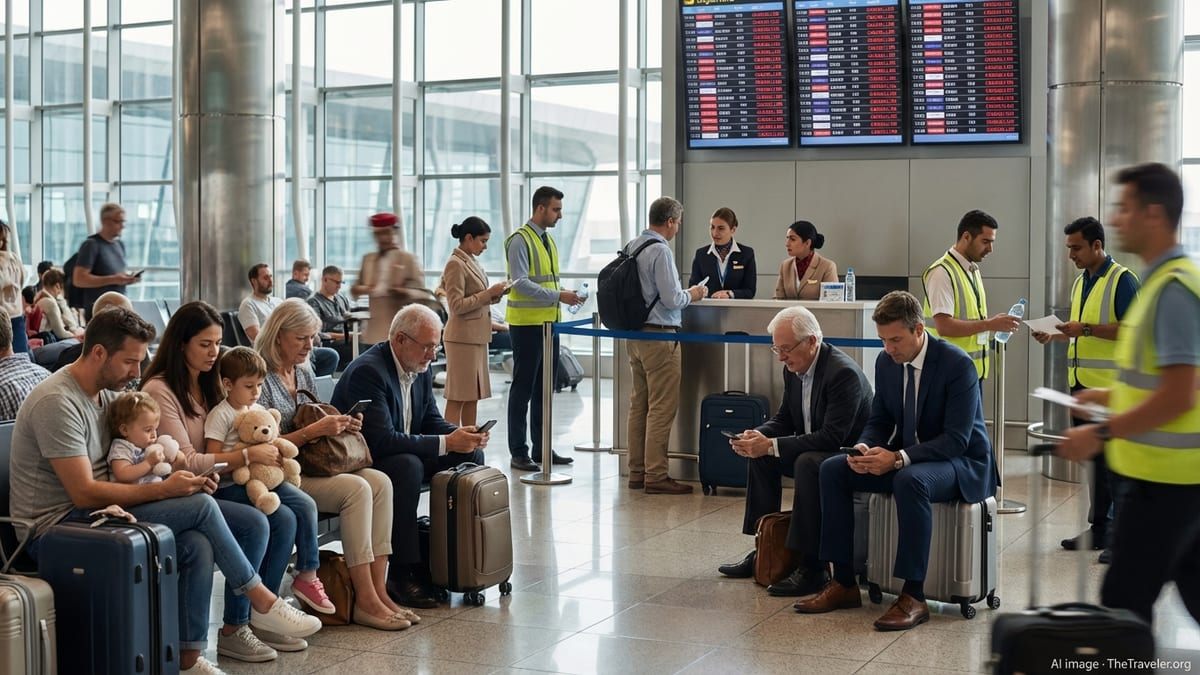
As missile strikes and rising tensions across the region forced sudden airspace closures over the weekend, flights in and out of the UAE’s major hubs were suspended or heavily rescheduled, leaving terminals packed with confused and exhausted travelers. In response, the UAE’s General Civil Aviation Authority announced that the state would cover all accommodation and sustenance costs for affected passengers during what it called a period of “operational adjustments.”
Officials say airports and national carriers have already assisted around 20,200 people caught up in the disruption, placing them in hotels and temporary lodgings while providing meals, refreshments, and onward rebooking support. The move goes well beyond standard airline welfare policies, effectively turning the government into the primary safety net for visitors who found themselves unable to leave the country through no fault of their own.
The measures apply across the country’s key gateways, including Dubai International Airport, Abu Dhabi’s Zayed International Airport, and Sharjah International Airport, all of which serve as major global transit points. With regional air corridors temporarily shut, many travelers who had only expected a quick layover have instead become involuntary guests of the UAE, now being told they will not be left to fend for themselves.
Dubai, Abu Dhabi, and Sharjah Move to Keep Guests in Place
In parallel with the federal aviation response, tourism and economic authorities in individual emirates have directed hotels to hold on to guests who are unable to depart. In Abu Dhabi, the Department of Culture and Tourism has instructed properties to extend stays for stranded visitors and send the invoices directly to the authority, confirming that guests will not shoulder the additional room charges.
Dubai’s Department of Economy and Tourism has issued similar guidance, telling hotel managers to prioritize guest welfare and avoid asking travelers to vacate their rooms if they cannot leave the country or immediately pay for extra nights. In practice, that has meant thousands of tourists remaining in their existing hotels under the same terms as their original reservations, even as their checkout dates come and go.
Sharjah, which has also seen flights diverted and cancelled, is coordinating with national carriers and local hotels to provide temporary rooms to passengers moved off grounded aircraft. Many travelers who had been sitting on planes for hours amid the uncertainty have since been transported by bus to nearby accommodation, where they are being checked in under the emergency support scheme.
What Stranded Travelers Can Expect: Hotels, Meals, and Transfers
For those currently stuck in the UAE, the headline promise is clear: accommodation and basic sustenance are being paid for by the state while the disruption continues. Passengers whose flights have been cancelled or significantly delayed are being eligible for hotel stays arranged either by their airline or airport teams, with costs later reconciled through government channels. Most are being placed in standard city hotels rather than resort properties, reflecting both the scale of the operation and the need to spread guests across the network.
Meals and refreshments are being provided as part of the package, typically through hotel meal plans or vouchers issued at check-in. Travelers report receiving breakfast and at least one additional main meal per day at no charge, with some airlines also handing out snack boxes or drink coupons at the airport before passengers are transferred to their rooms. Airport canteens and concessionaires are working extended hours to cope with the surge in demand.
Ground transport is also being coordinated, with shuttle buses ferrying groups between terminals and hotels at set intervals. In many cases, airport staff or airline representatives are escorting passengers to dedicated pick-up points, easing crowding in public taxi ranks. For those already staying in private accommodation or holiday rentals, officials are urging hosts to allow extensions wherever possible, especially for families with children and elderly travelers.
Flight Rebookings and How Long Disruptions May Last
While living costs are being covered for now, the biggest question for many visitors is when they will actually be able to fly. National carriers and international airlines are rebooking affected passengers on the next available services once airspace restrictions are eased and revised schedules are confirmed. Priority is generally being given to travelers with imminent onward connections, medical needs, or vulnerable dependents, though airlines stress that all ticketed passengers will be accommodated.
Because the closure of multiple neighboring airspaces has effectively created a bottleneck over the region, carriers are warning that seats on early recovery flights will be limited. Some routes may operate with reduced frequency or on altered flight paths, meaning passengers should prepare for multi-day delays rather than a simple overnight hiccup. Travelers who were in transit when the crisis hit are being treated as a distinct group, with dedicated desks inside terminals and hotels handling complex re-routing cases.
Authorities and airlines alike are urging passengers not to head back to the airport without confirmed information about their new departure time. Instead, they are being told to remain in their hotels or current accommodation and to monitor official airline notifications, which will specify when check-in counters reopen and when buses will resume transfers to the terminals.
Practical Advice: Where to Get Help and What to Ask For
Travelers currently in Dubai, Abu Dhabi, or Sharjah are being advised to make their airline the first point of contact for any questions about rebooking or eligibility for hotel stays and meals. Airline help desks inside terminals and hotel lobbies are equipped with the latest schedule data and can issue updated itineraries, boarding passes, and confirmation letters needed for immigration or insurance claims.
Passengers who have already checked out of their original hotel but cannot leave the country should inform front-desk staff that their flight has been cancelled or delayed by the crisis and ask whether the property is operating under the government extension directive. Many hotels have received explicit instructions not to evict guests in these circumstances and to coordinate directly with tourism authorities for reimbursement.
Officials are also encouraging visitors to keep receipts for any unavoidable out-of-pocket expenses, such as medication, essential toiletries, or replacement clothing, in case they can later be claimed from airlines or insurers. However, they stress that core needs such as a bed, food, and basic local transport should be available without charge to any passenger formally recognized as being stranded because of the airspace closures.
For now, the UAE’s message to the more than twenty thousand people unexpectedly grounded within its borders is one of reassurance: while the wider regional situation remains volatile, the country intends to shield visitors from the worst financial and logistical fallout by keeping them safe, housed, and fed until they can finally take to the skies again.