

More news on this day
The UK government has widened its travel warnings across the Middle East, adding Turkey to a growing roster of destinations under heightened alert alongside Israel, Qatar, Saudi Arabia and more than a dozen other states as regional tensions spike and airspace closures disrupt major travel routes.
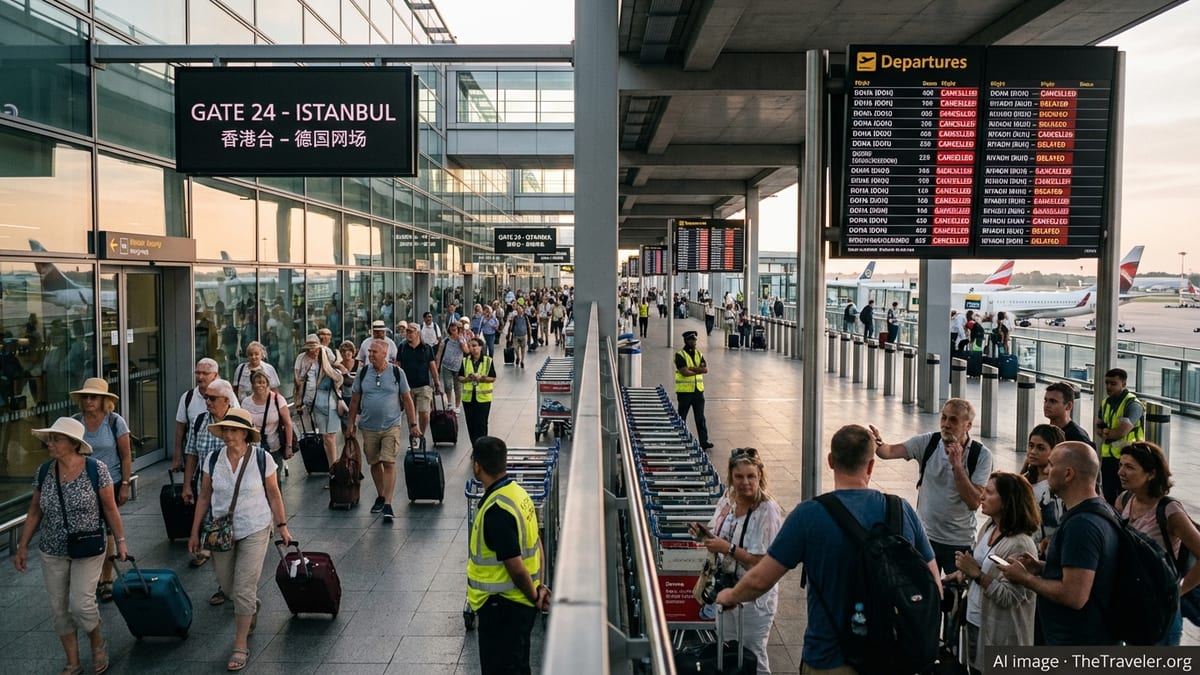
Turkey Moves Into the Spotlight of UK Middle East Warnings
The UK Foreign, Commonwealth and Development Office has updated its Turkey travel advice to flag a heightened regional risk linked to the escalating confrontation between Israel and Iran and its knock-on effects across the Middle East. While the core security concerns in Turkey remain terrorism, political protests and localised unrest, officials now warn that wider regional instability could trigger sudden travel disruption, including flight cancellations and route changes.
The Foreign Office continues to advise against all travel to areas within 10km of the Turkey Syria border and against all but essential travel to a number of provinces in the southeast. That long standing caution has now been placed in a broader context of regional volatility, with a specific note that escalation elsewhere in the Middle East could have unanticipated impacts on visitors in Turkey, from delays at airports to tightened security in major cities.
Updated guidance emphasises the high threat of terrorist attack in Turkey, particularly in Ankara, Istanbul and the southeast, and urges travellers to stay alert in crowded places, transport hubs and around diplomatic premises. Demonstrations related to events in Israel and Palestine have been taking place in Turkish cities, sometimes at short notice; UK officials urge visitors to avoid all protests and follow directions from local authorities.
For tour operators and airlines that rely on Turkey as both a destination and a connection point between Europe and the Middle East, the refreshed language from London is being closely watched. While the UK has not imposed a blanket ban on travel to Turkey, the latest wording reinforces the message that itineraries in and around the country may need to be adjusted quickly if the regional crisis deepens.
Israel, Qatar, Saudi Arabia and a Region Under Strain
Turkey’s inclusion comes as the UK reiterates more severe restrictions on parts of the region, particularly Israel and the Palestinian territories, where it continues to advise against all travel amid ongoing conflict and missile exchanges. Lebanon, Syria, Yemen and parts of Iraq and Iran remain subject to sweeping warnings that either ban travel outright or limit it to essential reasons only, reflecting intense security risks on the ground.
Across the Gulf, the picture is fluid. Qatar, the United Arab Emirates, Bahrain and Kuwait have seen airspace closures and extensive flight disruption as governments respond to the latest military strikes and retaliatory threats. The Foreign Office has urged British nationals in several of these states to register their presence so they can receive direct updates and, if necessary, be contacted about potential evacuation options.
Saudi Arabia and Jordan currently retain open airspace and continue to host international visitors, but the UK notes elevated security postures, especially around border regions and key religious and transport hubs. Travellers are being told to factor in longer security checks, potential last minute schedule changes and the risk that individual routes could be paused if the security situation deteriorates.
In total, the Foreign Office has recently updated advice for a cluster of more than a dozen Middle Eastern and adjacent countries, including Bahrain, Iran, Iraq, Israel, Jordan, Kuwait, Lebanon, Oman, Palestine, Qatar, Saudi Arabia, Syria, Turkey, the United Arab Emirates and Yemen. For many destinations, the wording has shifted quickly in recent days as governments react to missile launches, drone incidents and the closure of major flight corridors.
What the New Guidance Means for UK Travellers
For British holidaymakers and business travellers, the expanding list of cautions does not automatically mean trips must be cancelled, but it does change both the risk calculation and the practicalities of getting around. When the Foreign Office advises against all travel or against all but essential travel to a country or specific region, package holidays are typically suspended and customers are entitled to full refunds or alternative arrangements.
Where countries remain open, as with most of Turkey outside the immediate Syrian border region, travellers can still visit but should expect a more unpredictable operating environment. Airlines may reroute flights to avoid closed airspace, resulting in longer journeys, missed connections and occasional overnight delays at hubs. In some locations, carriers have temporarily suspended services altogether as a precaution.
Travel insurers usually align their cover with official UK advice. Policies may be invalidated if customers choose to travel into areas where the Foreign Office has explicitly warned against doing so. Conversely, if a destination is still considered safe enough to visit, standard cancellation cover often does not apply simply because a traveller is nervous about the wider situation; they may need their airline or tour operator to cancel first before refunds are triggered.
Officials are urging anyone already in the region to make sure their contact details are registered with consular services, monitor local news and official channels and keep digital copies of travel documents easily accessible. Those yet to travel are advised to review the latest government guidance up to the day of departure, check transit points as carefully as final destinations and build in extra flexibility where possible.
Airspace Closures and the Ripple Effect on Global Routes
The Middle East’s role as a major aviation crossroads means that regional instability can quickly affect journeys far beyond the conflict zone. With airspace over parts of Israel, Iran, Iraq, Syria, Qatar and other Gulf states subject to closures or restrictions, airlines have cancelled thousands of flights, particularly through busy hubs such as Dubai and Doha that normally connect Europe, Asia and Australasia.
For UK travellers, that has translated into disrupted itineraries even when their final destination lies outside the immediate region. Long haul services that would usually transit the Gulf have been forced to seek alternative routings, sometimes adding significant time and cost. In extreme cases, carriers have chosen to suspend certain routes altogether until the situation stabilises.
Under UK and European regulations, airlines whose flights depart from or arrive in the UK are obliged to provide care to stranded passengers, including meals and accommodation while they are waiting for new services. However, compensation payments are generally not available when disruption is caused by war or security emergencies, which are treated as extraordinary circumstances beyond an airline’s control.
Travel agents report a spike in queries from customers unsure whether to continue with planned itineraries that transit the Middle East in the coming weeks. Industry groups are advising travellers to keep bookings in place unless or until their airline confirms a cancellation or major rerouting, pointing out that voluntary cancellations made before official changes may not be fully refundable.
Practical Advice for Those Still Planning to Visit Turkey
Despite the sharpened warnings, Turkey remains one of the few major destinations in the region where leisure travel from the UK is still widely operating, particularly to coastal resorts and cultural centres such as Istanbul, Cappadocia and the Turquoise Coast. Tourism businesses there are keen to emphasise that daily life continues largely as normal in most popular areas, albeit with a visible security presence at transport hubs and major attractions.
Prospective visitors are being encouraged to pay close attention to regional maps in the official travel advice and to avoid any non essential trips to the Syrian border region or other areas highlighted for security concerns. Within the main tourist circuits, experts recommend allowing extra time for airport security and remaining flexible on connection times to accommodate potential rerouting around closed airspace.
Travellers are also being reminded to check that their insurance policies specifically cover travel to Turkey under current conditions and to confirm that they are not planning to enter any zones where the UK government advises against travel. Keeping contact details updated with airlines and tour operators, and enabling travel alerts on mobile devices, can help ensure that any last minute changes are communicated quickly.
With the situation across the Middle East evolving by the day, officials and industry figures alike stress that the key for Turkey bound travellers is preparation and vigilance. Those who stay informed, plan their routes carefully and remain ready to adapt at short notice are likely to find that, while the landscape has become more complex, travel to much of the country is still possible for now.